When planning a new house, most homeowners focus on spaces like bedrooms, living rooms, or the overall layout of the house. These spaces are important, but the kitchen is one of the most frequently used areas in any home. It is where daily cooking happens, where food is prepared, and often where family members gather during busy mornings and evenings.
Because the kitchen is used so regularly, its size and layout have a big impact on comfort and efficiency. A well-sized kitchen allows smooth movement between the stove, sink, and refrigerator. It also provides enough space for storage cabinets, appliances, and proper ventilation.
If the kitchen is too small, cooking can feel cramped, and storage becomes difficult. If it is too large without proper planning, the workflow may become inconvenient.
For this reason, architects carefully plan kitchen size, counter space, appliance placement, and storage layout while designing a house.
In this guide, we explain the standard kitchen size in India, the minimum kitchen dimensions for small homes, and the ideal kitchen sizes used in modern residential design.
Standard Kitchen Size in India (Quick Answer)
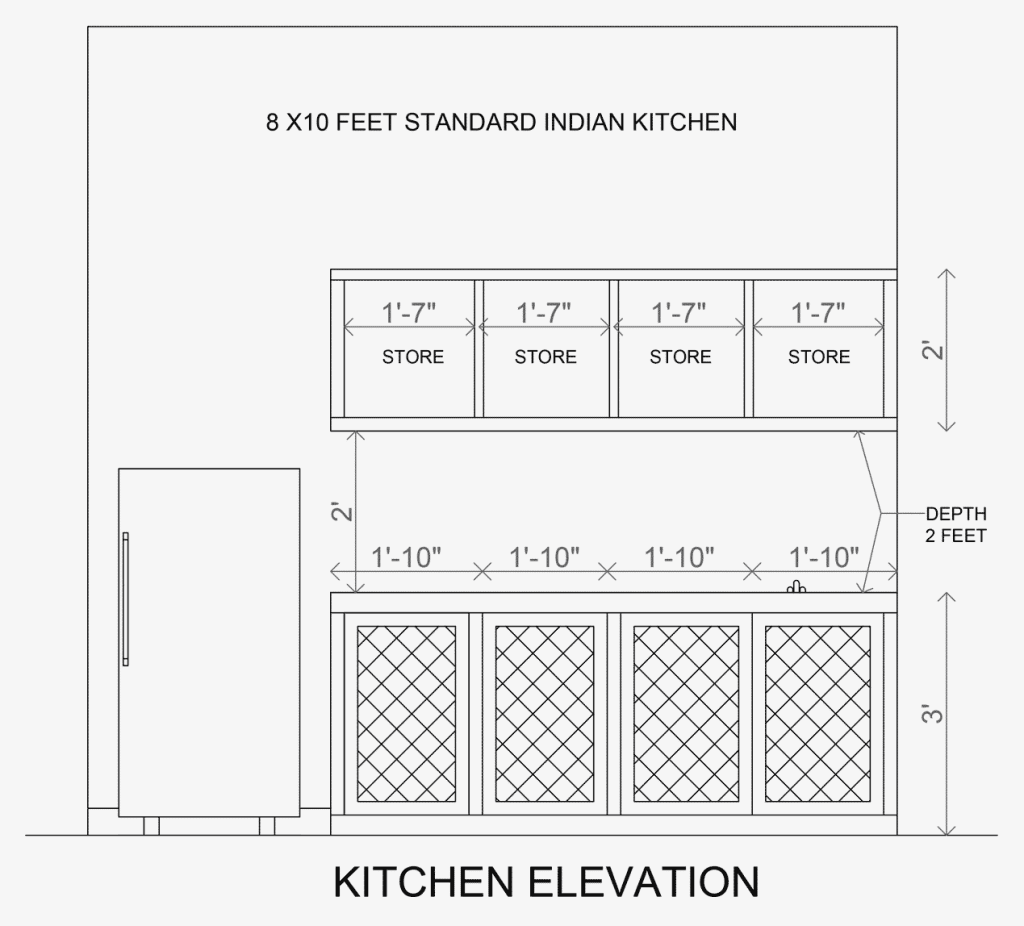
In most Indian homes, the standard kitchen size ranges between 8 × 10 feet and 10 × 12 feet, depending on the house layout and number of people using the kitchen.
This range provides enough space for essential elements such as the cooking counter, sink, refrigerator, storage cabinets, and comfortable movement while cooking.
While these sizes are common in many homes, the actual kitchen size may vary depending on the overall house plan, available space, and design preferences.
Minimum Kitchen Size for Small Houses
In smaller houses or apartments, kitchens are often designed as compact spaces. Even when space is limited, the kitchen should still allow basic cooking activities without feeling too cramped.
The following table shows typical minimum kitchen sizes used in small homes.
Kitchen Type
Minimum Size
Compact kitchen
6 × 8 ft
Small family kitchen
8 × 8 ft
Standard kitchen
8 × 10 ft
A 6 × 8 ft kitchen is usually considered the smallest practical size for basic cooking needs. It allows space for a stove, sink, and a small counter.
An 8 × 8 ft kitchen provides a little more working space and is commonly used in small apartments.
For independent houses and medium-sized homes, an 8 × 10 ft kitchen is often considered the starting point for comfortable cooking.
Even in compact kitchens, proper layout planning is important to ensure that cooking, washing, and storage activities can be carried out efficiently.
Ideal Kitchen Size for Comfortable Cooking
When space permits, slightly larger kitchens can make cooking and movement more convenient. Larger kitchens allow better storage options, wider counters, and easier placement of appliances.
The following table shows typical ideal kitchen sizes for comfortable use.
Kitchen Type
Ideal Size
Medium kitchen
10 × 12 ft
Large kitchen
12 × 14 ft
A 10 × 12 ft kitchen is considered a comfortable size for many modern homes. It provides enough space for multiple counters, cabinets, and movement around the cooking area.
A 12 × 14 ft kitchen is common in larger houses and allows more flexibility for storage units, pantry areas, or even a small breakfast counter.
The goal of choosing the right kitchen size is to ensure that cooking activities feel convenient rather than crowded.
Kitchen Layout Types
The layout of the kitchen plays an important role in how efficiently the space is used. Even a small kitchen can function well if the layout is planned carefully.
Some of the most common kitchen layouts used in Indian homes include the following.
L-Shaped Kitchen
In an L-shaped kitchen, the counters are arranged along two adjacent walls. This layout is widely used in small to medium-sized kitchens because it allows efficient use of corner space.
It also leaves some open space in the kitchen, making movement easier.
U-Shaped Kitchen
A U-shaped kitchen uses three walls for counters and cabinets. This layout provides plenty of storage and working space.
It works best in larger kitchens where enough space is available for movement in the centre.
Parallel Kitchen
A parallel kitchen, also called a galley kitchen, has two counters facing each other on opposite walls. One side may contain the cooking counter, while the other side may have the sink or preparation area.
This layout is commonly used in apartments because it works well in narrow spaces.
Factors That Affect Kitchen Size
The ideal kitchen size is not the same for every house. Architects consider several practical factors before deciding on the final kitchen dimensions.
Number of Family Members
Larger families often require bigger kitchens because cooking activities may involve multiple people and larger quantities of food.
Appliance Placement
Modern kitchens include appliances such as refrigerators, ovens, microwaves, and dishwashers. These appliances require additional space in the layout.
Ventilation and Windows
Good ventilation is essential in kitchens. Windows or exhaust systems need to be placed carefully, which can influence the layout and size of the space.
Storage Requirements
Kitchen storage plays an important role in keeping the space organised. Cabinets, shelves, and pantry units require sufficient wall and floor space.
By considering these factors, architects can design a kitchen that works well for the specific needs of the household.
Recommended Counter Height and Depth
Apart from kitchen size, the dimensions of the cooking counter are also important for comfort.
Two commonly used measurements are:
Counter height: 32–34 inches
Counter depth: 24 inches
A counter height of around 32 to 34 inches allows comfortable cooking for most people. It prevents excessive bending while preparing food.
A counter depth of about 24 inches provides enough space for cooking activities while still allowing easy access to items placed on the counter.
These measurements are widely used in residential kitchens because they provide a comfortable balance between usability and space efficiency.
Typical Kitchen Size in Modern Indian Homes
In modern Indian homes, kitchen sizes often depend on the type of house and available floor area.
In urban apartments and compact homes, kitchens commonly measure 8 × 10 ft or 10 × 10 ft. These sizes provide enough space for basic cooking activities while keeping the overall house layout efficient.
In larger independent houses or villas, kitchens may be 10 × 12 ft or larger. Some modern homes also include additional spaces, such as utility areas or pantry storage connected to the kitchen.
Regardless of the exact size, the most important factor is ensuring that the kitchen layout supports a smooth cooking workflow and sufficient storage.
Frequently Asked Questions
What is the standard kitchen size in India?
In most Indian homes, the standard kitchen size ranges between 8 × 10 feet and 10 × 12 feet, depending on the house layout and number of people using the kitchen.
What is the minimum kitchen size for a house?
The minimum practical kitchen size is usually around 6 × 8 feet, which allows space for a stove, sink, and basic counter area.
What is the ideal kitchen size for a family?
For comfortable cooking and storage, many homes use kitchens around 10 × 12 feet, which provides enough working space and movement area.
Conclusion
The kitchen is one of the most important spaces in any home, and its size directly affects daily comfort and convenience. A well-designed kitchen allows a smooth cooking workflow, proper storage, and adequate ventilation.
In most Indian homes, kitchen sizes between 8 × 10 feet and 10 × 12 feet provide a good balance between space efficiency and usability. Larger kitchens can offer additional storage and flexibility, but even smaller kitchens can function well with thoughtful layout planning.When planning a new house, you should consider kitchen size alongside other design standards such as room sizes, ceiling height, and staircase dimensions. Paying attention to these details helps create a kitchen that is comfortable, practical, and suitable for everyday use.