
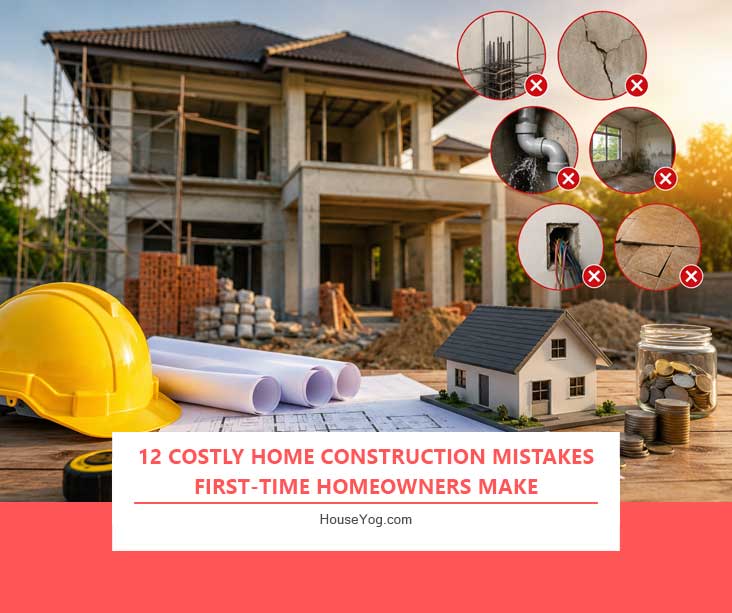

Most people build a house only once or twice in their lifetime.
Unfortunately, many homeowners learn important construction lessons only after they’ve already made an expensive mistake.
A poorly planned layout, inaccurate cost estimates, frequent design changes, or choosing the wrong materials can add several lakh rupees to your budget.
As architects, we’ve seen the same mistakes repeated across hundreds of residential projects.
The good news? Most of these mistakes are completely avoidable.
Whether you’re building a 1,000 sq. ft. home in Darbhanga, a duplex in Patna, or a 1700 sq. ft. independent house in Ranchi, avoiding these common construction mistakes can save you time, money, and unnecessary stress.
Why First-Time Homeowners Often Overspend During Construction
Most construction problems don’t begin on the construction site.
They begin during the planning stage.
Common causes of budget overruns include:
- Incomplete planning
- Unrealistic budgets
- Poor material estimation
- Frequent design changes
- Inadequate supervision
- Poor contractor selection
Let’s look at the most common mistakes and how to avoid them.
1. Starting Construction Without a Realistic Budget
Many homeowners calculate only the cost of brickwork, cement, and concrete.
Then they discover that they haven’t included:
- Electrical work
- Plumbing
- Flooring
- Doors and windows
- Waterproofing
- Painting
- Boundary walls
- Site development
As a result, the budget starts increasing midway through construction.
Architect’s tip: Always keep an additional 10-15% contingency fund for unexpected expenses.
If you’re planning your budget, our guide to house construction costs in India can help you estimate costs more accurately.
2. Choosing a House Plan Based Only on Appearance
A beautiful house isn’t always a practical house.
Many homeowners choose a design because they like the elevation or because they’ve seen a similar house in their neighbourhood.
But a good house plan should consider:
- Plot size
- Family size
- Future expansion
- Natural light
- Ventilation
- Privacy
- Storage requirements
We’ve seen many families regret building oversized bedrooms, poorly designed kitchens, or unnecessary corridors.
Before finalising your layout, read our guide on how to choose the right floor plan for your new home.
3. Making Design Changes After Construction Begins
This is one of the most expensive mistakes homeowners make.
Changing the design after construction has started can affect:
- Structural drawings
- Brickwork
- Electrical wiring
- Plumbing layouts
- Flooring
- Finishing work
Something as simple as moving a wall can create a chain reaction throughout the project.
Rule: Finalise all drawings before excavation begins.
4. Skipping Soil Testing
Many homeowners assume that all plots can support the same type of foundation.
That’s simply not true.
Soil conditions vary significantly from one location to another.
Without a proper soil investigation, you may face problems such as:
- Foundation settlement
- Structural cracks
- Uneven floors
- Water seepage
A soil test is a small investment that can prevent expensive structural problems in the future.
5. Underestimating Material Requirements
Poor material planning creates two major problems.
If you buy too little, construction slows down.
If you buy too much, money gets tied up in unused materials.
The most commonly miscalculated materials include:
- Cement
- Steel
- Sand
- Aggregate
- Bricks
Before purchasing materials, prepare a proper estimate.
Our detailed guides on aggregate required for house construction can help you calculate quantities more accurately.
6. Choosing Cheap Materials Instead of Good Materials
There’s a difference between reducing costs and buying the cheapest products available.
Some materials should never be compromised, including:
- Cement
- Steel
- Waterproofing materials
- Electrical wiring
- Plumbing pipes
Saving ₹20,000 today can easily result in ₹2 lakh in repairs a few years later.
If you need to reduce costs, look for savings in finishes rather than structural components.
7. Hiring a Contractor Without a Detailed Scope of Work
Many homeowners select contractors based only on the lowest quotation.
Unfortunately, a lower price often means important work has been excluded.
Before signing an agreement, clearly define:
- Materials
- Labour responsibilities
- Payment schedules
- Construction stages
- Completion timelines
- Quality standards
Everything should be documented in writing.
Verbal agreements often lead to disputes.
A detailed Bill of Quantities (BOQ) can help both homeowners and contractors clearly understand the scope of work before construction begins. You can refer to our construction BOQ sample available in PDF and Excel format to learn more.
8. Ignoring Waterproofing
Most homeowners think about waterproofing only after they discover damp patches on their walls.
By then, the damage has already been done.
Never ignore waterproofing in:
- Bathrooms
- Roof slabs
- Balconies
- External walls
- Water tanks
Good waterproofing may increase initial costs slightly, but it can save you from expensive repairs later. Our detailed guide on waterproofing materials and costs can help you choose the right solution for your home.
9. Forgetting About Electrical and Plumbing Planning
Electrical and plumbing systems are often treated as secondary tasks.
That’s a mistake.
Before construction begins, finalise:
- Switch locations
- Socket positions
- Internet points
- Air-conditioner locations
- Water supply lines
- Drainage layouts
- Geyser locations
Changing these systems later usually requires breaking walls and redoing finished work.
10. Overlooking Storage During the Design Stage
Storage shouldn’t be an afterthought.
When storage isn’t planned properly, homeowners end up filling rooms with additional furniture.
Plan for:
- Wardrobes
- Kitchen cabinets
- Linen storage
- Utility areas
- Shoe storage
- Loft spaces
Built-in storage almost always works better than trying to solve storage problems after moving in.
11. Failing to Supervise the Construction Site
Even the best drawings can’t replace regular site supervision.
Homeowners should routinely check:
- Material quality
- Construction progress
- Measurements
- Reinforcement placement
- Plumbing installations
- Finishing work
If you’re unable to visit the site regularly, consider hiring professional supervision.
Small mistakes discovered early are much easier to fix.
12. Thinking Construction Ends After You Move In
Construction doesn’t end when you receive the keys.
Regular maintenance protects your investment.
Your maintenance checklist should include:
- Roof inspections
- Plumbing inspections
- Electrical maintenance
- Waterproofing checks
- Paint maintenance
- Door and window maintenance
Many homeowners focus entirely on the structure of the house and forget that maintenance also includes external components such as gates, garages, and access systems. If your home includes a garage, regular inspections can help extend its lifespan and prevent costly repairs. In some cases, working with a professional garage door service can help identify minor issues before they become major problems.
Frequently Asked Questions
Changing the design after construction begins is one of the most common and expensive mistakes.
Most architects recommend keeping a contingency fund of 10-15% of your total construction budget.
No. Reducing costs by compromising on structural materials often leads to higher maintenance and repair expenses.
Yes. An architect can help you optimise space, control costs, improve functionality, and avoid costly mistakes.
Regular site visits are recommended, especially during foundation work, structural construction, plumbing installation, electrical work, and finishing stages.
Focus on better planning, accurate material estimation, efficient design, and quality materials rather than cutting corners or choosing the cheapest products.
Final Thoughts
Building a house is a major financial and emotional investment.
The difference between a successful project and an expensive one often comes down to planning.
Finalise your design, prepare a realistic budget, estimate materials carefully, and work with experienced professionals.
Because when it comes to home construction, avoiding mistakes is almost always cheaper than fixing them later.