
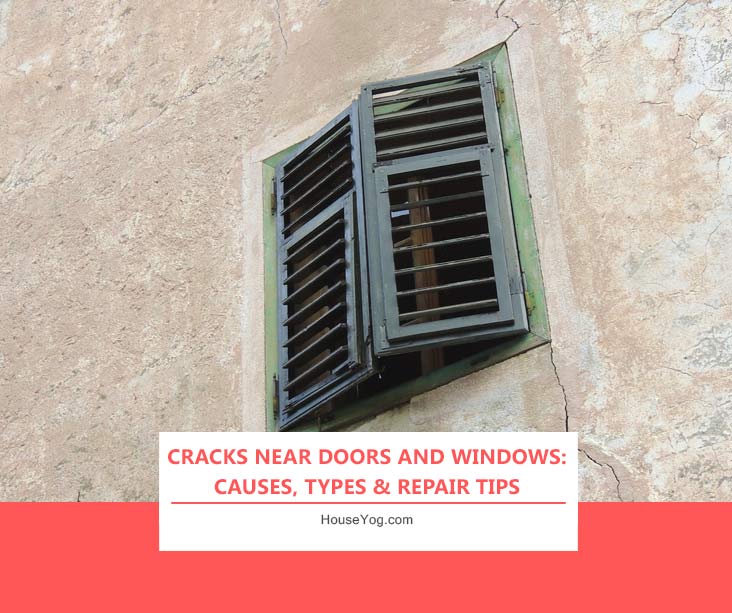

Cracks near doors and windows are among the most common wall problems seen in residential buildings. These cracks often appear diagonally from window corners, above door frames, or along the junction between RCC members and brick walls. While some cracks are only cosmetic, others may indicate stress concentration, poor construction detailing, lintel problems, or structural movement.
In most buildings, doors and windows are naturally weaker zones because they interrupt the continuity of the wall. As the building settles and materials expand or contract over time, these openings become more vulnerable to cracking than plain wall surfaces.
In this guide, we’ll explain why cracks commonly appear around doors and windows, the different crack patterns you may notice, how to identify warning signs, and the best ways to prevent and repair such cracks during construction.
Why Cracks Commonly Appear Near Doors and Windows
Cracks near doors and windows usually occur because openings create weak stress zones in walls. These cracks may develop due to settlement, lintel weakness, RCC-brick movement, or plaster shrinkage near openings.
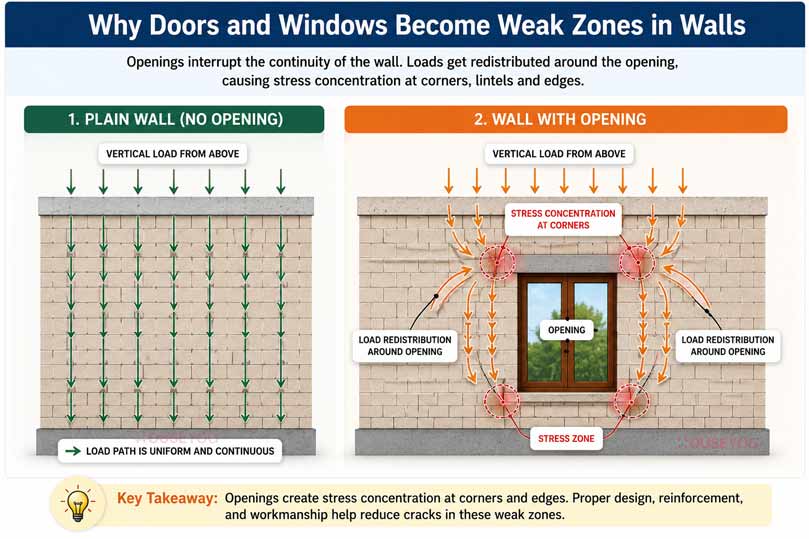
Walls distribute structural loads more evenly when they are continuous and uninterrupted. However, doors and windows create openings that disturb the normal load path within the wall. This causes stress to concentrate around corners, lintels, and junction areas.
As a result, even small structural movement, shrinkage, or thermal expansion often becomes visible first near openings.
Cracks around doors and windows commonly develop due to:
- Stress concentration near openings
- Differential movement between RCC and brick masonry
- Weak lintel support
- Minor structural settlement
- Thermal expansion and contraction
- Poor reinforcement detailing
- Movement between wall and frame materials
In many homes, these cracks become more noticeable after the first summer or monsoon cycle when buildings undergo temperature and moisture-related movement.
Why Doors and Windows Become Weak Zones in Walls
Every door or window opening creates a discontinuity in the wall structure. Instead of loads travelling uniformly downward through the masonry, the load must redistribute itself around the opening through lintels and surrounding wall sections.
This redistribution creates stress concentration points, especially at window corners, door frame edges, lintel ends, and RCC and masonry junctions.
These areas experience higher internal stress compared to the rest of the wall. Even minor settlement, shrinkage, or thermal movem structural movement.ent can therefore trigger visible cracking around openings before cracks appear elsewhere.
This is why diagonal cracks above windows and doors are so common in residential buildings.
Common Crack Patterns Around Doors and Windows
In many Indian homes, these cracks become visible after the first monsoon or during the first summer after construction.
Different crack patterns often indicate different underlying causes. Understanding the shape and location of the crack can help determine whether the issue is related to plaster movement, lintel behavior, material junctions, or structural stress.
Diagonal Cracks from Window Corners
Diagonal cracks extending from the corners of windows are among the most common cracks seen in masonry walls. These cracks usually form because window corners act as natural stress concentration points within the wall.
In many cases, the cracks develop due to minor settlement, differential movement between RCC and brick masonry, inadequate reinforcement near openings, or poor load distribution around the window.
Small hairline diagonal cracks are often limited to the plaster surface. However, wider diagonal cracks that continue increasing over time may indicate structural movement and should be inspected carefully.
Vertical Cracks Along Door Frames
Vertical cracks near door frames generally appear because the wall and the frame material respond differently to temperature and moisture changes. Wood, steel, aluminum, concrete, and masonry expand and contract at different rates, which can create small separation cracks over time.
Poor frame fixing, weak mortar packing, and slight movement between the frame and masonry can also contribute to cracking near door edges.
These cracks are usually cosmetic unless accompanied by wall displacement or door jamming.
Horizontal Cracks Above Doors and Windows
Horizontal cracks above openings are commonly associated with lintel-related problems. Since lintels transfer the wall load around the opening, any weakness in lintel design or construction can eventually result in cracking near lintel level.
These cracks may develop due to
- Insufficient lintel bearing length
- Weak reinforcement
- Excessive wall loading
- RCC deflection
- Poor concrete quality
- Improper curing
If the crack extends continuously across the wall or becomes wider over time, structural inspection may be necessary.
Cracks Between RCC Beam and Brick Wall
Cracks frequently appear where RCC beams or columns meet brick masonry because both materials behave differently under thermal and structural movement.
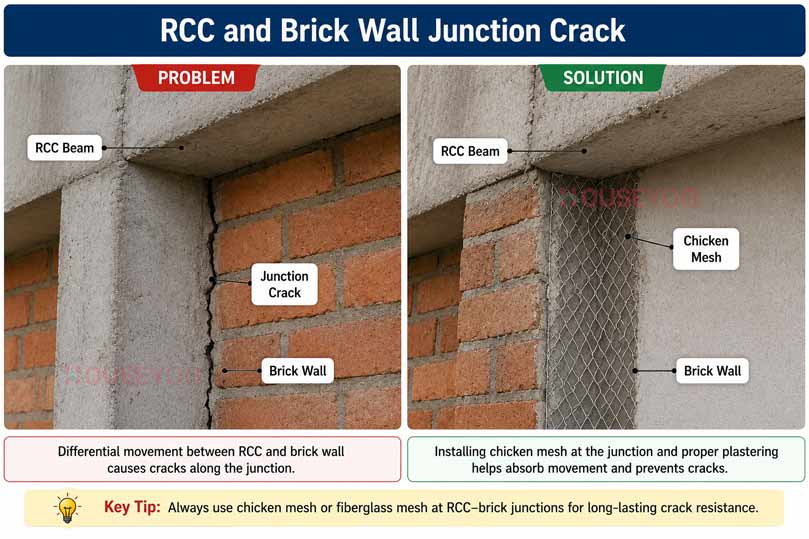
Concrete and brick masonry expand, shrink, and deflect differently over time. This difference creates stress along the junction line, which eventually becomes visible as plaster cracking.
These cracks are especially common above doors and windows, near beam-column junctions, along RCC beam edges, and beside the columns.
Improper bonding, lack of mesh reinforcement, and poor plaster detailing can further increase the chances of cracking.
Are These Cracks Structural or Cosmetic?
Not all cracks near doors and windows are dangerous. Many are limited to the plaster surface and occur due to shrinkage, thermal movement, or minor settlement. However, some cracks may indicate deeper structural stress or foundation movement.
Cosmetic cracks like a hairline crack usually remain stable and affect only the plaster surface, while structural cracks tend to widen over time and may extend into the masonry itself.
You can also read our detailed guide on why wall plaster cracks to understand different types of plaster cracks in detail.
However, certain warning signs should never be ignored.
Cracks may require professional inspection if:
- The crack keeps widening over time
- Doors or windows become difficult to open
- Cracks pass through brickwork instead of only plaster
- Stair-step cracks appear in masonry
- Visible wall displacement is noticed
- Cracks reappear repeatedly after repair
If structural movement is involved, simply filling the crack cosmetically may not solve the problem permanently.
When Should You Worry About Cracks Near Openings?
Small surface cracks are common in many homes and are not always a major concern. However, some crack patterns may indicate structural distress, settlement, or excessive movement within the building.
You should pay closer attention if the crack:
- Is wider than 3–5 mm
- Continues increasing in length or width
- Appears suddenly after settlement or renovation work
- Is accompanied by sagging or wall movement
- Allows water seepage during rain
- Extends diagonally across large wall sections
Similarly, if multiple cracks appear around several openings in the building, it may indicate broader structural or foundation-related issues rather than isolated plaster cracking.
Monitoring the crack over time is often the best first step. Taking periodic photographs can help determine whether the crack is stable or active.
Why Diagonal Cracks Form Above Windows
Diagonal cracks above windows are one of the most searched and misunderstood wall crack problems in residential buildings.
These cracks usually develop because the corners of openings experience concentrated tensile stress when the wall undergoes movement or load redistribution. Since masonry is relatively weak in tension, stress often gets released in the form of diagonal cracking.
Several factors can contribute to diagonal window corner cracks, including:
- Minor settlement in the building
- Weak lintel support
- Differential movement between RCC and masonry
- Thermal expansion and contraction
- Poor reinforcement detailing
- Lack of mesh at junction areas
In many cases, the crack starts as a thin plaster crack and gradually becomes more visible over time.
While small diagonal cracks are often cosmetic, continuously growing diagonal cracks should always be evaluated carefully.
Lintel-Related Cracks and Load Transfer Problems
Lintels are horizontal structural members placed above doors and windows to transfer loads safely around the opening. If the lintel is weak, undersized, or poorly constructed, stress may build up above the opening and eventually lead to cracking.
Lintel-related cracks are commonly seen in small residential buildings where construction detailing is compromised to reduce costs.
Common reasons include:
- Insufficient reinforcement
- Inadequate bearing length
- Poor concrete quality
- Premature removal of supports
- Excessive loading above openings
- Improper curing after casting
Cracks above windows are particularly common when long wall spans are supported using weak or shallow lintels.
How Builders Prevent Cracks Around Openings
Good construction detailing plays a major role in preventing cracks near doors and windows. Experienced builders and engineers typically use several preventive measures to reduce stress concentration around openings.
Proper Lintel Design
Lintels should be designed with adequate reinforcement, sufficient bearing length, proper concrete strength, and correct curing practices to ensure safe load transfer around openings.
Mesh Reinforcement at Junctions
Chicken mesh or fiberglass mesh is commonly installed at RCC-masonry junctions and around openings before plastering. This helps distribute stress more evenly and significantly reduces visible plaster cracking later.
Proper Masonry Alignment
Poorly aligned brickwork often results in uneven stress distribution and excessively thick plaster patches around openings. Proper masonry workmanship helps reduce localized stress and shrinkage-related cracking.
Controlled Plaster Thickness Near Openings
Very thick plaster near corners and junctions tends to shrink more during drying and curing. Maintaining uniform plaster thickness around openings improves bonding and reduces cracking risk.
You can also read our detailed guide on standard plaster thickness for walls in house construction to understand recommended plaster thickness for different wall surfaces.
Proper Curing and Construction Practices
Inadequate curing and rushed construction practices can weaken plaster and increase crack formation near openings. Proper curing, controlled drying, and better workmanship significantly improve crack resistance over time.
Poor supervision, rushed plastering work, and improper construction detailing are some of the most common reasons for cracks around doors and windows. Working with experienced professionals and following proper construction practices can significantly improve long-term wall durability and reduce future maintenance issues. You can also explore our house construction services for professional residential construction and project execution support.
Repair Methods for Cracks Near Doors and Windows
The correct repair method depends on whether the crack is cosmetic, junction-related, or structural.
Minor hairline cracks near openings can often be repaired using crack fillers, polymer putty, or local replastering after cleaning the affected area properly.
For recurring cracks at RCC and masonry junctions, the damaged plaster may need to be reopened and reinforced using fiberglass mesh or chicken mesh before replastering.
However, if the crack is caused by settlement, lintel failure, or structural movement, the root cause must be identified first before cosmetic repairs are attempted.
Ignoring active structural cracks can eventually lead to more serious and expensive damage.
You may also want to read our guide on Plastering Cost in India: Per Sq Ft Rates for Material and Labour to estimate the approximate cost of plaster repair and replastering work.
Final Thoughts
Cracks near doors and windows are common because openings naturally create weak stress zones within walls. While many of these cracks are cosmetic and limited to plaster surfaces, others may indicate structural movement, lintel problems, or poor construction detailing.
Understanding the crack pattern, location, and behavior is important before starting repairs. In many cases, proper reinforcement, lintel design, mesh installation, and good workmanship during construction can significantly reduce the chances of cracks developing around openings in the future.
Early inspection and proper repair can prevent small cracks from turning into larger structural or maintenance problems later.
FAQs on Cracks Near Door and Windows
Cracks commonly appear near doors and windows because openings create weak stress zones in walls where movement and load concentration become more visible.
Small hairline cracks are often cosmetic, but wider or growing cracks above windows may indicate lintel or structural issues.
Diagonal cracks near windows are usually caused by stress concentration, settlement, lintel problems, or differential movement between RCC and masonry.
Minor cracks can be repaired using crack fillers or replastering, while recurring junction cracks may require mesh reinforcement and structural inspection.
Yes, cracks commonly develop where RCC members meet brick masonry because both materials expand and contract differently over time.