
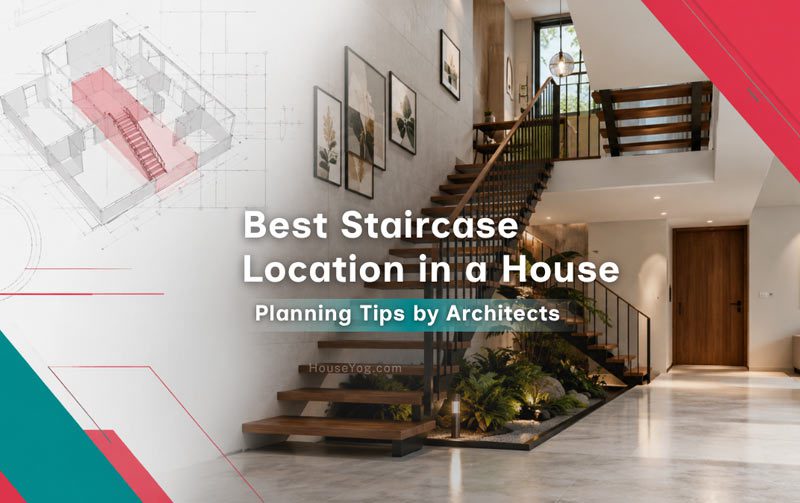

When you start planning a house, one of the most important design decisions, which is the location of the staircase, is often overlooked.
Most of us initially focus on staircase design, direction, or appearance. But in actual architectural planning, staircase placement affects almost every part of your building layout. It influences movement flow, privacy, ventilation, natural lighting, structural planning, future expansion, and even the long-term usability of the house.
A poorly planned staircase can make even a large home feel cramped and inefficient. On the other hand, a well-positioned staircase improves circulation, creates smoother connectivity between floors, and makes the entire house feel more comfortable to use every day.
In Indian homes, staircase planning becomes even more important because many families think beyond immediate needs. You may plan for:
- Future rental floors
- Duplex living
- Independent floor access
- Future vertical expansion
- Multi-generational living
- Mixed residential-commercial use
This is why the best staircase location in a house should never be decided based only on direction or visual preference. It should be planned based on how your building will function over the next 10–20 years.
If you are planning to build a house and wondering about the best location for the staircase, then continue reading.
Today in this guide, we will explain how architects decide staircase placement, what works best for different building types, common planning mistakes to avoid, and how you can choose the right staircase location for your own home.
So are you ready? Let’s dive in.
Why Staircase Location Matters in House Planning
A staircase is much more than a connection between two floors. In architectural planning, it becomes one of the main circulation elements of the building.
The position of the staircase affects how people move through the house, how rooms connect with each other, and how efficiently the available floor space can be used.
For example, in many of the small urban homes, a badly positioned staircase often creates awkward unusable corners and interrupts the natural flow of movement inside the house. In duplex homes, poor staircase planning may reduce privacy between public and private spaces. In rental buildings, the wrong staircase location can make future independent access difficult.
This is why experienced architects usually start thinking about staircase placement very early during floor plan development — often before finalising room layouts.
A staircase that looks good on paper may still create practical problems in daily life if circulation and future usage are not considered properly.
What Architects Consider Before Positioning a Staircase
There is no universal staircase location that works perfectly for every building. The ideal position depends on your plot size, space requirements, future plans, and building type.
Before finalising staircase placement, architects usually evaluate several practical planning factors.
Movement Flow Inside the House
One of the biggest goals of staircase planning is to create smooth and natural movement between floors without disturbing the usability of the ground floor.
If the staircase cuts through important circulation paths, your floor plan may start feeling congested. In many homes, this becomes noticeable only after construction, when furniture placement and day-to-day movement become difficult.
For example, in narrow plots, placing the staircase exactly at the centre may divide the layout into smaller disconnected zones. On the other hand, a carefully planned corner staircase often leaves larger, uninterrupted usable spaces for furniture movement and circulation.
Good staircase planning should make movement feel comfortable and effortless.
Privacy Between Floors
Privacy is another major factor that directly affects staircase placement.
In duplex homes, families usually prefer internal staircases that connect floors comfortably while maintaining separation between public and private spaces. But in rental buildings, the requirement is often completely different.
Many Indian homeowners later regret not planning for independent upper-floor access during the initial design stage. A staircase placed without considering future rental possibilities can become a major limitation factor later on.
This is why architects usually discuss future rental plans, independent access requirements and family structure and floor usage patterns before finalising staircase positions in the floor plan layout.
Ventilation and Natural Lighting
Poor staircase placement often creates dark and poorly ventilated areas inside the house.
In many older houses, staircases become enclosed spaces with very little daylight. Over time, these areas start feeling heavy, cramped, and uncomfortable.
Modern architectural planning treats staircases differently. Instead of hiding them, architects often use staircases strategically to improve:
- Vertical air movement
- Daylight penetration
- Openness inside the layout
- Visual spaciousness
For example, staircases placed near courtyards, side setbacks, skylights, or ventilation shafts can dramatically improve natural lighting inside compact homes.
In small urban plots where natural light becomes difficult to bring into the centre of the house, staircase zones are often used as a light-enhancing space.
Structural Planning and Construction Efficiency
A staircase is also an important structural element.
Its position affects beam placement, slab continuity, column locations, load transfer, and foundation planning.
When staircase planning is delayed until later stages, it often creates structural compromises and increases construction complexity.
This is one reason architects prefer integrating staircase planning during the early floor plan stage itself rather than treating it as an isolated element later.
Good staircase placement can simplify structural planning and also improve construction efficiency.
Future Expansion Possibilities
In India, many families construct houses in phases. You may initially build only the ground floor and later add additional floors depending on budget or family requirements.
Because of this, staircase planning should always consider future expansion possibilities.
For example, an internal staircase may work perfectly for a single-family duplex house today. But if you later decide to create an independent rental floor, an external staircase might have been more practical.
Similarly, many homeowners later realise that future floor additions become difficult because the staircase location does not support smooth vertical expansion.
A well-planned staircase should therefore support both present and future use of the property.
Common Staircase Placement Options in Houses
Different staircase locations serve different planning objectives. The best option depends on your space constraints, privacy needs, and long-term usage plans.
Central Staircase Layout
In this layout, the staircase is positioned near the middle of the house.
The central staircase layout is commonly used in duplex homes, larger villas, and open-plan modern houses.
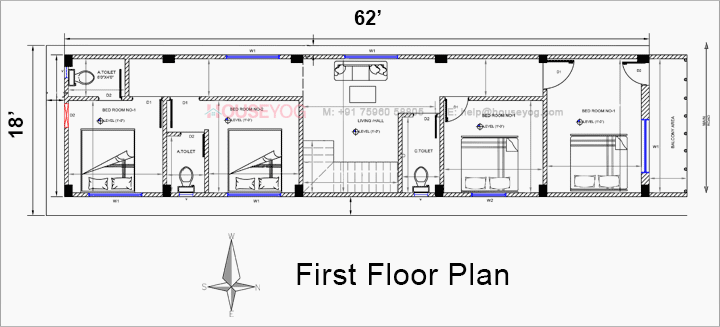
A centrally placed staircase can create balanced circulation and improve connectivity between rooms. It also allows the staircase to become an important visual feature inside the house.
However, in smaller homes, this layout requires careful planning. If not designed properly, a central staircase can consume valuable usable area and create awkward circulation around rooms.
Corner Staircase Placement
Corner staircases are among the most practical options for compact Indian homes.
Instead of breaking the layout into multiple smaller sections, a corner staircase keeps the floor plan cleaner and easier to organise. This usually improves furniture placement, circulation flow, and overall space efficiency.
In narrow plots and urban row houses, architects often prefer this approach because it leaves larger uninterrupted usable spaces for daily living.
Corner staircase layouts also work well when future vertical expansion is expected.
Staircase Near the Entrance
Many homeowners ask whether placing the staircase near the main entrance is good or bad.
In reality, the answer depends entirely on how the building will be used.
For example, entrance-side staircases are often very practical in:
- Rental houses
- Mixed-use buildings
- Commercial-residential properties
- Future independent floor planning
This type of layout allows upper floors to remain accessible without disturbing the ground-floor occupants.
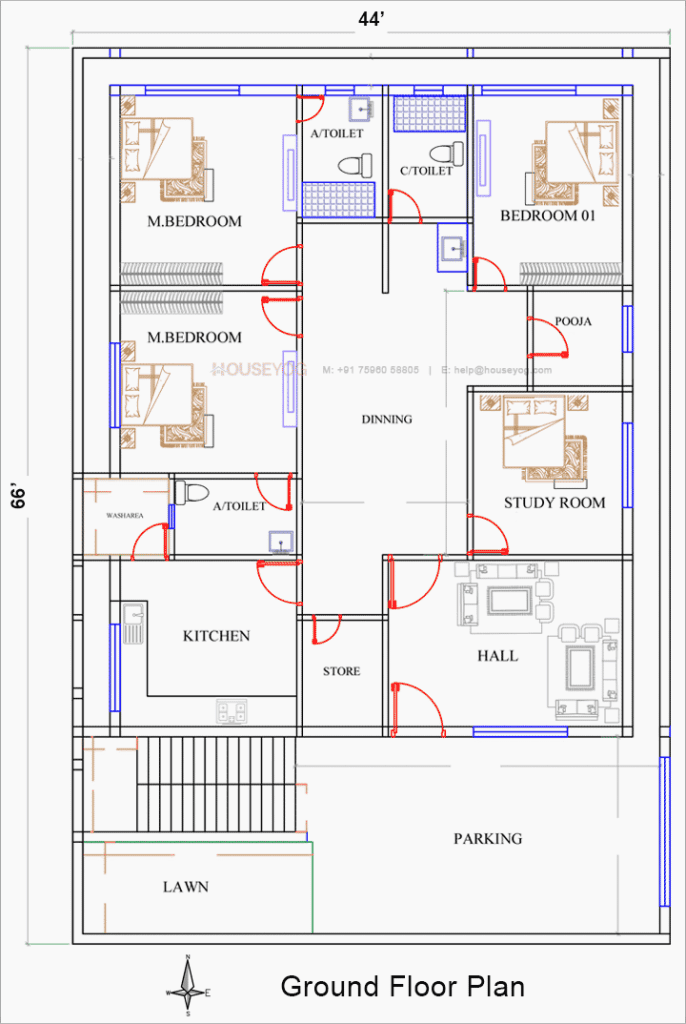
However, if privacy is not handled carefully, the staircase may make the living area feel exposed. Architects often solve this by introducing:
- Partition walls
- Semi-private transition spaces
- Entrance lobbies
- Offset staircase positioning
Small design adjustments can make a major difference in usability.
External Staircase Placement
External staircases are extremely common in Indian rental and mixed-use buildings.
Their biggest advantage is independent access.
For example, tenants can access upper floors without passing through the family living spaces on the ground floor. This improves privacy for both occupants and tenants.
External staircases are also useful for:
- Phased construction
- Future rental conversion
- Independent floor ownership
- Commercial access flexibility
However, they require proper planning for weather protection, drainage, security, and exterior elevation design.
A poorly designed external staircase can negatively affect both aesthetics and usability.
Best Staircase Location for Different Types of Buildings
The ideal staircase position changes depending on how the building will function.
Small Houses
In small homes, staircase planning is primarily about space efficiency.
The staircase should consume minimal circulation area while still remaining comfortable to use. In many small urban plots, poorly planned staircases end up reducing furniture space and creating cramped interiors.
This is why corner staircase layouts are usually preferred in smaller homes. Architects also frequently utilise under-stair spaces for storage, utility areas, seating, or compact washrooms.
Correct staircase positioning can significantly improve how spacious a small house feels.
Duplex Houses
In duplex homes, the staircase becomes part of everyday family movement.
Because the staircase is used constantly throughout the day, its location should feel natural and comfortable rather than isolated.
In many duplex layouts, centrally positioned or semi-central staircases work well because they improve connectivity between floors while maintaining privacy between living and bedroom areas.
Natural lighting also becomes particularly important in duplex staircases because dark enclosed staircases can make the house feel visually heavy.
Rental Houses
Rental buildings require a completely different staircase planning approach.
In these houses, the staircase should support:
- Independent access
- Tenant privacy
- Easy maintenance
- Future flexibility
Many Indian homeowners later realise that a beautifully designed internal staircase becomes inconvenient once upper floors are rented separately.
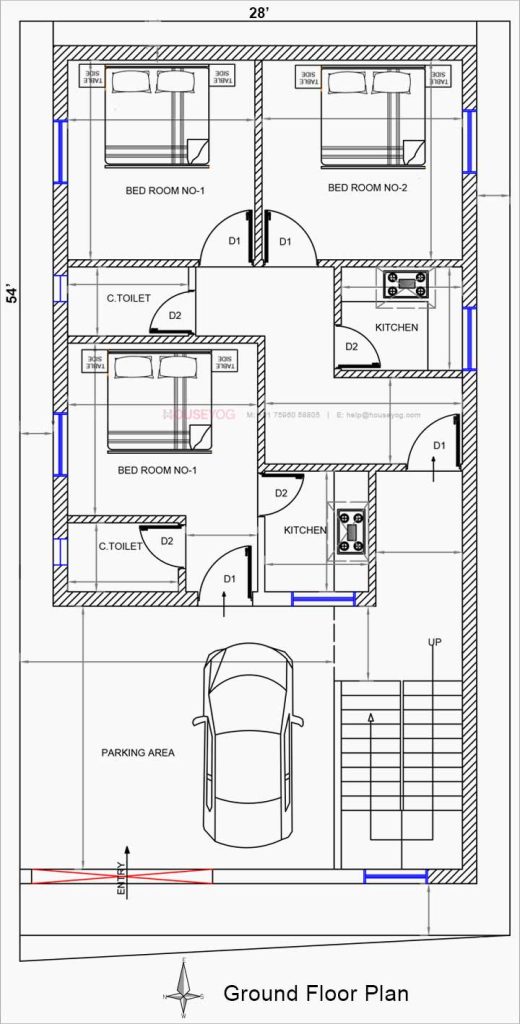
This is why front-side or side-setback staircases are commonly preferred in rental-focused layouts.
Apartment Buildings
In apartment buildings, staircase planning is influenced heavily by:
- Fire safety norms
- Evacuation requirements
- Lift integration
- Corridor planning
- Structural efficiency
The staircase should allow smooth movement while minimising dead circulation areas.
In larger apartment projects, architects carefully coordinate staircase positions with lift cores and emergency access routes to improve both functionality and safety.
Commercial Buildings
Commercial buildings prioritise movement efficiency and accessibility.
Unlike residential buildings, commercial staircases must handle larger movement volumes throughout the day. Their location should therefore support:
- Customer circulation
- Emergency evacuation
- Visibility
- Access efficiency
In many mixed-use Indian buildings, staircase placement also influences how effectively residential and commercial spaces remain separated.
Internal vs External Staircase: Which Is Better?
This is one of the most common questions our clients ask during planning.
The answer depends entirely on your long-term goals for the property.
An internal staircase usually works better when the building is intended for single-family use or duplex living. It creates a more connected and protected indoor experience and generally improves aesthetics.
An external staircase, however, offers more flexibility for future rental use, independent floor access, and phased expansion. This is one reason why external staircases remain extremely popular in urban Indian houses.
Instead of deciding based only on appearance, it is better to evaluate how the building may function 10 years from now. That’s probably the best question to ask.
What Most Homeowners Realise Too Late About Staircase Planning
One of the most common mistakes in residential planning is treating the staircase as a secondary element.
Many homeowners spend weeks discussing room sizes, tiles, elevations, and interiors, but staircase placement is finalised quickly without considering long-term usability.
Unfortunately, staircase mistakes are difficult and expensive to correct later.
In real projects, homeowners often later realise:
- Upper-floor rental access is inconvenient
- Privacy between floors feels uncomfortable
- Furniture layouts become restricted
- Future expansion becomes difficult
- Staircase areas remain dark throughout the day
- Circulation inside the house feels awkward
In compact urban plots, especially, staircase planning can influence the overall comfort of the house more than people initially expect.
This is why experienced architects usually treat staircase placement as a core planning decision rather than simply a structural necessity.
Common Staircase Planning Mistakes to Avoid
Many staircase-related problems happen because the staircase is planned too late in the design process.
One common mistake is ignoring future expansion possibilities. A staircase that works perfectly for today’s requirements may become restrictive later when additional floors are added or rented independently.
Another frequent issue is poor ventilation. Dark enclosed staircases often make interiors feel smaller and less comfortable. Introducing natural light through windows, skylights, or ventilation shafts can completely improve the experience of the space.
Privacy is another overlooked factor. Staircases opening directly into living or dining spaces may reduce comfort in duplex and multi-family homes.
Finally, oversized staircases can waste valuable usable area, especially in compact urban plots where every square foot matters.
Good staircase planning is ultimately about balance — not just aesthetics.
Should Staircase Location Follow Vastu?
Many Indian homeowners naturally consider staircase Vastu while planning their homes.
Vastu recommendations usually focus on staircase direction, clockwise movement, placement zones and relationship with the entrance.
These preferences can certainly be incorporated into the design. However, staircase planning should also balance:
- Circulation efficiency
- Structural practicality
- Ventilation
- Privacy
- Future usability
A staircase that follows Vastu principles but creates poor functionality may not work well in daily life.
If you want detailed guidance specifically about staircase direction and Vastu rules, you can also read our detailed guide on Staircase Vastu: Best Direction, Design Rules & Common Mistakes to Avoid.
A Practical Approach to Staircase Planning
The best staircase location in a house is usually the one that balances circulation efficiency, privacy, ventilation, structural practicality, future expansion, and usability.
Instead of copying staircase layouts from other houses, it is always better to evaluate how your own property will function over time.
A staircase should support the way your family lives, moves, expands, and uses the building today and in the future.
This is why staircase planning should ideally happen during the early architectural design stage rather than after room layouts are already finalised.
When Should You Consult an Architect for Staircase Planning?
You should ideally discuss staircase placement with your architect before finalising room layouts and structural grids. It is very important to get the staircase position right in a house. Even a little planning error in choosing the staircase position can affect:
- Usable floor area
- Movement efficiency
- Privacy of the spaces
- Future flexibility
- Natural lighting and ventilation
At Houseyog, we can help you plan practical and future-ready floor plans and house designs for:
- Independent houses
- Duplex homes
- Rental buildings
- Residential apartments
- Commercial properties like schools and marriage halls
If you are planning a new house or evaluating your floor plan, professional staircase planning can help you avoid expensive design limitations later.
FAQs About Staircase Location
The best staircase location depends on your plot size, family requirements, privacy needs, and future expansion plans. In most homes, the ideal staircase position is the one that balances circulation efficiency, usability, ventilation, and long-term flexibility.
Internal staircases are usually better for duplex and single-family homes, while external staircases are more practical for rental buildings and independent floor access.
Yes, staircase placement near the entrance can work very well for rental houses, mixed-use buildings, and future independent floor access. However, privacy planning becomes important in such layouts.
Corner staircase layouts are often the most practical for compact homes because they improve space efficiency and leave larger uninterrupted usable areas.
Yes. Staircase placement directly affects structural planning, beam positions, circulation flow, and room layouts. This is why architects usually finalise staircase locations during the early planning stage.
Final Thoughts
The staircase is one of the most influential planning elements in any building.
Its position affects not only movement between floors, but also privacy, ventilation, lighting, structural efficiency, and future usability.
The best staircase location in a house is therefore not decided only by direction or appearance. It should be planned based on how the building will actually function for your family, tenants, or future expansion plans.
A well-planned staircase makes the entire house feel more comfortable, practical, and future-ready.