
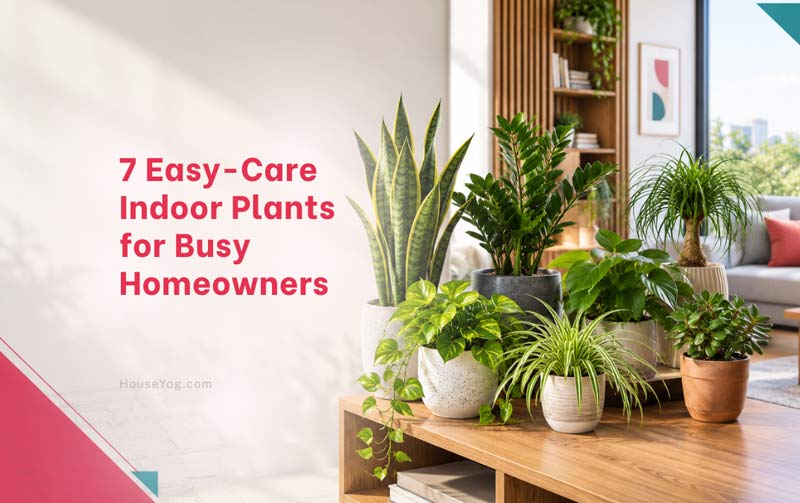

Not everyone has the time to look after plants every day.
Between work, family, travel and everything else that needs attention at home, plant care can easily become one more task on the list. But that doesn’t mean you have to give up on having greenery indoors.
Some indoor plants are remarkably forgiving. They can handle an occasional missed watering, adapt to different light conditions and continue to look good without demanding constant attention.
In practice, choosing the right plant for your room matters more than choosing the plant that happens to be trending.
At Houseyog, plant selection is also part of how we think about a home’s interiors and outdoor spaces. When planning a home, we often consider factors such as available light, ventilation, room use, maintenance and the overall landscape with horticulture and landscaping professionals. The suggestions below reflect those practical considerations, rather than simply a list of popular houseplants.
If you want to bring some greenery into your home without creating another daily chore, here are seven easy-care indoor plants worth considering.
1. Snake Plant
The Snake Plant is one of the easiest indoor plants to maintain because it tolerates lower-light conditions and doesn’t need frequent watering.
Its upright growth also takes up very little floor space, making it suitable for bedrooms, living rooms, home offices and even narrow corners.
If you’re specifically choosing plants for the bedroom, you can also explore our guide to the best bedroom plants for better sleep and cleaner air.
With Snake Plants, overwatering is often a bigger problem than occasional neglect. Allow the soil to dry out between waterings, and make sure excess water can drain from the pot.
Best for: Low-light rooms, bedrooms and busy households.
Light: Low to bright indirect light.
Watering: Allow soil to dry between waterings.
Its tall, structured appearance also works particularly well with simple contemporary interiors.
2. ZZ Plant
If you regularly forget about your plants, the ZZ Plant is an excellent choice.
It has thick, glossy leaves and stores water in its underground rhizomes, allowing it to cope with periods of dryness better than many common houseplants. It also tolerates relatively low light.
That makes it particularly useful in rooms where natural light is limited or where you don’t want to spend much time maintaining plants.
Just don’t interpret “low maintenance” as “no maintenance”. Water when the soil has dried out, and avoid leaving the roots sitting in water.
Best for: Low-light areas, offices and frequent travellers.
Light: Low to bright indirect light.
Watering: Infrequent; let the soil dry between waterings.
3. Golden Pothos
Golden Pothos is popular for a simple reason: it grows easily in a wide range of indoor conditions.
Its trailing stems can be allowed to hang from a shelf or cabinet, trained around a support, or simply allowed to spill over the side of a planter. The variegated green-and-yellow leaves also add colour without requiring much effort.
Golden Pothos generally does well in bright, indirect light, although it can tolerate lower-light conditions. Growth and leaf variegation may be reduced when there isn’t enough light.
Best for: Shelves, living rooms, home offices and covered balconies with indirect light.
Light: Bright indirect light is ideal.
Watering: Water when the top layer of soil has dried.
If you’re buying your first indoor plant, Pothos is one of the safer choices because it is forgiving when your watering routine isn’t perfect.
4. Spider Plant
They’re also a popular choice for homes because they add plenty of greenery without demanding much care. If you’re interested in the other benefits of keeping Spider Plants indoors, we’ve covered those in more detail here
Their long, narrow leaves and cascading growth make them particularly attractive in hanging planters or on shelves. They also produce small plantlets, which can eventually be separated and grown into new plants.
A Spider Plant prefers bright, indirect light but can adapt to less intense conditions. Keep the soil lightly moist without keeping it permanently wet.
Best for: Hanging planters, shelves and bright indoor spaces.
Light: Bright indirect light.
Watering: Water when the soil begins to dry.
They’re also a good option if you want a plant that adds plenty of greenery without occupying much floor space.
5. Philodendron
Philodendrons are another good choice if you want lush foliage without a demanding care routine.
Many of the common varieties tolerate ordinary indoor conditions and can cope with an occasional missed watering. Their heart-shaped leaves also give them a softer, more relaxed appearance than the upright form of plants such as Snake Plants.
Place your Philodendron somewhere with bright, indirect light and avoid keeping the soil constantly wet. As with many indoor plants, drainage is just as important as watering.
Best for: Living rooms, bedrooms and home offices.
Light: Medium to bright indirect light.
Watering: Allow the upper layer of soil to dry before watering.
If your room has limited natural light, choose a variety known to tolerate lower-light conditions rather than assuming every Philodendron will perform equally well.
6. Ponytail Palm
Despite its name, the Ponytail Palm isn’t actually a palm. It is a drought-tolerant plant that stores water in its swollen trunk.
That ability makes it particularly suitable for people who don’t want to follow a strict watering schedule. Its long, narrow leaves also give it a distinctive appearance and make it a good focal plant for a bright room.
Give it plenty of light and use a well-draining potting mix. The main thing to avoid is excessive watering.
Best for: Bright living rooms, balconies and sunny indoor corners.
Light: Bright light, including some direct sunlight.
Watering: Allow the soil to dry substantially between waterings.
It can also work well as a standalone floor plant when you want some greenery without filling the room with several smaller pots.
7. Jade Plant
Jade Plant is another low-maintenance option, particularly if you have a bright spot available.
Its thick, fleshy leaves store water, so it doesn’t need frequent watering. With the right conditions, it can also live for many years and gradually develop into a small, attractive indoor plant.
Give it plenty of light and use a pot with good drainage. Water only after the soil has dried out.
Best for: Bright windowsills, balconies and sunny rooms.
Light: Bright light.
Watering: Infrequent; allow soil to dry between waterings.
For a first-time plant owner, Jade Plant is a good introduction to caring for succulents without needing a complicated routine.
Which Low-Maintenance Indoor Plant Should You Choose?
The best plant depends largely on the light available in your home and how often you are likely to remember to water it.
| Plant | Light | Watering | Best suited for |
| Snake Plant | Low to bright indirect | Infrequent | Bedrooms, offices |
| ZZ Plant | Low to bright indirect | Infrequent | Low-light rooms |
| Golden Pothos | Bright indirect | Moderate | Shelves, living rooms |
| Spider Plant | Bright indirect | Moderate | Hanging planters, shelves |
| Philodendron | Medium to bright indirect | Moderate | Living rooms, bedrooms |
| Ponytail Palm | Bright | Infrequent | Sunny rooms, balconies |
| Jade Plant | Bright | Infrequent | Windowsills, bright rooms |
The important point is not to choose a plant simply because it is described as “low maintenance”. Choose one that matches the conditions you already have at home. A plant that suits your available light will usually be easier to maintain than one that needs conditions your home cannot provide.
A Few Simple Ways to Make Plant Care Easier
Even low-maintenance plants need the basics: suitable light, sensible watering and proper drainage.
You don’t need an elaborate gardening routine. A few simple habits can make a noticeable difference.
- Don’t water on a fixed schedule just because the calendar says it’s time. Check the soil first. Indoor temperature, humidity, pot size and season can all affect how quickly it dries.
- Use pots with drainage holes. Excess water trapped around the roots is a common cause of problems, particularly with plants that prefer drier soil.
- Match the plant to the room. A bright window, a shaded bedroom and a covered balcony offer very different growing conditions.
- Don’t automatically choose a larger pot. A pot that is much bigger than the root system can retain excess moisture for longer.
And finally, turn plant care into a quick weekly habit. Look at the leaves, check the soil and remove any dead or damaged growth. It takes only a few minutes.
While you’re checking the leaves, look underneath them as well. Early signs of pests are much easier to deal with than a larger infestation.
Which Plant Matches Your Lifestyle?
Still unsure where to start? Think about how you actually live.
You travel frequently or often forget to water: Choose a ZZ Plant, Snake Plant, Ponytail Palm or Jade Plant.
You have a bright living room
Consider a Ponytail Palm, Jade Plant or Pothos.
You have limited natural light
Snake Plant and ZZ Plant are better choices than plants that require strong light.
You want greenery on a shelf
Pothos, Spider Plant or a smaller Philodendron can work well.
You are buying your first indoor plant
Golden Pothos, Snake Plant or ZZ Plant are relatively forgiving choices.
There isn’t one “best” low-maintenance plant for every home. The better approach is to look at your room first and then choose a plant that can comfortably live there.
FAQs About Low-Maintenance Indoor Plants
Snake Plant and ZZ Plant are two of the most forgiving choices. Both can tolerate periods of dry soil, although they still need occasional watering and suitable drainage.
Golden Pothos, Snake Plant and ZZ Plant are among the easier indoor plants for beginners because they tolerate a range of indoor conditions and don’t require frequent watering.
Snake Plant and ZZ Plant are good options for rooms with limited natural light. However, low light does not mean no light; all plants need some light to remain healthy.
There is no single watering schedule that works for every plant. Check the soil before watering and consider the plant type, pot size, light, temperature and season. Overwatering is often a bigger problem than underwatering.
Final Thoughts
Adding plants to your home doesn’t have to create another demanding routine.
Start with the conditions you already have. If your room gets little natural light, choose a plant that can tolerate it. If you travel frequently, choose something that doesn’t need frequent watering. And if you have a bright corner that needs some life, there are plenty of options that will thrive there.
The right low-maintenance indoor plant should fit into your routine rather than force you to change it.
And that’s really the advantage of choosing easy-care plants: you get the warmth and character of greenery without turning plant care into another daily responsibility.