
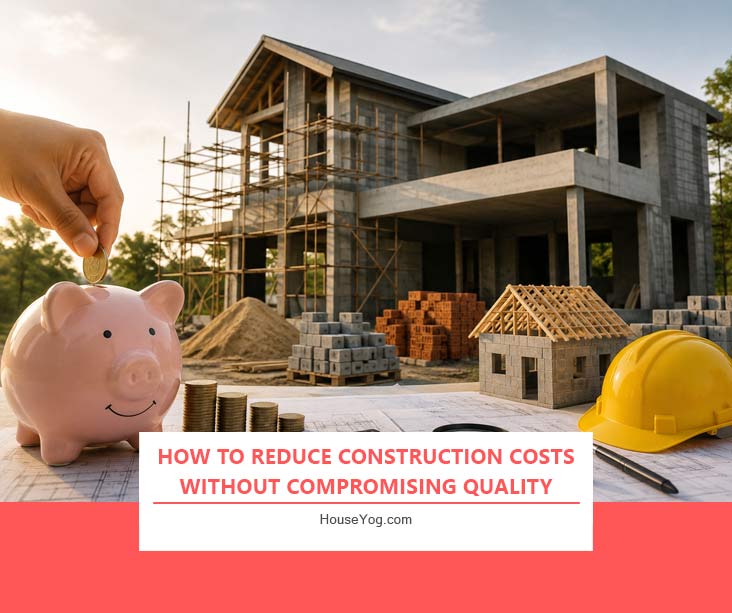

Building a house is expensive, but cutting corners can cost even more.
For most families, building a house is one of the biggest financial decisions they will ever make.
Unfortunately, construction costs rarely stay exactly where homeowners expect them to. A slightly larger floor plan, a design change during construction, material wastage, or poor planning can easily add several lakh rupees to the final budget.
When costs start rising, many homeowners make the same mistake: they try to reduce expenses by choosing cheaper materials or skipping important construction activities.
In most cases, this approach creates even bigger problems.
Low-quality materials can lead to structural issues, water seepage, cracks, higher maintenance costs, and expensive repairs in the future.
The smarter approach is to reduce waste, improve planning, optimise the design, and spend money where it delivers the greatest value.
As architects, we often tell homeowners that reducing construction costs does not mean building a cheaper house. It means building a better-planned house.
Here are 10 practical and architect-approved ways to reduce construction costs without compromising quality.
1. Finalise the Design Before Construction Begins
One of the biggest reasons for cost overruns is changing the design after construction has already started.
Moving a wall, enlarging a bedroom, changing the staircase design, or adding a balcony may seem like a small modification. However, these changes often affect multiple aspects of construction, including:
- Brickwork
- Electrical wiring
- Plumbing
- Flooring
- Structural elements
Every change increases labour and material costs.
Before construction begins, finalise:
- Floor plans
- Elevation design
- Structural drawings
- Electrical layouts
- Plumbing layouts
The fewer changes you make during construction, the easier it becomes to stay within budget.
2. Build Only the Space You Actually Need
Many homeowners believe that a larger house automatically means a better house.
That is not always true.
Every additional square foot increases the cost of:
- Excavation
- Foundation work
- Brickwork
- Concrete
- Flooring
- Painting
- Electrical work
For example, increasing the built-up area from 1,200 sq. ft. to 1,500 sq. ft. can significantly increase your overall construction budget. Increasing the built-up area by just 300 sq. ft. can add ₹6-9 lakh or more to the overall construction cost, depending on the city, specifications, and material choices.
Instead of building extra rooms that may remain unused, focus on efficient space planning.
Ask yourself:
- Do you really need a separate guest room?
- Can the study room double as a home office?
- Can you reduce unnecessary corridors?
A well-designed 1,400 sq. ft. house often functions better than a poorly planned 1,800 sq. ft. house.
3. Prepare a Detailed Construction Budget
Starting construction without a budget is like starting a journey without a map.
Before construction begins, prepare a detailed estimate that includes:
- Civil work
- Steel
- Cement
- Sand
- Aggregate
- Electrical work
- Plumbing
- Flooring
- Doors and windows
- Painting
Many homeowners only calculate the structural cost and forget finishing expenses.
As a result, they exceed their budget halfway through the project.
If you are planning to build a house, our guide on house construction cost in India can help you estimate your budget more accurately and avoid unpleasant surprises later.
4. Estimate Building Materials Correctly
Material wastage is one of the most common reasons construction costs increase.
Over-ordering leads to unnecessary expenses, while under-ordering causes delays and additional transportation costs.
Before purchasing materials, estimate the required quantities carefully.
Pay particular attention to:
- Cement
- Steel
- Sand
- Aggregate
- Bricks
Using material estimation tools can help reduce waste and improve cost control.
You can also refer to our detailed guides on sand required for house construction and aggregate required for house construction to estimate material requirements more accurately.
5. Buy Quality Materials Instead of Cheap Materials
There is a difference between reducing costs and buying the cheapest materials available.
Choosing low-quality materials may reduce your expenses today, but it often increases maintenance and repair costs in the future.
Instead of buying the cheapest products, focus on value.
Prioritise quality in:
- Cement
- Steel
- Waterproofing products
- Electrical materials
- Plumbing fittings
Our detailed construction material buying guide can help you check the quality and quantity of materials.
For finishes such as tiles, paint, and decorative elements, you can often choose more economical alternatives without affecting the structural quality of your home.
Remember: structural materials should never be compromised.
6. Choose Local and Readily Available Materials Whenever Possible
Imported materials often increase costs because of:
- Transportation charges
- Longer delivery times
- Limited availability
- Higher maintenance expenses
Whenever possible, choose locally available materials that meet quality standards.
For example:
- Locally manufactured vitrified tiles instead of imported marble
- Fly ash bricks instead of expensive alternatives
- Regional stone for landscaping
Local materials often provide better value without compromising durability.
7. Reduce Material Waste on the Construction Site
Many homeowners underestimate how much money is lost through material wastage.
Simple site management practices can make a significant difference.
For example:
- Store cement in a dry, covered area.
- Protect steel from rust and corrosion.
- Stack bricks properly.
- Cover sand and aggregates during heavy rain.
- Purchase materials in phases instead of ordering everything at once.
Small improvements in material handling can save thousands of rupees during construction.
8. Invest in Energy-Efficient Features
Some upgrades may increase your initial investment slightly, but they can significantly reduce long-term operating costs.
Consider investing in:
- Better insulation
- Energy-efficient windows
- LED lighting
- Solar water heaters
- Reflective roofing materials
These features reduce electricity consumption and lower maintenance expenses over time.
A house should not only be affordable to build. It should also be affordable to maintain.
9. Plan Exterior Access and Garage Systems Carefully
Many homeowners focus on interiors and overlook exterior systems until the very end of the project.
However, gates, driveways, garages, and access systems should be considered during the planning stage.
Poorly designed exterior access can result in expensive modifications later.
If your home includes a garage, consider the entire access system rather than treating it as a separate component. In some cases, consulting a reliable garage door repair specialist can help you upgrade older garage systems while improving security, insulation, and long-term performance.
10. Work With an Architect From the Beginning
Some homeowners avoid hiring an architect because they believe it will increase construction costs.
In reality, the opposite is often true.
An architect can help you:
- Optimize space
- Reduce material wastage
- Improve structural efficiency
- Avoid unnecessary changes
- Plan services properly
- Select cost-effective materials
The goal is not simply to build a house.
The goal is to build the right house within your budget.
Professional planning almost always costs less than fixing mistakes after construction begins.
FAQs
Focus on better planning, efficient design, accurate material estimation, and waste reduction rather than choosing cheaper materials.
Design changes during construction are one of the most common reasons projects exceed their budgets.
No. Low-quality materials often increase maintenance and repair costs in the long run.
Good planning can reduce construction costs by 10-15% in many cases by minimising waste, avoiding design changes, and improving material management.
Not necessarily. Architects often help homeowners save money through better space planning, material selection, and project coordination.
Final Thoughts
Reducing construction costs does not mean sacrificing quality.
The secret is to focus on smarter planning rather than cheaper construction.
Finalise your design early, estimate materials accurately, reduce waste, and invest in quality where it matters most.
A well-planned home is almost always more affordable than a poorly planned one.
And if there is one lesson architects repeatedly share with homeowners, it is this: every rupee you spend on planning can save several rupees during construction.