When you decide to build your own house, one of the first big questions is – how much plot size do you actually need?
Most people start by thinking in square feet. A 1200 sq ft plot sounds decent, a 1500 sq ft plot sounds better. But very quickly, confusion starts to creep in.
That’s because the same plot area can lead to completely different house layouts.
A 1200 sq ft plot can feel spacious in one case and cramped in another. Some homes feel open and well-planned, while others feel tight despite having a similar area.
The reason is simple. Plot size is not just about area. It directly affects your room layout, ventilation, parking, staircase placement, and overall comfort.
In this guide, you’ll get a clear understanding of:
Minimum vs ideal plot sizes
How much space do you actually need for 2BHK, 3BHK, and 4BHK homes
Why width, depth, and proportion matter more than you think
By the end, you’ll be able to make a practical and confident decision before buying or planning your house.
Before deciding the plot size, it’s important to understand what you are actually getting when you buy land.
Many people assume that if they purchase a 1200 sq ft plot, they will be able to build a 1200 sq ft house. In reality, the usable built-up area is always less.
This happens because a portion of your plot is used for essential planning requirements. Local building rules require setbacks, which means you need to leave space around the building for light, ventilation, and safety. Apart from that, space is also used for parking, entry movement, and in many cases, a staircase for upper floors.
As a result, the actual usable built-up area is reduced.
For example, on a 1200 sq ft plot, your ground floor construction may realistically fall in the range of 700 to 900 sq ft, depending on the design and local rules.
This is why choosing the right plot size is not just about numbers. It is about understanding how much usable space you will actually get for your home.
Understanding these basics becomes even more important when you are evaluating different land options. You can also refer to our complete guide to buying a residential plot in India to avoid common mistakes during purchase.
Minimum vs Ideal Plot Size (Quick Answer)
If you are looking for a quick guideline, here is a practical reference based on our practical experience of designing typical Indian house plans:
House Type
Minimum Plot Size
Ideal Plot Size
2BHK
600–900 sq ft
900–1200 sq ft
3BHK
1200–1500 sq ft
1500–2000 sq ft
4BHK
2000+ sq ft
2400+ sq ft
The minimum plot size allows you to fit the required number of rooms, but usually with compromises in room size, ventilation, or parking.
The ideal plot size, on the other hand, gives you better proportions, smoother circulation, and more flexibility in planning.
A useful benchmark to remember is this: A 3BHK house in India typically requires a plot size of 1200–1800 sq ft, with at least 30 ft frontage for comfortable planning.
Ideal Plot Size for 2BHK House in India
If you are planning a compact home, a 2BHK is often the starting point, especially for small families looking for budget-conscious construction.
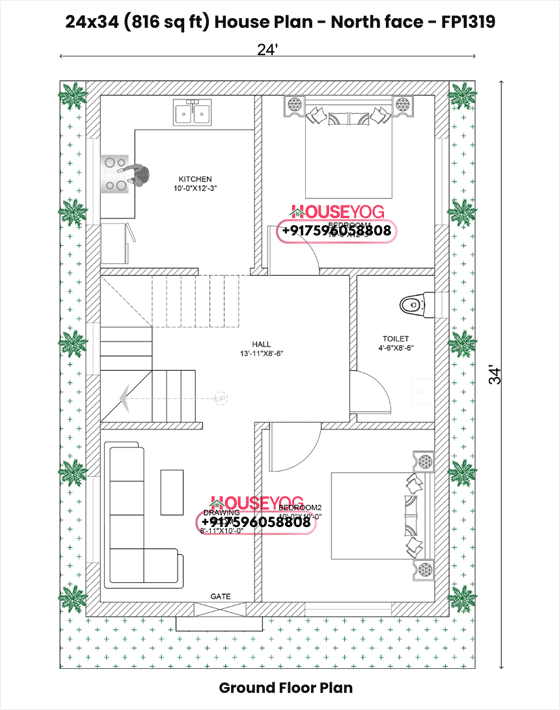
A 2BHK can be designed on a plot of around 600 to 900 sq ft, but this usually comes with certain limitations. While you can fit two bedrooms, a small living space, and a kitchen, the layout tends to feel tight. Rooms may be smaller than ideal, and in many cases, parking either becomes difficult or has to be adjusted within the available space.
Ventilation is another common issue in smaller plots. When the width is limited, rooms may not get enough natural light or airflow, which affects comfort in the long run.
If you want a more balanced and comfortable layout, a plot size of 900 to 1200 sq ft works much better. This allows slightly larger rooms, better movement within the house, and the possibility of including a small parking area without disturbing the internal layout.
In smaller plots, the efficiency of planning matters more than the total area. A well-designed layout can make a noticeable difference.
Plot Size for 3BHK House in India
The 3BHK layout is the most common requirement today, especially for growing families. However, this is also where many people underestimate the importance of plot size.
A 3BHK is not just about adding one more bedroom. It requires a proper balance between living space, circulation, and privacy.
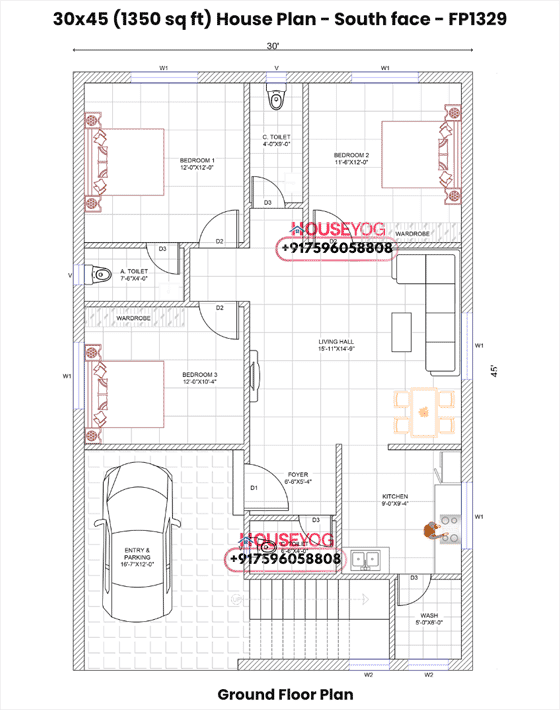
You can plan a basic 3BHK on a plot of 1200 to 1500 sq ft, but the design may feel slightly compact. Rooms might be tighter, and parking spaces may not be as comfortable as expected.
For a more practical and comfortable layout, a plot size of 1500 to 2000 sq ft is recommended. This allows you to properly accommodate a living room, three bedrooms, a functional kitchen, and dedicated parking without excessive compromise.
One critical factor that often gets ignored is plot width.
A comfortable 3BHK typically needs at least 30 ft frontage.
This is because multiple spaces, such as the living room, staircase, and bedrooms, need to be arranged side by side. If the width is insufficient, the layout becomes restrictive.
In fact, in many cases, plot width matters more than total area when designing a house.
If you are considering this configuration, you can explore some practical layout ideas in our 30×40 house plans collection, which is one of the most common plot sizes for compact 3BHK homes in India.
Plot Size for 4BHK House in India
Planning a 4BHK house requires a different level of space planning. It is not just about fitting more rooms, but also about ensuring smooth movement and privacy within the house.
A 4BHK can be planned on a plot of 2000 sq ft or more, especially if you are building a duplex or multi-floor house. However, if you are looking for a spacious and comfortable layout, a plot size of 2400 sq ft and above is more suitable.
With larger homes, circulation space becomes important. You need enough area for staircases, passages, and common areas so that the house does not feel congested.
Another important point is the number of floors. A single-floor 4BHK requires a significantly larger plot, while a duplex can accommodate the same requirement more efficiently within a smaller footprint.
Because of this complexity, planning decisions for a 4BHK plan layout should ideally be made early, before finalising the plot.
Why Plot Width (Frontage) Matters More Than Total Area
One of the most important yet overlooked aspects of plot selection is frontage, or width.
To understand this, consider two plots:
30 x 40 (1200 sq ft)
20 x 60 (1200 sq ft)
Both have the same area, but the usability is completely different.
In a narrow plot with 20 ft width, rooms tend to become long and narrow. This affects furniture placement, reduces natural light, and limits cross ventilation. The house may feel dark and constrained even if the total area is sufficient.
In contrast, a wider plot of 30 ft or more allows better room proportions. You can design spaces side by side, create openings on multiple sides, and achieve better airflow and lighting.
This is why a key principle in house planning is: Wider plots offer better design flexibility and more comfortable living compared to narrow, deep plots.
Common Plot Sizes in India (With Practical Use Cases)
In India, certain plot sizes are widely used, and each comes with its own planning possibilities.
A 20 x 30 plot (600 sq ft) is typically suitable for a compact 1BHK or a very tight 2BHK. These plots are more common in dense urban areas where space is limited. You can explore 20 x 30 house plans to get some layout ideas for these plots.
A 30 x 40 plot (1200 sq ft) is one of the most popular choices. It is often considered the minimum practical size for a compact 3BHK.
A 30 x 50 plot (1500 sq ft) provides more flexibility and allows a more comfortable 3BHK layout with better room sizes and circulation.
A 40 x 60 plot (2400 sq ft) is ideal for larger homes. It works well for 4BHK layouts or spacious 3BHK designs with additional features like larger living areas or multiple parking spaces.
Among these, the 30×40 and 30×50 plots are especially popular because they offer a good balance between affordability and usability. If you are evaluating such options, it’s helpful to understand layout possibilities before finalising your decision.
Ideal Plot Size Ratio for House Planning
Apart from area and width, the proportion of the plot also plays an important role.
An ideal plot usually follows a width-to-depth ratio between 1:1.5 and 1:2. This proportion helps in creating balanced layouts where rooms receive proper light and ventilation.
When the plot becomes too narrow and deep, it becomes difficult to distribute spaces efficiently. Rooms may end up with limited openings, which affects airflow and natural lighting.
Plot proportion also affects how comfortably you can plan room sizes. For a better understanding of space requirements inside the house, you can refer to our guide on minimum room size standards in India.
A well-proportioned plot makes planning easier and improves the overall living experience.
Factors That Decide the Right Plot Size for You
The ideal plot size is not the same for everyone. It depends on your specific space needs and plans.
The number of family members will influence how many bedrooms you need.
Your budget will determine how much you can invest not only in the plot but also in construction.
The number of floors you plan to build will affect how much area you need on the ground.
Parking is another important factor, especially in urban areas where space is limited.
You should also think about future expansion, such as adding another floor or modifying the layout later.
Taking a slightly long-term view, around 5 to 10 years, helps in making a more practical decision.
Common Mistakes People Make While Choosing Plot Size
Many people finalise a plot based on immediate affordability, without fully considering how it will affect their house design.
One common mistake is focusing only on the total area while ignoring the plot width. This often leads to awkward layouts that are difficult to use.
Another issue is not planning for parking in advance. In many cases, homeowners realise later that the available space is not sufficient for comfortable vehicle movement.
Overestimating usable space is also very common. A plot may look large on paper, but once setbacks and circulation are considered, the actual usable area becomes much smaller.
Avoiding these mistakes can save you from major design compromises later.
Vastu Considerations for Plot Size (Optional)
For those who follow Vastu principles, plot shape and proportion are often considered important.
Regular shapes, such as square or rectangular plots, are generally preferred because they are easier to plan and balance. Extremely narrow or irregular plots can make both Vastu compliance and practical planning more difficult.
At the same time, it is important to maintain a practical approach. A well-designed layout with good light and ventilation should always remain the priority.
If you want to go deeper into Vastu-based selection, you can also explore our detailed guide on Vastu tips for selecting a plot, which explains direction, shape, and placement in more detail.
How to Choose the Right Plot Size (Step-by-Step)
If you are still unsure, you can simplify your decision by following a structured approach.
Start by deciding how many bedrooms you need, as this directly determines your space requirement. Then consider whether you want a single-floor house or a multi-floor design, as this affects how much area you need on the ground.
Next, check the required frontage. A 2BHK can work within 20 to 25 ft width, while a 3BHK typically needs around 30 ft or more. Larger homes like 4BHK benefit from even wider plots.
Finally, align your choice with your budget, keeping in mind both land cost and construction cost.
Final Thoughts
Choosing the right plot size is one of the most important decisions in your home-building journey.
It influences your layout, your comfort, and your ability to adapt the house in the future.
A well-chosen plot makes design easier. A poorly chosen one creates limitations that are difficult to fix later.
So before you finalise your land purchase, take the time to plan properly.If you’re unsure what plot size will work best for your needs, our architectural team at Houseyog can help you plan the right layout based on your plot and requirements. You can also explore our house design collections to get a better idea of how different plot sizes translate into actual designs.