
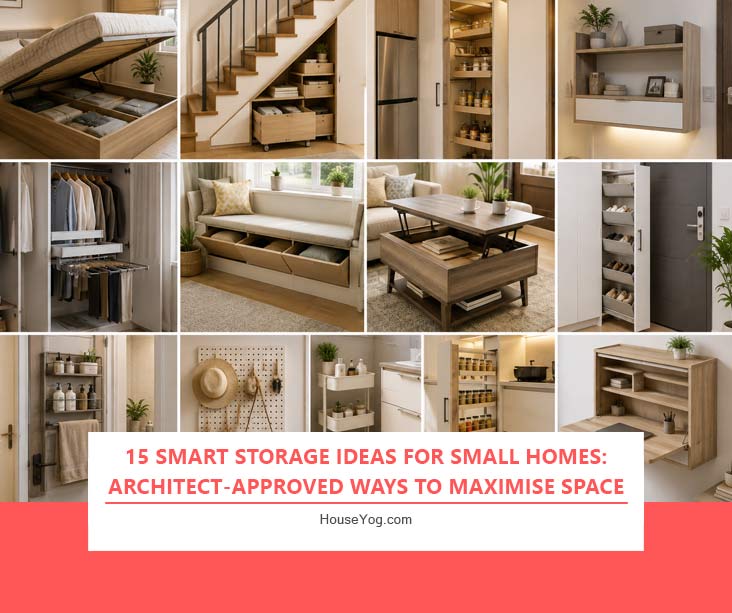

Does your home always feel cluttered, no matter how often you clean it?
You’re not alone.
For most homes, the problem isn’t a lack of space. It’s a lack of smart storage.
Shoes pile up near the entrance. Kitchen counters disappear under jars and appliances. Wardrobes overflow with clothes. Children’s toys slowly take over the living room. Before long, even a reasonably sized home starts to feel cramped.
The good news is that you don’t necessarily need a larger house.
As architects, we’ve found that even small design changes can dramatically improve storage and make a home feel larger, more organised, and easier to live in.
Whether you live in a compact 2BHK apartment in Kolkata, a duplex in Patna, or an independent house in Ranchi, these smart storage ideas can help you make better use of every square foot.
How Architects Maximise Storage in Small Homes
Architects rarely solve storage problems by simply adding more cupboards. Instead, they focus on using space more efficiently through better layouts, built-in storage, vertical design, and multifunctional furniture.
Many of these ideas can be incorporated into both existing homes and new construction projects.
Let’s look at some of the most effective solutions.
1. Use Vertical Space Instead of Expanding Outwards
When floor space is limited, look up.
Most homes have large, unused wall areas that can be converted into practical storage.
Consider adding:
- Floating shelves
- Floor-to-ceiling bookcases
- Wall-mounted cabinets
- Open shelving in the kitchen
Vertical storage frees up valuable floor space while making rooms feel more organised.
Architect’s tip: In smaller homes, we often recommend extending wardrobes and cabinets all the way to the ceiling. The upper sections can be used to store seasonal items, suitcases, festival decorations, and rarely used household items.
2. Invest in Furniture That Does More Than One Job
Multifunctional furniture is one of the easiest ways to increase storage without adding extra cabinets.
Look for furniture that combines comfort with hidden storage, such as:
- Beds with storage drawers
- Ottomans with lift-up compartments
- Dining benches with storage
- Coffee tables with shelves
- Foldable study tables
This approach works particularly well in apartments where every square foot matters.
3. Turn the Space Under the Bed Into Valuable Storage
The area under the bed is often one of the most underused spaces in a home.
Instead of leaving it empty, use it to store:
- Extra bedding
- Winter clothing
- Suitcases
- Children’s toys
- Seasonal decorations
Hydraulic storage beds are especially popular in Indian homes because they provide a large storage area without increasing the room’s footprint.
4. Design a Smarter Kitchen Instead of a Bigger Kitchen
A larger kitchen doesn’t automatically mean better storage.
In fact, a well-designed compact kitchen often functions much better than a larger but poorly planned one.
Consider adding:
- Pull-out pantry units
- Corner storage systems
- Drawer organisers
- Wall-mounted spice racks
- Overhead cabinets
In many Indian kitchens, pressure cookers, spice containers, large utensils, and monthly grocery supplies can quickly occupy valuable counter space. Smart cabinet planning can help keep these items organised.
If you’re building a new home, proper kitchen planning should begin during the design stage rather than after construction is complete.
5. Create a Dedicated Entryway Storage Zone
The entrance is often one of the most cluttered areas in a home.
Shoes, keys, bags, umbrellas, helmets, and courier packages can quickly create chaos.
A simple entryway storage system can include:
- Shoe cabinets
- Wall hooks
- Key holders
- Small storage benches
Giving everyday items a designated place can immediately make your home feel more organised.
6. Add Storage Above Doorways
Most homeowners completely overlook the area above doors.
However, these spaces can be transformed into practical storage areas.
Consider installing small cabinets above:
- Bedroom doors
- Bathroom doors
- Utility room entrances
These areas are perfect for storing items that aren’t used every day.
7. Make Better Use of Corners
Corners are frequently wasted in home design.
However, they can become surprisingly useful storage spaces.
Consider using:
- Corner bookshelves
- Corner cabinets
- Rotating kitchen units
- L-shaped shelving
Even awkward corners can become functional with the right design approach.
8. Build Storage Into Staircases
If you live in a duplex or a multi-storey home, the space under the staircase offers enormous storage potential.
You can use it for:
- Bookshelves
- Closed cabinets
- Shoe storage
- Study areas
- Utility storage
We’ve used this approach in several duplex house designs, and it’s one of the most effective ways to maximise unused space.
If you’re still in the planning stage, exploring professionally designed house plans can help you identify storage opportunities before construction begins.
9. Install Built-In Wardrobes Instead of Freestanding Furniture
Freestanding wardrobes often leave gaps that waste valuable space.
Built-in wardrobes offer several advantages:
- Better space utilisation
- A cleaner appearance
- More storage capacity
- Better room organisation
Floor-to-ceiling wardrobes are particularly effective in smaller bedrooms.
They’re also ideal for storing sarees, blankets, luggage, and seasonal clothing.
10. Use Wall-Mounted Storage in Bathrooms
Bathrooms are usually among the smallest rooms in a house, which makes efficient storage even more important.
Instead of using floor-standing cabinets, consider:
- Floating shelves
- Recessed niches
- Mirror cabinets
- Wall-mounted organisers
These additions help keep toiletries organised while making the bathroom feel larger.
11. Create Hidden Storage Wherever Possible
Some of the best storage solutions are the ones you can’t immediately see.
Hidden storage can be incorporated into:
- Window seats
- TV units
- Staircases
- Beds
- Benches
Custom-designed furniture often provides significantly more storage than ready-made alternatives.
If you’re planning a new home, our guide to small house plans can help you understand how storage can be integrated directly into the layout rather than added later.
12. Organise Children’s Rooms With Flexible Storage
Children’s rooms become cluttered very quickly.
Toys, books, school bags, sports equipment, and art supplies can easily overwhelm a room.
Instead of relying on a single wardrobe, create multiple storage zones.
Use:
- Storage bins
- Open shelves
- Labelled baskets
- Under-bed drawers
Flexible storage systems can adapt as your children grow.
13. Don’t Ignore Balcony Storage
Balconies are often treated as decorative spaces, but they can also provide valuable storage.
Weather-resistant storage benches can hold:
- Gardening tools
- Cleaning supplies
- Plant accessories
- Outdoor cushions
This approach works particularly well in urban apartments where balconies often serve as both relaxation areas and utility spaces.
But just be careful not to overcrowd the area.
The goal is to maintain both functionality and openness.
14. Declutter Before Adding More Storage
Adding more cabinets won’t solve a clutter problem if you’re storing things you no longer use.
Before investing in new storage solutions, ask yourself:
- Have I used this item in the last year?
- Do I really need it?
- Can I donate it?
- Can I recycle it?
Sometimes, removing unnecessary items creates more usable space than installing additional storage.
15. Think About Storage During the Design Stage
This is probably the most important piece of advice architects give homeowners.
Don’t think about storage after your home is built.
Think about it while you’re designing it.
When we design homes, we plan for:
- Wardrobe locations
- Kitchen storage
- Utility spaces
- Linen storage
- Staircase storage
- Loft spaces
- Entryway storage
Good storage isn’t added later.
It’s built into the architecture itself.
The earlier you plan for it, the easier it becomes to create a home that feels spacious, organised, and comfortable.
Frequently Asked Questions
Use vertical storage, multifunctional furniture, built-in cabinets, and hidden storage solutions to maximise available space.
Multifunctional furniture, floor-to-ceiling storage, and custom-built cabinets usually provide the best results.
Start by removing items you no longer use, then assign a dedicated storage space to everything you keep.
In smaller homes, custom storage often uses available space more efficiently than standard furniture.
Absolutely. Planning storage during the design phase is far more effective and less expensive than adding it later.
Final Thoughts
Smart storage isn’t about adding more cupboards.
It’s about designing a home that works better for the people living in it.
Small improvements such as vertical shelving, hidden storage, multifunctional furniture, and better kitchen planning can completely transform how your home feels.
And don’t forget spaces that are often overlooked. Garages, for example, can become valuable storage areas for tools, seasonal items, sports equipment, and household supplies. If you’re looking for ideas to organise these spaces more effectively, exploring different garage storage solutions can be helpful.
Remember, a well-designed home doesn’t always have to be bigger.
Sometimes, it simply needs to be planned more intelligently.