
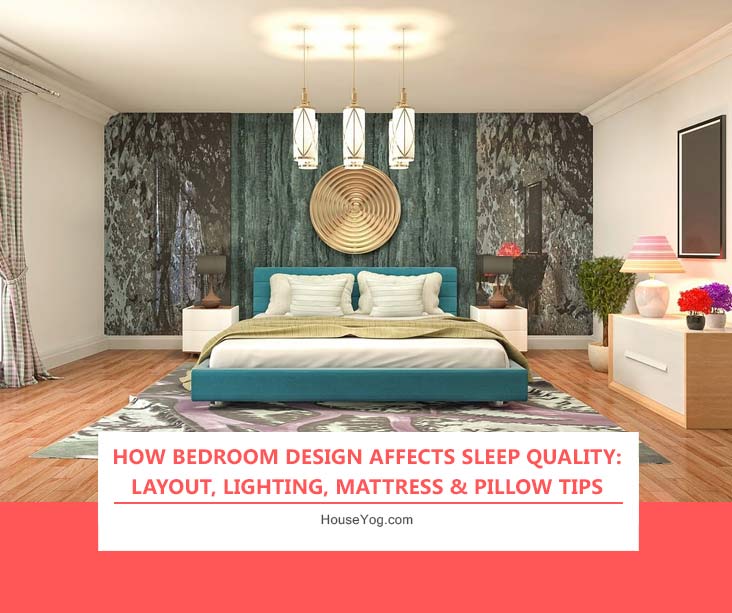

The overall bedroom environment plays a much bigger role in sleep quality than many people realise. Factors such as room layout, lighting, ventilation, temperature, and bedding all influence how comfortable and relaxing a bedroom feels.
A poorly planned room with harsh lighting, cluttered furniture, or poor airflow can make it difficult to unwind at the end of the day. On the other hand, a thoughtfully designed bedroom creates a calm atmosphere that helps the body relax and prepare for rest.
This is why bedroom design for better sleep is an important aspect of home planning. Research shows that the bedroom environment, including lighting conditions, temperature, and comfort, can significantly affect sleep quality and overall well-being.
In this article, we’ll explore practical design ideas related to layout, lighting, ventilation, mattress support, and bedroom organisation that can help you create a more comfortable and sleep-friendly bedroom environment.
If you are planning a new home or renovating an existing one, thoughtful interior planning can make a big difference in how comfortable your spaces feel. Exploring different layout ideas and professional design guidance through Houseyog’s interior design services can also help create a bedroom that is both functional and relaxing.
Why Bedroom Design Matters for Good Sleep
Research shows that the bedroom environment, including lighting, temperature, and comfort, can significantly affect sleep quality and overall well-being.
A well-planned bedroom sleep environment reduces disturbances and supports the body’s natural sleep cycle.
Some of the key design elements that affect sleep include:
- Lighting conditions – Bright or harsh lighting can interfere with the body’s natural circadian rhythm.
- Noise and distractions – A cluttered or busy room can make it harder for the mind to relax.
- Room layout – Poor furniture placement can make the space feel cramped or uncomfortable.
- Ventilation and temperature – Fresh air and comfortable temperature levels help the body rest more easily.
- Mattress and pillow support – Proper spinal alignment is essential for restful sleep.
When these elements are thoughtfully planned, the bedroom becomes a quiet and comfortable retreat rather than just another room in the house.
Good bedroom design, therefore, focuses not only on aesthetics but also on comfort, usability, and relaxation.

Choosing the Right Bedroom Layout
The layout of a bedroom has a significant impact on how comfortable and functional the space feels. A well-organised layout creates visual balance and allows easy movement within the room.
Bed Placement
The bed is the focal point of any bedroom, and its placement should allow both comfort and symmetry.
Common layout practices include:
- Positioning the bed against a solid wall for support
- Avoiding placement directly in front of the door
- Keeping both sides of the bed accessible where possible
- Aligning the bed so the room feels visually balanced
Proper bed placement makes the bedroom feel stable and organised.
Circulation Space
Adequate circulation space around the bed improves both comfort and usability.
Ideally, bedrooms should allow:
- Walking space on at least one or two sides of the bed
- Comfortable access to wardrobes and windows
- Enough clearance for bedside tables and lighting
When circulation space is limited, even a large bedroom can feel cramped.
While comfort is important, planning the right room size is equally critical. When designing your bedroom layout, it helps to understand the standard bedroom size in India to ensure enough space for furniture and easy movement.
Clutter-Free Design
Too much furniture can make a bedroom feel crowded and stressful.
For a sleep-friendly bedroom design, consider:
- Limiting furniture to essential items
- Using built-in wardrobes where possible
- Avoiding bulky décor near the bed
- Keeping surfaces clean and organised
A simple and uncluttered layout creates a calm and relaxing environment that promotes better sleep.
If you are looking for inspiration while planning your bedroom layout, exploring curated interior design ideas can help you visualise different furniture arrangements, lighting concepts, and bedroom styles that improve comfort and usability.
Architect Tip: Designing a Bedroom for Long-Term Comfort
When we design bedrooms for homeowners, we usually focus on more than just the bed placement. Small design decisions — such as window positioning, natural light control, and circulation space — can significantly affect how comfortable the room feels over time.
For example, placing the bed so that you can see the door without being directly aligned with it often creates a sense of visual comfort and balance. Similarly, leaving adequate space around the bed makes daily use easier and prevents the room from feeling cramped.
These small planning details may seem minor during design, but they play a major role in creating a truly comfortable bedroom environment.
Bedroom Design for Better Sleep: Lighting Matters
Lighting plays a crucial role in regulating the body’s natural sleep cycle. Good bedroom lighting for sleep should create a calm environment in the evening while providing sufficient brightness for daily activities.
Designing bedroom lighting for sleep requires a combination of functional and relaxing lighting options.
Recommended Bedroom Lighting Options for Better Sleep
| Lighting Type | Best Use in the Bedroom | Why It Helps Sleep |
| Warm ambient lighting | General evening lighting | Creates a relaxing atmosphere and supports the body’s natural sleep rhythm |
| Bedside lamps | Reading or soft lighting before sleep | Provides focused light without illuminating the entire room |
| Wall-mounted reading lights | Bedside task lighting | Saves space and keeps lighting directed where needed |
| Dimmable lighting | Adjusting brightness at night | Allows gradual reduction of light before bedtime |
| Blackout curtains or blinds | Blocking external light | Helps maintain a dark environment that improves sleep quality |
Some practical lighting tips include:
Use Warm Lighting
Warm light tones help create a relaxing atmosphere in the evening.
Soft yellow lighting is generally more comfortable than bright white LED lights for nighttime use.
Avoid Harsh Ceiling Lights at Night
Bright ceiling lights can make the room feel overly stimulating before bedtime.
Instead, consider using:
- Bedside lamps
- Wall-mounted reading lights
- Low-intensity ambient lighting
Install Dimmable Lights
Dimmable lighting allows you to gradually reduce brightness in the evening, helping the body transition into sleep mode.
Use Blackout Curtains or Blinds
External light from street lamps or early morning sunlight can disrupt sleep.
Blackout curtains help:
- Block unwanted outside light
- Create a darker sleeping environment
- Improve overall sleep quality
Soft, adjustable lighting is an important element of a comfortable bedroom design.
Temperature and Ventilation
Airflow and temperature control are often overlooked when planning bedrooms, yet they play a major role in sleep comfort.
Good bedroom ventilation also depends on proper window planning and room orientation during the architectural design stage.
A bedroom that feels hot, stuffy, or poorly ventilated can make it difficult to fall asleep or stay asleep.
Natural Ventilation
Proper window placement allows fresh air to circulate inside the room.
Well-designed bedrooms typically include:
- windows placed on exterior walls
- openings that allow natural air movement
- adequate daylight during the day
Cross Ventilation
Cross ventilation occurs when air flows between two openings in different walls.
This improves air circulation and helps maintain a fresher indoor environment.
Ceiling Fans vs Air Conditioners
Both cooling options have their advantages:
Ceiling fans
- Promote air circulation
- Consume less energy
- Maintain natural airflow
Air conditioners
- Provide precise temperature control
- Help during extremely hot weather
- Reduce humidity levels
Many homeowners use a combination of both depending on seasonal conditions.
Comfortable Sleeping Temperature
Most people sleep best in a slightly cool environment.
Maintaining a comfortable indoor temperature and fresh airflow helps create a more relaxing bedroom sleep environment.
Mattress and Pillow Support for Neck and Spine
Even the most beautifully designed bedroom cannot provide restful sleep if the mattress and pillows do not support the body properly.
Proper spinal alignment is essential for good and healthy sleep.
Mattress Firmness
Mattresses are generally available in different firmness levels:
- Soft
- Medium
- Firm
The ideal choice depends on body weight, sleeping position, and personal comfort preference.
A mattress that is too soft may cause the body to sink unevenly, while one that is too firm may create pressure points.
Spine Alignment
During sleep, the spine should remain in a neutral position.
A supportive mattress helps distribute body weight evenly and reduces strain on the back.
Pillow Support
Pillows also play an important role in sleep posture.
A supportive mattress and ergonomic pillow help maintain proper neck alignment during sleep.
When choosing pillows, consider:
- sleeping position (side, back, or stomach)
- neck height and shoulder width
- firmness preference
Together, the mattress and pillow contribute significantly to a comfortable bedroom design that supports good sleep.
Vastu Direction for Better Sleep (Optional Consideration)
In India, many homeowners also consider traditional Vastu principles when planning bedroom layouts.
While these guidelines are not mandatory, our architects at Houseyog often incorporate basic Vastu recommendations when designing residential homes, especially when clients prefer Vastu-compliant layouts.
Some commonly suggested Vastu practices for bedrooms include:
- Sleeping with the head towards the south or east
- Avoiding mirrors placed directly facing the bed
- Keeping the bedroom clean, organised, and uncluttered
- Placing heavier furniture along the south or west walls
These practices are traditionally believed to create a more balanced and peaceful sleeping environment.
For homeowners who value Vastu principles, these considerations can easily be integrated during the bedroom planning stage without significantly affecting the overall design.
Common Bedroom Design Mistakes That Affect Sleep
Even small design mistakes can negatively affect the bedroom environment and reduce sleep quality.
Some common issues include:
Overly Bright Lighting
Excessively bright lighting can make it difficult for the body to relax at night.
Soft and adjustable lighting is usually more comfortable.
Poor Ventilation
A room without adequate airflow can feel warm and uncomfortable, leading to disturbed sleep.
Cluttered Furniture Layout
Too many furniture pieces can create visual stress and limit movement within the room.
Incorrect Bed Placement
Beds placed awkwardly near doors, windows, or tight corners can reduce comfort and accessibility.
Lack of Light Control
Without curtains or blinds, outside light may enter the room and interrupt sleep.
Using the Bedroom as a Workspace
Working, studying, or watching TV in bed can make the brain associate the bedroom with activity rather than rest.
Ideally, the bedroom should be a calm space dedicated mainly to relaxation and sleep.
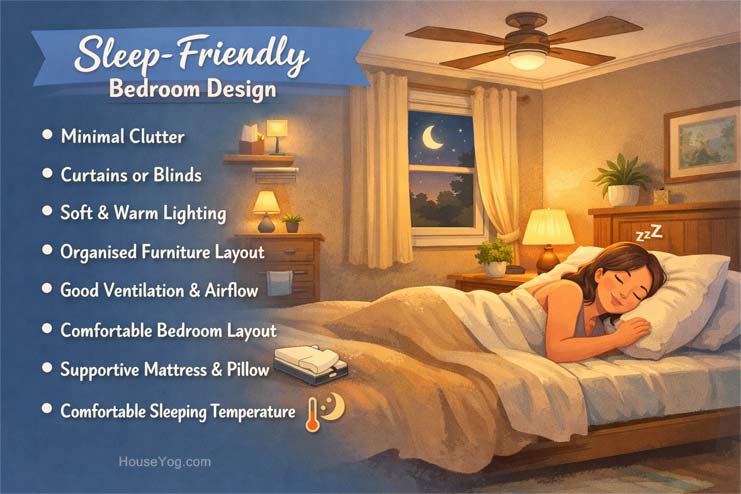
Key Elements of a Sleep-Friendly Bedroom Design
Creating a comfortable bedroom environment does not always require major renovations. Small design improvements can significantly enhance sleep quality.
Here are some important elements of a sleep-friendly bedroom design:
- Comfortable bedroom layout with adequate circulation space
- Soft and warm lighting that supports relaxation in the evening
- Good ventilation and airflow to maintain fresh indoor air
- Comfortable sleeping temperature through fans or air conditioning
- Supportive mattress and pillow for proper neck and spine alignment
- Minimal clutter and organised furniture layout
- Curtains or blinds to control outside light
When these elements are combined, the bedroom becomes a calm and comfortable space that naturally supports better sleep.
FAQs About Bedroom Design for Better Sleep
An ideal bedroom design for better sleep focuses on comfort, calm lighting, proper ventilation, and minimal distractions. A well-organised layout, supportive mattress, and soft lighting can help create a relaxing bedroom environment that supports better sleep.
Warm and soft lighting is generally better for bedrooms. Bedside lamps, wall lights, or dimmable lighting help create a relaxing atmosphere and reduce harsh brightness before bedtime.
Yes, the layout of a bedroom can influence how comfortable and relaxing the space feels. Adequate circulation space, balanced furniture placement, and a clutter-free environment help create a more peaceful bedroom setting.
Most people sleep comfortably in a slightly cool environment. Proper ventilation, ceiling fans, or air conditioning can help maintain a comfortable temperature that supports better sleep.
Mattress and pillow support are essential for maintaining proper spinal alignment during sleep. A supportive mattress and ergonomic pillow help reduce strain on the neck and back, improving overall sleep comfort.
Yes, bedroom colours can influence how relaxing a space feels. Soft and neutral colours such as light grey, beige, soft blue, or warm earth tones often create a calming atmosphere that supports relaxation and better sleep. Bright or overly stimulating colours may make the bedroom feel more active rather than restful.
Conclusion
Good sleep depends on much more than just a comfortable mattress. The overall bedroom environment plays an equally important role in how well you rest at night.
Thoughtful bedroom design for better sleep involves multiple elements working together, from layout and lighting to ventilation, beddings, curtains and pillows.
A well-planned bedroom layout ensures comfortable circulation and reduces clutter. Soft lighting helps the body prepare for rest, while proper ventilation keeps the room fresh and comfortable. At the same time, a supportive mattress and pillow help maintain healthy spinal alignment during sleep.
When these factors are carefully considered, the bedroom becomes a relaxing retreat that supports both physical comfort and mental well-being.
Whether you are designing a new home or improving your current bedroom, paying attention to these practical design principles can help create a more sleep-friendly bedroom design that improves your overall sleep quality and daily comfort.