
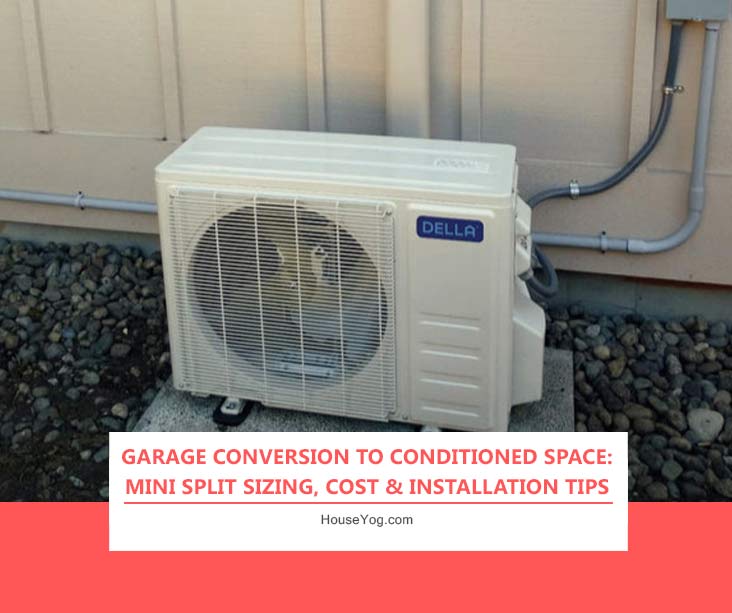

If your garage has slowly turned into a storage dump of boxes, tools, and things you rarely use, you’re not alone.
Many homeowners today are converting garages into home offices, gyms, workshops, or even rental rooms.
But there’s one major challenge: garages are not designed for comfort. They can get extremely hot in summer and cold in winter.
That’s where a mini split (ductless AC) system can completely transform the space, turning an unused garage into a comfortable, year-round living area.
In this guide, we’ll break down how to choose the right mini split size, installation tips, and the total cost of converting your garage into a conditioned space.
What Is a Conditioned Space?
A conditioned space is any part of your home that is actively heated, cooled, and ventilated to maintain a comfortable indoor temperature. Rooms like your living room, bedroom, and kitchen are all conditioned spaces — they’re designed for year-round comfort.
Most garages, however, are not. They are typically built without proper insulation, ventilation, or temperature control, which makes them uncomfortable in extreme weather.
When you convert a garage into a conditioned space using a mini split system, you’re essentially upgrading it to function like any other room in your home. This usually involves:
- Adding insulation to the walls, ceiling, and garage door
- Sealing air gaps to prevent heat loss, drafts, and humidity
- Installing a heating and cooling system (like a mini split)
- Ensuring proper ventilation and airflow
Once these upgrades are in place, your garage can become a fully functional and comfortable space — whether you use it as a home office, gym, or guest room — regardless of the weather outside.
Why Choose a Mini Split for Garage Conversion?
When it comes to conditioning a garage, homeowners typically consider three options: extending the existing HVAC system, installing a window AC unit, or going with a ductless mini split. Of these, the mini split is almost always the best choice. Here is why:
1. No Ductwork Required
Garages are not connected to your home’s duct system. Extending ducts into a garage is expensive and complicated. A mini split system is ductless; it uses a small pipe to connect an outdoor compressor to an indoor wall unit, making installation much simpler.
2. Heats and Cools in One System
A mini split works as both a heater and an air conditioner. During hot summers, it cools the space. During cold winters, it works as a heat pump to warm the room. You get year-round comfort from one single system.
3. Energy Efficient
Mini splits are known for their energy efficiency. Unlike window units that lose cool air through gaps, or central systems that lose energy through long duct runs, a mini split delivers conditioned air directly into the room with minimal energy loss.
4. Quiet Operation
If you plan to use your garage as an office, gym, or hobby room, noise matters. Mini splits operate very quietly; most indoor units run at around 19 to 24 decibels, which is barely noticeable.
5. Independent Temperature Control
A mini split lets you control the garage temperature separately from the rest of your home. You only cool or heat the garage when you are using it, which saves energy and reduces your electric bill.
In simple terms, a conditioned space is designed for comfort, while an unconditioned space (like a typical garage) is not.
How to Convert Your Garage into a Conditioned Space (Step-by-Step)
Now that you understand what a conditioned space is, let’s look at how to actually convert your garage into one.
The process is not just about installing an AC unit — it involves proper insulation, correct system sizing, and careful installation. Follow these steps to get it right.
Step 1: Insulate Before You Install
Before you even think about installing a mini split, insulation is the most important first step.
A mini split in a poorly insulated garage will:
- run continuously
- struggle to maintain temperature
- increase your electricity bills
Where to Insulate
Focus on these key areas:
- Walls: Use batt insulation (fibreglass or mineral wool) between wall studs
Recommended: R-13 to R-15 for standard 2×4 walls - Ceiling: The most critical area, since heat rises
Recommended: R-30 or higher - Garage Door: Use an insulated door or an insulation kit. If the existing garage door has damaged panels, worn components, or operating problems, have it inspected by a trusted garage door repair professional before completing the conversion.
Look for: R-8 to R-18 - Air Sealing: Seal gaps using caulk and weatherstripping around doors, windows, and joints
Pro Tip: Good insulation reduces load on your AC, improves comfort, and saves money long-term.
Step 2: Choose the Right Mini Split Size
Choosing the correct size (capacity) is critical.
- Too small → won’t cool or heat effectively
- Too large → short cycles, wastes energy, and creates humidity issues
Mini split capacity is measured in BTUs (British Thermal Units).
Mini Split Sizing Guide
| Garage Size | Recommended Capacity |
| Up to 300 sq ft | 9,000 BTU |
| 300 – 450 sq ft | 12,000 BTU |
| 450 – 600 sq ft | 18,000 BTU |
| 600 – 1,000 sq ft | 24,000 BTU |
Factors That Affect Sizing
- Climate: Hot/humid regions require higher capacity
- Ceiling Height: Taller ceilings = more volume to cool
- Insulation Quality: Better insulation = lower BTU needed
- Sun Exposure: More sunlight = higher cooling load
- Usage: Equipment, gym, or multiple people increase heat load
Step 3: Cost of Garage Conversion with Mini Split
One of the most common questions is: how much does it cost?
The total cost depends on:
- unit size
- installation complexity
- electrical work
- insulation requirements
Typical Cost Breakdown
- Mini split unit (9,000–12,000 BTU): $700 – $1,500
- Mini split unit (18,000–24,000 BTU): $1,200 – $2,500
- Installation labour: $500 – $2,000
- Electrical work: $200 – $600
- Garage insulation (if needed): $500 – $2,000
Total Estimated Cost: 👉 $2,000 – $6,000+ (all-inclusive)
DIY vs Professional Installation
While DIY kits are available, professional installation is strongly recommended.
Improper installation can:
- void warranties
- cause refrigerant leaks
- reduce system efficiency
In many regions, HVAC work must be done by a licensed professional.
Step 4: Mini Split Installation Process
Here’s what typically happens during installation:
Step-by-Step Process
- Site Evaluation: Assess space, insulation, and electrical capacity
- Indoor Unit Installation: Mounted high on the wall for proper airflow
- Outdoor Unit Placement: Installed on pad or bracket with proper ventilation
- Connecting Lines: Refrigerant, drain, and electrical lines connected
- Electrical Setup: Dedicated circuit (usually 240V) installed
- System Testing: Leak check, cooling/heating test, drainage check
- Final Walkthrough: Instructions on usage and maintenance
Maintaining Your Garage Mini Split
Once your mini split is installed, regular maintenance is key to keeping it efficient, reliable, and long-lasting.
The good news? Most of the maintenance is simple and doesn’t take much time.
Basic Maintenance Checklist
- Clean the air filters (every 2–4 weeks):
Dirty filters restrict airflow and reduce efficiency. Most filters can be easily removed, washed, and reinstalled. - Check the outdoor unit regularly:
Remove leaves, dust, or debris that may block airflow around the compressor. - Inspect the drain line (once a year):
A clogged drain can lead to water leakage from the indoor unit. Make sure it’s clean and flowing properly. - Schedule professional servicing (annually):
A licensed HVAC technician can inspect refrigerant levels, electrical connections, and overall system performance.
Pro Tip: Regular maintenance not only improves performance but can also extend the lifespan of your mini split by several years.
Final Thoughts
Converting your garage into a conditioned space with a mini split is one of the smartest home improvement upgrades you can make.
It allows you to:
- unlock unused space
- increase your home’s functionality
- create a comfortable, year-round living or working area
Quick Recap:
- Insulate your garage properly
- Choose the right mini split size
- Plan your budget carefully
- Hire a qualified professional for installation
When done right, a garage conversion with a mini split system is not just practical — it’s a long-term investment in comfort, efficiency, and property value.
Planning a home upgrade or redesign? Explore expert house planning and layout services to make the most of your space.
Frequently Asked Questions (FAQs)
Yes, insulation is essential. Without it, the mini split will run continuously, increase energy bills, and struggle to maintain temperature.
An 18,000 BTU mini split is usually ideal for a 2-car garage (400–600 sq ft). Larger units (24,000 BTU) may be needed for hot climates, high ceilings, or poor insulation.
DIY installation is possible but not recommended. Improper setup can cause leaks, safety issues, and void the warranty. Professional installation is safer and more reliable.
The total cost typically ranges from $2,000 to $6,000. This includes the unit, installation, and basic electrical work.
Yes, but it will be inefficient. The system will run continuously, increasing energy costs and reducing lifespan.
Yes, it can increase property value. A conditioned garage adds usable space and improves overall functionality.
Typically, 15 to 20 years with proper maintenance. Regular servicing and clean filters help extend its lifespan.
In most cases, yes. HVAC installations often require permits, especially when electrical work is involved.