
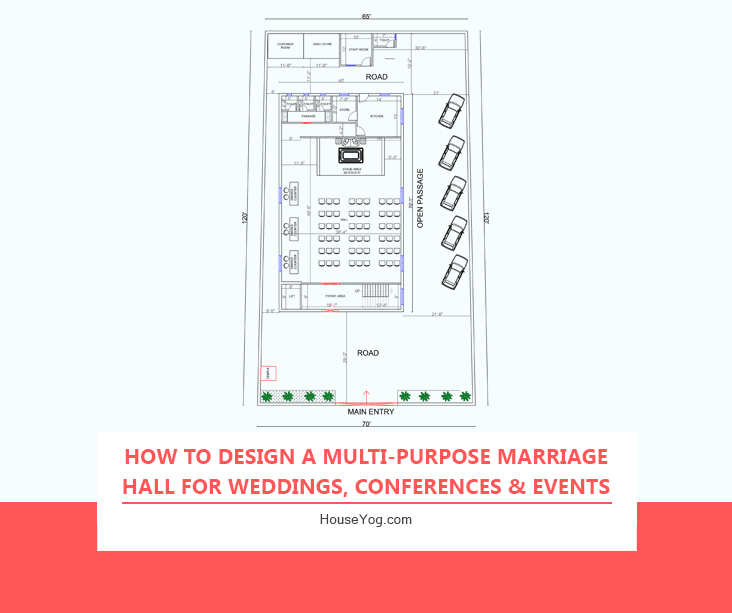

In India, marriage halls are rarely short of wedding enquiries during auspicious periods. The real challenge begins outside those dates. Large gaps between wedding seasons often leave halls underutilised, even though the investment in land and construction remains constant.
This is where multi-purpose marriage hall design becomes important, allowing the same venue to function for weddings, conferences, and other events throughout the year. Instead of planning a venue only for wedding functions, owners increasingly look to accommodate conferences, seminars, cultural programs, community meetings, and institutional events, using the same space without frequent structural changes.
Designing such a hall is not about adding temporary arrangements later. It requires architectural planning that balances celebration, functionality, and commercial viability from the start.
What Is a Multi-Purpose Marriage Hall?
A multi-purpose marriage hall is a venue planned to support multiple event formats without compromising usability or aesthetics. While weddings remain the primary function, the hall is also capable of hosting:
- Conferences and seminars
- Corporate meetings and training programs
- Community and cultural events
- Institutional gatherings and exhibitions
Each of these uses places different demands on space, acoustics, lighting, seating, and services. A hall designed only for weddings often struggles to adapt, leading to awkward layouts, sound issues, or inefficient operations.
A truly multi-purpose hall anticipates these differences and resolves them within the architectural layout itself.
Why Multi-Purpose Design Matters for Indian Marriage Halls
Marriage halls in India operate within a unique context. Wedding dates are dictated by the calendar of auspicious days, not by weekly patterns. This means that demand comes in clusters, followed by long idle periods.
A hall designed only for weddings:
- remains unused for extended durations
- depends entirely on seasonal bookings
- struggles to justify long-term returns
Multi-purpose design helps address this imbalance by enabling:
- weekday and off-season usage
- institutional and corporate rentals
- community programs that require simpler setups
The result is better utilisation of the same built space, without diluting the hall’s appeal for weddings. Multi-purpose planning works best when land feasibility, parking capacity, and circulation are assessed early during site selection and planning.
Multi-purpose planning works best when land feasibility, parking capacity, and circulation are assessed early during site selection. You can explore this in detail in our guide on ideal plot size for a marriage hall in India.
Core Design Principles for a Multi-Purpose Marriage Hall
Designing for multiple uses starts with a shift in mindset. Instead of asking how grand the hall looks for weddings, the more useful question is how easily the space can transform.
Flexible Hall Geometry
The basic shape and structure of the hall determine its long-term usability. Clear spans, minimal columns, and balanced proportions allow the hall to accommodate different seating arrangements without obstruction.
A neutral layout does not mean a dull space. It means avoiding permanent elements that lock the hall into one type of function.
Adaptable Seating and Storage Planning
Seating is one of the most frequently changed elements between events. Weddings may require round tables, conferences prefer straight rows, and cultural programs often need open floor space.
This flexibility only works when:
- seating is modular or stackable
- storage areas are planned close to the hall
- movement paths remain clear during changeovers
Without proper storage, flexibility exists only on paper.
Acoustic Planning for Mixed-Use Events
Sound behaviour inside a hall varies significantly between weddings and conferences. Loud music, announcements, and celebrations create different acoustic demands than speeches or presentations.
Multi-purpose halls benefit from:
- controlled echo and reverberation
- zoning of sound systems
- thoughtful placement of speakers and acoustic treatments
Good acoustic planning ensures clarity during conferences without dampening the energy of wedding functions.
Lighting Design That Supports Multiple Moods
Lighting in a multi-purpose marriage hall must perform, not just decorate. Conferences require bright, evenly distributed light for visibility and focus. Weddings benefit from warmer tones and layered lighting.
Effective lighting design allows:
- zoning instead of single-point control
- dimming and scene-based switching
- minimal reliance on temporary fixtures
This flexibility avoids repeated installations and keeps the hall visually balanced across event types.
Stage, AV, and Technical Infrastructure
Temporary stages and exposed wiring are common signs of poor planning. In a multi-purpose hall, technical infrastructure should be integrated into the design.
This includes:
- a stage that works for ceremonies as well as presentations
- concealed AV cabling and control points
- logical screen placement and sightlines
Conference users expect reliability, while wedding setups demand aesthetics. Both can coexist when infrastructure is planned early. In practice, halls that ignore acoustic planning often rely on temporary sound fixes, which rarely work well for conferences and cultural programs.
Dining and Kitchen Planning for Variable Use
Dining requirements vary widely between weddings and conferences. Weddings demand high-capacity buffet service during peak hours, while conferences require smaller catering setups.
A flexible design ensures:
- dining areas do not permanently block hall layouts
- kitchen and service movement remains separate from guests
- temporary dining zones can be added or removed smoothly
This allows the hall to shift between large-scale functions and simpler events without operational stress.
Parking and Circulation for Different Event Types
Different events create different traffic patterns. Weddings generate heavy peak loads, while conferences often have staggered arrivals and departures.
Multi-purpose planning considers:
- adaptable parking layouts
- clear entry and exit circulation
- safe pedestrian movement
- separate service access
Many well-designed halls fail operationally due to parking congestion, not because of the building itself.
Regulatory and Approval Considerations
Marriage halls fall under the assembly building category, and approvals are typically evaluated based on maximum occupancy scenarios.
Multi-purpose halls must demonstrate:
- adequate exits and circulation
- parking provision for peak use
- compliance with fire safety norms
Clear planning documentation helps authorities understand how the hall functions across different event types, reducing approval delays.
Approval requirements for marriage halls vary by location and scale, and are typically assessed after basic feasibility is established. We’ve explained this in detail in our guide on marriage hall building rules and the approval process in India.
Common Mistakes in Multi-Purpose Marriage Hall Design
Several issues repeatedly limit flexibility and revenue potential:
- Designing exclusively for weddings
- Over-decorated interiors that restrict layout changes
- Fixed seating or permanent stage elements
- Lack of storage for furniture and equipment
- Ignoring non-wedding usage patterns
These decisions often look attractive initially, but restrict long-term adaptability.
Many of these issues are discussed in detail in our guide on common marriage hall design mistakes in India, especially where flexibility is ignored during early planning.
When Multi-Purpose Design Makes Financial Sense
Multi-purpose planning is especially relevant when:
- land and construction costs are high
- long-term utilisation matters more than peak-day glamour
- the hall serves institutions, trusts, or communities
While design alone does not guarantee profitability, poor planning almost always limits it.
The Architect’s Role in Multi-Purpose Planning
Multi-purpose functionality cannot be added after construction. It must be integrated during the feasibility and design stages.
An architect helps align:
- layout and circulation logic
- services, acoustics, and lighting
- regulatory compliance
- future scalability
This holistic approach prevents repeated alterations and operational compromises.
Designing for Flexibility, Not Just Weddings
A successful multi-purpose marriage hall respects the cultural importance of weddings while recognising the commercial reality of long-term operation. When flexibility is embedded into the architectural plan, the hall remains relevant, usable, and profitable over time.
Houseyog supports marriage hall projects end-to-end, from land feasibility and concept planning to complete architectural delivery, including layout plans, structural design, 3D exterior elevation, and interior design. This integrated approach ensures that multi-purpose halls perform well not only during weddings, but across all event types throughout the year.