
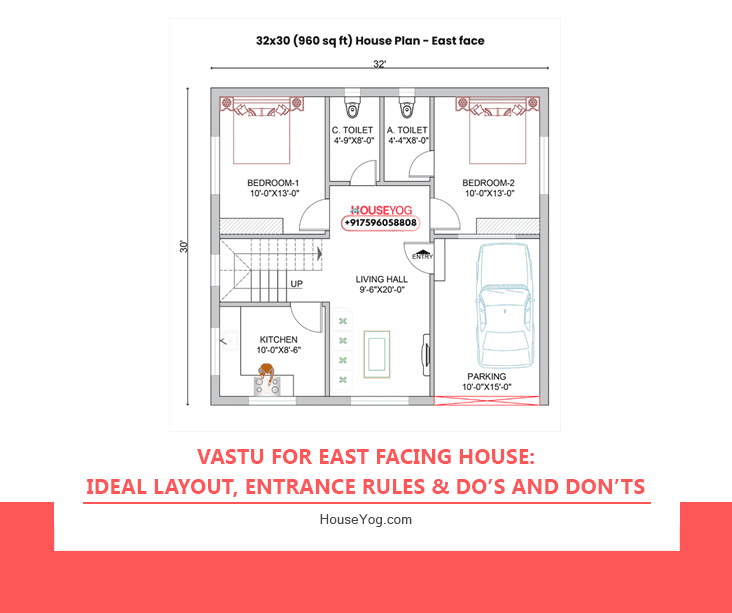

In India, an east-facing house is often seen as the most auspicious option. Morning sunlight, fresh energy, and cultural beliefs around the rising sun make east-facing homes highly desirable. Many homeowners assume that simply choosing an east-facing plot is enough to ensure a positive living experience.
But here’s what we consistently see on real sites: an east-facing house performs well only when it is planned correctly. While the east direction has natural advantages, poor entrance placement, blocked sunlight, or incorrect room zoning can reduce those benefits, sometimes even more than in other orientations.
An east-facing house offers excellent potential for health, routine, and positivity, but that potential depends on how well the layout supports light, movement, and daily life.
In this practical guide on east facing house vastu, you’ll learn how to plan the entrance, layout, rooms, and plot details correctly, without superstition or guesswork.
What Makes a House East-Facing?
Before applying any Vastu rules, it’s important to get the definition right.
A house is called east-facing when:
- The main entrance door opens towards the east
- The road or primary open space is on the east side of the plot
It does not depend on:
- Where the kitchen is
- Where bedrooms are located
- Where the staircase is placed
Only the direction of the main entrance decides the house facing.
This clarity matters because many homeowners assume their house is east-facing just because they get morning sunlight from one side.
This is why architects always verify the entrance direction on drawings or site, rather than relying on assumptions.
What the East Direction Represents in Vastu
In Vastu Shastra, the east direction is associated with:
- The Sun (Surya)
- Health, discipline, and daily routines
- New beginnings, clarity, and alertness
This is why east-facing houses are often preferred by:
- Families with school-going children
- Professionals with structured routines
- Homeowners who value daylight and openness
This natural positivity is the reason east-facing houses are so popular, but it also makes the east direction more sensitive to poor planning and blockage. When light is blocked or heavy elements dominate the east, residents may feel lethargic, stressed, or out of sync with daily rhythms.
Is an East-Facing House Always Good?
Yes, a well-planned east-facing house is generally considered excellent for long-term living.
East-facing houses work best when:
- Morning sunlight is allowed to enter freely
- The entrance is placed correctly
- Heavy spaces are shifted away from the east
When these basics are ignored, the house may look good on paper but feel dull or uncomfortable in daily use.
If you’re comparing orientations, you may also find our north-facing house Vastu guide useful, where we explain why north-facing homes are considered favourable and how planning still plays a decisive role.
Main Entrance Vastu for East-Facing House (Most Important)
Thhe main entrance is the single most important element in an east-facing house as per Vastu, because it controls how morning light, movement, and energy enter the home.
Best Entrance Zones
For an east-facing house, the entrance works best when placed:
- Slightly towards the north-east portion of the east wall
- Near the central-east zone, avoiding extreme corners
These positions help:
- Capture gentle morning sunlight
- Support alertness and positive routines
- Create a welcoming, balanced entry experience
Entrance Zones to Avoid
Avoid placing the main door:
- At the south-east extreme of the east wall
- Exactly at corners without buffer space
Such placements often result in harsh light, awkward internal planning, or circulation issues.
Practical Entrance Tips
- Keep the east side open and uncluttered
- Avoid tall compound walls blocking morning light
- Ensure the entrance area feels clean, bright, and inviting
In practice, even small shifts in entrance placement can significantly improve how an east-facing house feels throughout the day.
Ideal Layout Planning for East-Facing Houses
Instead of planning rooms in isolation, east-facing houses benefit from overall layout balance, with lighter, open spaces towards the east and more stable, enclosed functions placed in the south and west.
Living Room Placement in an East-Facing House
After the entrance, the living room is usually the first space people experience inside the house. Because the east receives the best natural light in the morning, living spaces placed here often feel more active, welcoming, and comfortable throughout the day.
Best Living Room Locations
- East or North-East – ideal
- North – acceptable alternative
These placements allow:
- Soft morning daylight
- A bright, welcoming atmosphere
- Better interaction and openness
Furniture Tips
- Keep heavy furniture towards the south or west walls
- Avoid blocking east-facing windows
- Maintain an open central space for airflow
Kitchen Vastu for East-Facing Houses
A common mistake is placing the kitchen in the east just because the house faces east.
Best Kitchen Locations
- South-East (Agni corner) – ideal
- North-West – acceptable if south-east is not possible
Cooking Direction
- Face east while cooking
- Avoid facing south directly
Avoid
- Kitchen in the north-east
- Kitchen directly under toilets in upper floors
A well-placed kitchen supports daily comfort far more than symbolic placement alone.
In practice, kitchen placement affects daily routines far more noticeably than most homeowners expect.
Bedroom Placement in East-Facing House
Bedrooms in an east-facing house should prioritise stability and rest, balancing the otherwise active and bright nature of the east direction.
Master Bedroom
- South-West is the most stable location
- Supports restful sleep and emotional balance
Children’s Bedroom
- West or North-West works well
Guest Bedroom
- North-West is ideal
Sleeping Direction Tips
- Sleep with your head towards south or east
- Avoid mirrors directly facing the bed
Bedrooms should feel grounded and calm, especially in houses that are bright and active in the east.
Toilets & Bathrooms in East-Facing Houses
Toilets and bathrooms don’t need complex Vastu remedies, but they do require sensible placement and good ventilation.
Suitable Locations
- West
- North-West
- South-East (with proper ventilation)
Avoid
- East and North-East
- Centre of the house
Good ventilation, dryness, and hygiene matter more than any symbolic correction.
Staircase Placement for East-Facing Houses
In east-facing houses, staircase placement affects not just circulation but also how light moves through the home.
Best Staircase Zones
- South
- West
- South-West
Staircase Rules
- Clockwise movement is preferred
- Avoid staircases in the east or north-east
Poor staircase placement often blocks light and disrupts circulation more than it affects energy.
Plot Level & Site Planning for East-Facing Houses
Beyond internal layout, site levels play a surprisingly large role in how an east-facing house feels. This is often ignored but extremely important.
Ideal Plot Levels
- Plot should slope from West to East
- East and north sides should remain lower and open
Avoid
- Raised levels on the east side
- Underground tanks in the east without proper design
Even a well-designed east-facing house can feel heavy if site levels block light and drainage.
Common Mistakes in East-Facing House Design
Many homeowners unknowingly reduce the benefits of an east-facing house by:
- Blocking morning light with walls or storage
- Treating east like north in layout planning
- Copying standard plans without site adaptation
- Over-decorating the east zone with heavy elements
Remember that direction creates opportunity, but planning decides performance.
Interestingly, many of these planning mistakes are similar to what homeowners face with south-facing plots, which we’ve explained in detail in our south-facing house Vastu guide.
Do’s and Don’ts for East-Facing House Vastu
These simple do’s and don’ts help preserve the natural advantages of an east-facing house without overcomplicating design decisions.
Do’s
- Keep the east side open and light
- Allow morning sunlight into living areas
- Use lighter colours in east-facing rooms
- Place heavier functions in south and west
Don’ts
- Don’t block east light with tall structures
- Don’t place toilets in the east or north-east
- Don’t assume east-facing works without planning
Should You Choose an East-Facing House?
Yes, an east-facing house can be an excellent choice, especially for families who value daylight, structure, and healthy routines, provided the house is designed thoughtfully and not treated as automatically perfect.
Key Takeaways: East-Facing House Vastu
- East-facing houses are naturally positive, but sensitive to blockage
- Entrance placement is critical
- Morning light should be preserved
- Heavy spaces belong to south and west
- Good planning matters more than direction myths
East-Facing House Vastu – FAQs
An east-facing house is generally favourable, but only when the entrance and layout allow proper light and movement.
Entrances slightly towards the north-east or central-east zones work best.
The south-east is ideal, with north-west as a secondary option.
Yes, when morning light enters living spaces and routines are supported.
Minor remedies can help, but good planning is always more effective.
Need Help Planning an East-Facing House?
At Houseyog, we design architect-led, Vastu-aware house plans that balance traditional principles with modern Indian lifestyles and real construction constraints.
You can explore our architect-designed house plans or request a custom east-facing house layout tailored to your plot, city, and budget.
If you found this guide helpful, feel free to share it with anyone planning a new home.