
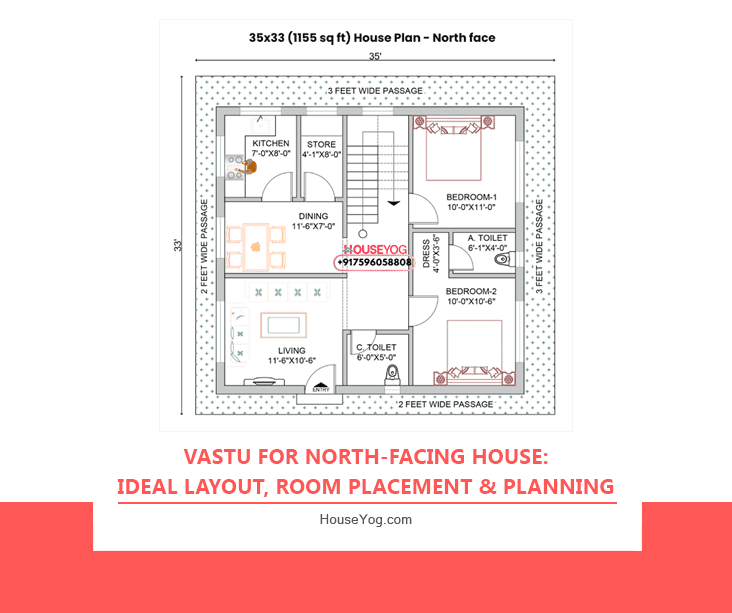

If you ask most people about Vastu, a north-facing house is often seen as the safest and most desirable choice. Builders highlight it, buyers actively look for it, and many homeowners feel confident simply knowing their house faces north.
But as architects, we see a different reality on site, a north-facing house is beneficial only when it is planned correctly.
While the north direction is naturally favourable in Vastu, mistakes in entrance placement, room zoning, or plot planning can still lead to poor light, awkward layouts, or long-term discomfort, just like in any other house orientation.
Quick clarity: North-facing houses offer strong potential for comfort and prosperity, but that potential depends entirely on how the house is designed, not just the direction it faces.
In this practical guide on north-facing house Vastu, you’ll learn how to plan your entrance, living areas, kitchen, bedrooms, and plot levels correctly, based on real-world design principles followed in Indian homes.
What Does a North-Facing House Mean in Vastu?
Before applying any rules, clarity is essential.
A house is called north-facing when:
- The main entrance door opens towards the north
- The road or primary open space is on the north side of the plot
It does not depend on:
- Where the kitchen is
- Where bedrooms are placed
- Where the staircase is
Only the direction of the main entrance decides the facing of the house.
This distinction is critical, because many homeowners incorrectly assume their house is north-facing just because the plot opens on the north.
To understand why north-facing houses are often preferred, it helps to look at what the north direction represents in Vastu..
This is why architects and planners always verify the entrance direction on drawings or site, rather than relying on assumptions.
Why the North Direction Is Important in Vastu
In Vastu Shastra, the north direction is associated with:
- Kubera, the deity of wealth and prosperity
- Career growth, opportunities, and financial inflow
- Movement, openness, and expansion
Because of this, north-facing houses are considered:
- Easier to balance energetically
- More forgiving of small planning mistakes
- Suitable for professionals, business owners, and working families
However, this does not mean north-facing houses work automatically without planning.
Is a North-Facing House Always Good?
Short Answer
A well-planned north-facing house is generally considered auspicious and comfortable for long-term living.
The Real Answer
North-facing houses perform best when:
- The entrance is placed correctly
- The north and north-east zones are kept open and light
- Heavy or closed spaces are shifted towards the south and west
When these basics are ignored, even a north-facing house can feel cramped, unstable, or financially draining.
Once you’re clear about the direction, the next and most important decision is the main entrance placement, which largely determines how a north-facing house performs.
If you’re also comparing different house orientations, you may find it useful to read our detailed guide on Vastu for south-facing houses, where we explain how layout and entrance placement can make even south-facing homes perform well.
If you’re also considering other orientations, you may find it helpful to read our detailed guide on Vastu for east-facing houses, where we explain how morning light, entrance placement, and layout planning influence daily comfort.
Main Entrance Vastu for North-Facing House
The main entrance plays a decisive role in how a north-facing house performs.
Even though the north direction is naturally favourable in Vastu, the exact placement of the entrance determines how effectively light, movement, and positive energy enter the home.
Best Entrance Zones
For a north-facing house, the main entrance works best when placed:
- Slightly towards the north-east
- In the central-north portion of the north wall
These entrance zones help support:
- Smooth energy and movement flow
- Financial stability and career opportunities
- Positive interaction between occupants and visitors
In practice, we often find that even small shifts in entrance position within the north wall can significantly improve daylight, circulation, and overall usability.
Entrance Zones to Avoid
Avoid placing the main door:
- At the extreme north-west
- Exactly at corners without buffer space
Such placements can restrict openness and create awkward internal layouts, even in north-facing houses.
Practical Planning Tip
Beyond Vastu zoning, north-facing entrances perform best when supported by good site planning:
- Clear daylight access from the north
- Clean and unobstructed approach roads
- No major visual or physical obstructions like poles, drains, or large trees
A well-positioned entrance works best when Vastu principles and practical site conditions are aligned.
Once the entrance is placed correctly, the next step is planning the living areas to make the most of north light and openness.
Living Room Planning in a North-Facing House
Once the entrance is planned correctly, the living room becomes the most visible and frequently used space in a north-facing house. Its placement and openness largely determine how bright, welcoming, and comfortable the home feels.
Ideal Living Room Zones
For a north-facing house, the living room works best when located in:
- North-East – the most favourable option
- North or East – practical and well-balanced alternatives
These zones naturally support:
- Openness and easy movement
- Abundant natural daylight
- Healthy interaction with guests and family members
Furniture Placement Tips
To maintain balance and comfort:
- Place heavier furniture along the south or west walls
- Keep north-facing windows unobstructed to allow light inside
- Maintain an open, breathable centre space for better circulation
A well-planned living room in a north-facing house should feel open and relaxed, not crowded or closed-in.
With the public living spaces planned, the next focus should shift to service areas, especially the kitchen, which directly affects daily routines, health, and long-term comfort.
Kitchen Vastu for North-Facing Homes
Many homeowners assume that a north-facing house should also have a kitchen in the north, which is a common planning mistake. In reality, the kitchen’s placement depends on function, not the house facing, and incorrect positioning can affect daily comfort and health.
Best Kitchen Locations
For a north-facing house, the kitchen works best when located in:
- South-East (Agni corner) – the ideal and most stable option
- North-West – an acceptable alternative when south-east is not possible
Cooking Direction
- Face east while cooking
- Avoid facing north or south directly while cooking
This alignment supports smoother movement and a more comfortable cooking environment.
Avoid These Mistakes
Avoid placing the kitchen:
- In the north-east zone, which should remain light and open
- Directly under a toilet in duplex or multi-storey houses
A well-placed kitchen supports health and routine, while poor placement often leads to long-term inconvenience rather than immediate problems.
Once the kitchen is positioned correctly, the next priority is bedroom planning, where stability and privacy play a larger role in overall comfort.
Bedroom Placement in North-Facing House
Bedrooms are private, restorative spaces, and their placement plays a key role in sleep quality, mental calm, and long-term comfort. In a north-facing house, bedroom planning should focus on stability rather than openness.
Master Bedroom (Most Important Room)
- The South-West is the most stable and preferred location
- This zone supports:
- Sound, uninterrupted sleep
- Better decision-making and emotional balance
Avoid placing the master bedroom in the north or north-east, even in a north-facing house.
Children’s Bedroom
- West or North-West works well for children
- These zones support:
- Activity and growth
- A balanced routine without excessive restlessness
Guest Bedroom
- The North-West is ideal for guest bedrooms
- It provides privacy while maintaining a temporary, flexible feel
Sleeping Direction Tips
Regardless of bedroom location:
- Sleep with your head towards the south or east
- Avoid mirrors directly facing the bed, as they can disturb rest and privacy
A well-planned bedroom should feel grounded and calm, especially in homes that are otherwise open and active on the north side.
With bedrooms planned for stability and rest, the next focus should move to toilets, bathrooms, and utility spaces, where careful placement helps maintain balance and hygiene.
Toilets, Bathrooms & Utilities
Toilets and bathrooms are often overlooked during planning, but their placement can quietly affect hygiene, ventilation, and daily comfort, even in a north-facing house. More than symbolism, practicality matters most here.
Suitable Toilet Locations
For a north-facing house, toilets work best when placed in:
- West
- North-West
- South-East (with proper ventilation and sunlight)
These zones help keep the more sensitive north and north-east areas free and open.
Areas to Avoid
Avoid placing toilets:
- In the North-East, which should remain light and unobstructed
- In the centre of the house, where circulation and balance are critical
Practical Bathroom Planning Tips
- Ensure strong natural or mechanical ventilation
- Keep bathrooms dry and well-lit
- Avoid water leakage near bedrooms or living areas
In practice, good ventilation and dryness matter far more than symbolic remedies when it comes to toilet planning.
With bathrooms and utility spaces planned sensibly, the next element to consider is the staircase, which influences movement, light, and internal flow in multi-level homes.
Staircase Placement in North-Facing Houses
In multi-level homes, the staircase is more than just a circulation element. Its placement affects movement, daylight distribution, and internal flow, which is why staircase planning matters even in a north-facing house.
Best Staircase Zones
For a north-facing house, staircases work best when located in:
- South
- West
- South-West
These zones help keep the north and north-east areas open, light, and uninterrupted.
Staircase Planning Rules
- Clockwise movement is generally preferred
- Avoid placing staircases in the north-east zone, which should remain open and calm
In practice, staircases placed in the wrong zones tend to disturb natural light, circulation, and usability more than energy alone.
Beyond internal room placement, the overall performance of a north-facing house is also strongly influenced by site levels and plot planning, an aspect many homeowners tend to overlook.
Plot Level & Site Planning for North-Facing Houses
Plot levels and site planning are often ignored during house construction, but they play a crucial role in how a north-facing house performs. Even a well-designed layout can feel blocked or uncomfortable if the site levels are incorrect.
Ideal Plot Level for a North-Facing House
For best results:
- The plot should gently slope from South to North
- The north and east sides should remain more open and relatively lighter
This allows better daylight access, natural drainage, and a sense of openness towards the north.
What to Avoid
Avoid:
- Higher ground levels on the north side, which can block openness and light
- Underground water tanks or sumps in the north-east without proper technical and design consideration
In practice, incorrect plot levels can weaken even a well-planned north-facing house, affecting light, drainage, and long-term comfort.
With site levels and external planning addressed, the next step is to look at common mistakes homeowners make when planning north-facing houses, and how to avoid them.
Common Mistakes in North-Facing House Design
Many homeowners assume that a north-facing house is automatically safe and overlook basic planning principles. This false sense of security is one of the most common reasons north-facing homes underperform.
Common mistakes include:
- Blocking north-facing light with storage units, thick walls, or closed layouts
- Placing toilets in the north-east, which should remain open and light
- Treating north-facing plots casually without proper layout planning
- Copying standard house plans without adapting them to the site, levels, and orientation
Direction helps, but planning decides performance, even for north-facing houses.
If your house is already built or some of these issues exist, simple Vastu corrections and practical adjustments can still help improve comfort and balance.
Simple Vastu Remedies for North-Facing Houses
Remedies should support a well-planned layout—not replace thoughtful design. If your house is already built, small corrections can still help.
Practical, Non-Intrusive Remedies
- Keep north and north-east clutter-free
- Use light colours in north-facing rooms
- Ensure windows allow daylight from the north
- Keep heavier elements towards the south
Avoid extreme or unscientific solutions. Layout clarity always matters more.
Should You Choose a North-Facing House?
Yes, a north-facing house can be an excellent choice, provided it is planned correctly and not treated as “automatically good” just because of its direction.
A north-facing house works best when:
- The entrance is placed in the right zone
- The layout keeps the north and north-east areas open and light
- The house is designed specifically for the plot, not copied from generic plans
When planned thoughtfully, north-facing homes offer comfort, clarity, and long-term usability, making them a strong option for modern Indian families.
Key Takeaways: North-Facing House Vastu
- North-facing houses are naturally favourable—but not automatic
- Entrance placement still matters
- North and north-east zones must stay open and light
- Heavy spaces belong to south and west
- Good planning beats direction myths
North-Facing House Vastu – FAQs
A north-facing house is considered favourable in Vastu because the north direction is associated with growth and opportunities. However, luck depends on correct planning. Improper entrance placement, blocked north zones, or poor layout can reduce its benefits.
For a north-facing house, the main entrance works best when placed slightly towards the north-east or near the central-north portion of the wall. Extreme north-west or corner entrances should generally be avoided.
The ideal kitchen location for a north-facing house is the south-east (Agni corner). The north-west is an acceptable alternative. Kitchens should be avoided in the north-east zone, as this area should remain light and open.
Yes. A well-designed north-facing house can be excellent for long-term living. Proper entrance placement, open north and east zones, stable bedroom locations, and correct plot levels are more important than direction alone.
Common mistakes include blocking north-facing windows, placing toilets in the north-east, assuming all north-facing plots are automatically good, and copying standard plans without site-specific design adjustments.
Simple remedies like decluttering the north zone, improving daylight, and balancing heavy elements towards the south can help. However, remedies work best when combined with good planning and should not replace proper architectural design.
Yes. North-facing houses may appear straightforward, but small planning mistakes can reduce their benefits. An architect helps balance Vastu principles with functional layout, building bylaws, natural light, and long-term usability.
Need Help Planning a North-Facing House?
At Houseyog, we design architect-led, Vastu-aware house plans that balance traditional principles with modern Indian lifestyles and real construction constraints.
You can explore our architect-designed house plans or request a custom north-facing house layout tailored to your plot size, city, and budget.
If you found this guide helpful, feel free to share it with anyone planning a new home.