
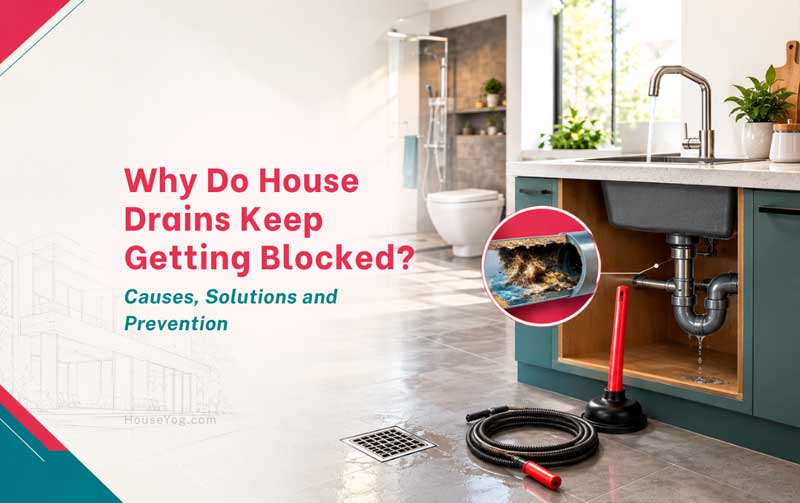

A blocked drain is usually treated as a small plumbing problem. You notice water draining slowly from the kitchen sink, the bathroom floor trap starts backing up, or the shower takes longer than usual to empty. A plunger or plumbing snake may solve it temporarily.
But if the same drain keeps blocking, the problem may not simply be what is going down the drain. The plumbing system itself could have a design, installation or maintenance issue.
For a house you are planning or constructing, drainage deserves attention from the beginning. Correct pipe sizing, adequate slope, sensible routing, properly designed traps and accessible inspection points can make a significant difference to how easily the system works and is maintained later.
Why Do House Drains Get Blocked?
House drains commonly get blocked because hair, food waste, grease, soap deposits, debris or foreign objects accumulate inside the pipe. Incorrect pipe slope, undersized pipes, excessive bends and construction debris can make the problem worse or cause recurring blockages.
The important distinction is between a one-off blockage and a recurring drainage problem. A one-off blockage may simply need cleaning. Repeated blockages deserve investigation.
Here are some of the more common causes:
| Cause | Where it commonly occurs | Typical problem |
| Hair and soap deposits | Shower, bathroom basin | Slow drainage |
| Food waste and grease | Kitchen sink | Partial or complete blockage |
| Debris | Floor traps, waste pipes | Restricted flow |
| Construction material | New or recently renovated houses | Unexpected blockage |
| Incorrect pipe slope | Waste and drainage lines | Water and sediment remain in pipe |
| Undersized pipes | Kitchen, bathroom and common drainage | Frequent blockage |
| Excessive bends | Long drainage runs | Difficult flow and maintenance |
| Damaged or displaced pipes | Underground drainage | Recurring or unexplained blockage |
Routine maintenance can address some of these causes. Others begin much earlier—during plumbing design and construction.
How Plumbing Design Can Cause Recurring Drain Problems
A drainage pipe is not simply a pipe that carries dirty water. Its size, slope, route and connections all affect how reliably the system works.
If you are building a new house, this is where good plumbing planning can save you considerable trouble later.
Incorrect or Inadequate Pipe Slope
Drainage pipes rely on gravity, so an appropriate slope or gradient is essential. An appropriate gradient helps wastewater flow through the pipe instead of sitting inside it.
The required drainage pipe slope or gradient depends on the pipe size, layout and applicable plumbing requirements.
If the slope is too little, water may move slowly and allow solids to settle. Too much slope is not automatically better either; drainage design has to consider the pipe size, flow and overall layout.
The correct gradient should therefore be established as part of the plumbing design rather than decided casually at the time of installation.
Undersized Pipes
A pipe that is too small for the expected flow can become more prone to blockage, particularly where several fixtures discharge into the same line.
For example, a kitchen waste line handling water and food-related residue needs to be planned differently from a small washbasin waste connection.
Proper drainage pipe sizing should consider the fixtures connected to the line, the expected discharge and the length and configuration of the drainage route.
Too Many Bends in the Drainage Layout
Every bend changes the direction of flow and can make cleaning more difficult.
A few bends are unavoidable in a house, but unnecessary changes in direction should be avoided wherever practical. A long, complicated drainage route can also make it harder to locate and clear a blockage.
A simpler route is generally easier to install, inspect and maintain.
Poorly Designed Traps
Traps are essential because they hold a small quantity of water that helps prevent foul sewer gases from entering the house. A properly designed trap is therefore an essential part of a house drainage system.
At the same time, the trap needs to be correctly sized, positioned and accessible for maintenance. A poorly installed or partially obstructed trap can itself become a point where debris accumulates.
Construction Debris Can Block New Plumbing
One problem that is often overlooked is construction debris inside drainage pipes.
During construction, sand, cement slurry, mortar, tile adhesive, grout and other materials can accidentally enter open plumbing lines. Once they harden, removing them can be considerably more difficult than clearing an ordinary hair or grease blockage.
This is particularly frustrating because the problem may appear only after the house is occupied.
Drainage pipes should therefore be protected during construction, and the system should be properly tested before floors, walls and other finishes conceal the plumbing.
A little care during construction is much easier than breaking finished flooring later to reach a blocked pipe.
How Does a Plumbing Snake Work and When Should You Use One?
A plumbing snake, also called a drain auger, uses a flexible cable to reach a blockage inside a drain pipe. As the cable is pushed into the pipe and rotated, its tip can break through the obstruction, loosen it or catch material so it can be pulled out.
A manual drain snake may be sufficient for a relatively simple blockage in a sink, basin or shower. Larger motorised drain-cleaning machines can reach deeper or tougher blockages, but they require more care and are generally better handled by someone experienced with the equipment.
A plumbing snake is most useful when a plunger has not cleared a stubborn blockage and the obstruction is within a section of pipe that the cable can reach. Hair, soap deposits and accumulated debris are examples of blockages that may respond to mechanical clearing.
The tool needs to match the fixture, too. A standard drain snake is not necessarily suitable for a toilet because it can damage the porcelain. A toilet auger is designed specifically for clearing toilet blockages.
If you are using a manual snake yourself, feed the cable gradually rather than forcing it into the pipe. Excessive force can damage older or fragile plumbing. Powered drain-cleaning equipment requires even more care.
Most importantly, a plumbing snake should not be treated as a solution to every drainage problem. If the same pipe keeps blocking after it has been cleaned, the underlying issue may be the pipe layout, slope, size, a deeper obstruction or another drainage problem. Repeatedly clearing the blockage without finding the cause is only treating the symptom.
For a practical visual explanation of how to use a drain snake, see this guide to using a drain snake.
When a Blocked Drain Indicates a Bigger Problem
A blocked drain may indicate a bigger plumbing problem when it keeps returning, affects several fixtures, or causes sewage or dirty water to back up.
For example, if the kitchen sink blocks once because grease has accumulated in the waste pipe, cleaning it may be all that is required. But if the sink blocks every few weeks, there may be a problem with the pipe layout, slope, size or a deeper section of the drainage system.
Watch for signs such as:
- Several drains becoming slow or blocked at the same time
- Water backing up through another fixture
- Persistent foul smells
- Gurgling sounds from drains
- Sewage or dirty water backing up
- A drain that repeatedly becomes blocked after cleaning
When multiple fixtures are affected, the problem may be farther downstream in a common drainage line rather than at the individual fixture.
That is a good point to stop repeatedly trying DIY solutions and have the drainage system inspected.
Why Inspection and Cleanout Points Matter
A drainage system should not be designed only to work when everything is flowing normally. It should also be possible to maintain it when something goes wrong.
Inspection and cleanout points provide access to sections of the drainage system so that blockages can be located and cleared without unnecessarily dismantling finished areas.
Their location depends on the plumbing layout and the applicable design requirements, but the basic principle is simple: a concealed drainage pipe should still have a practical way of being inspected or cleaned when necessary.
This is one of those details that may not matter at all on the day you move into the house. Five years later, you may be very glad it was considered.
How to Prevent Drainage Problems When Building a House
If you are still at the design or construction stage, prevention is much easier than repair.
Start with a properly coordinated plumbing layout rather than deciding pipe routes independently at the site. The plumbing drawings should show fixture locations, drainage routes, pipe sizes, traps and connections clearly enough for the installation team to follow.
Drainage routes should also be coordinated with beams, columns, foundations and finished floor levels so that pipes do not have to be improvised on site
A few practical points deserve particular attention:
- Plan the drainage route before construction. Avoid unnecessarily long or complicated runs and coordinate drainage with the structural and architectural layout.
- Provide the correct pipe sizes. Pipe sizing should be based on the fixtures and expected discharge rather than simply using the same size everywhere.
- Maintain the required pipe slope. Drainage needs gravity to work properly, so pipe levels should be checked during installation.
- Avoid unnecessary bends. Straightforward routes are generally easier to install and maintain.
- Protect open pipes during construction. Keep cement, mortar, sand and other debris from entering the drainage system.
- Plan accessible cleanouts and inspection points. These can make future maintenance much easier.
- Test the drainage before covering it. Problems are considerably easier to correct while pipes remain accessible.
These details are not particularly glamorous parts of house construction. But good plumbing is often noticed most when it doesn’t cause problems.
Simple Drain Maintenance Can Prevent Many Blockages
Even a well-designed drainage system needs sensible day-to-day use.
In the kitchen, avoid allowing large quantities of cooking oil, grease or food waste to enter the sink. In bathrooms, use suitable drain covers or strainers to reduce the amount of hair and solid debris entering the pipe.
Do not treat a drain as a convenient disposal route for materials that were never meant to go into the plumbing system.
If a drain starts becoming noticeably slower, deal with it early. A partially restricted pipe is generally easier to clean than one that has become completely blocked.
And if a particular drain repeatedly gives you trouble, don’t keep treating the blockage as an isolated incident. Look for the underlying reason.
Good Plumbing Design Is About More Than Preventing Blockages
A plumbing system has two jobs: it should carry water and wastewater where they need to go, and it should remain reasonably accessible for maintenance over its service life.
A plumbing snake, plunger or other drain-cleaning tool can be useful when something goes wrong. But those tools are the backup plan.
Rainwater needs to be considered separately too, particularly around roofs, driveways and paved areas. Our guide to sustainable urban drainage and flood control looks at how surface water can be managed more effectively.
If you are building a house, the better approach is to get the drainage layout right from the beginning—appropriate pipe sizes, proper gradients, sensible routing, correctly designed traps, protection during construction and accessible points for future maintenance.
That kind of planning may not be visible once the house is finished. You will notice it, though, every time your drains work properly without demanding your attention.