

If you have visited a tile showroom recently, you have probably noticed dozens of tile sizes ranging from compact bathroom tiles to large-format slabs. Choosing the right size can feel confusing, especially when every option seems attractive in the showroom.
Choosing tiles for your home is not just about selecting a colour, finish, or pattern. One of the most important decisions that often gets overlooked is the tile size itself.
The size of your tiles can significantly influence how spacious a room feels, how many grout lines are visible, how easy the floor is to clean, and even the overall installation cost. A tile that looks perfect in a large living room may feel completely out of place in a compact bathroom.
This is why there is no single “best” tile size for every home. The right choice depends on the room dimensions, intended use, design style, budget, and maintenance preferences.
In this guide, we will explore the standard tile sizes available in India, the best floor and wall tile sizes for different rooms, and practical recommendations based on real residential construction projects.
Quick Tile Size Recommendations for Every Room
If you are looking for a quick answer on best tile sizes for your rooms, the table below provides a practical starting point.
| Space | Recommended Tile Size |
| Living Room | 600×600 mm, 800×800 mm, 600×1200 mm |
| Bedroom | 600×600 mm, 800×800 mm |
| Kitchen Floor | 600×600 mm |
| Bathroom Floor | 300×300 mm, 300×600 mm |
| Bathroom Wall | 300×600 mm, 300×900 mm |
| Balcony | 300×300 mm, 400×400 mm |
| Staircase | 300×600 mm |
These are not rigid rules, but they represent the most commonly used and practical tile sizes in modern Indian homes.
Standard Tile Sizes Available in India
Tile manufacturers in India today offer a wide range of dimensions to suit different room sizes and design styles.
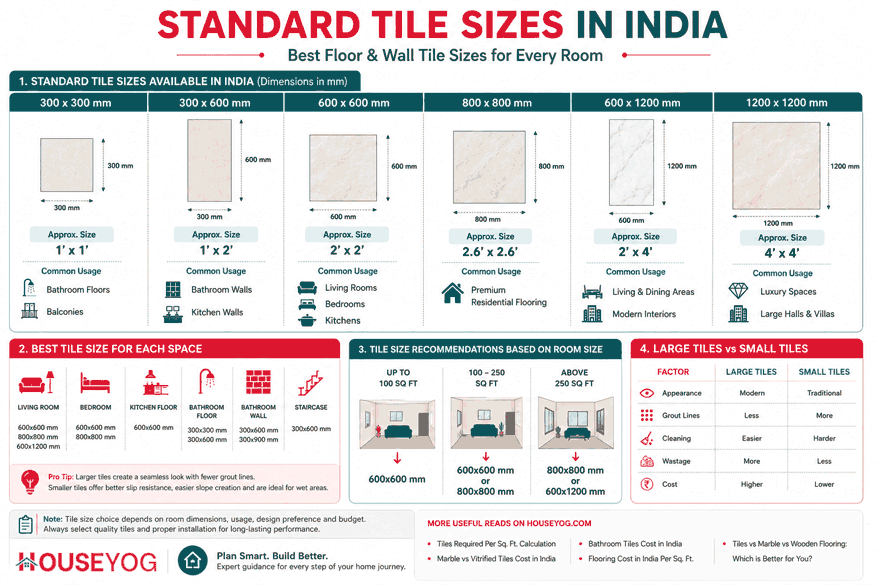
The following table shows some of the most common floor and wall tile sizes available in the Indian market.
| Tile Size (mm) | Approximate Size | Common Applications |
| 300×300 | 1×1 ft | Bathroom floors, balconies |
| 300×600 | 1×2 ft | Bathroom walls, kitchen walls |
| 400×400 | 1.3×1.3 ft | Balconies, utility areas |
| 600×600 | 2×2 ft | Living rooms, bedrooms, kitchens |
| 800×800 | 2.6×2.6 ft | Premium residential flooring |
| 600×1200 | 2×4 ft | Living rooms, dining areas |
| 1200×1200 | 4×4 ft | Luxury residences and large halls |
Among all these sizes, 600×600 mm vitrified tiles remain the most widely used option in Indian homes because they balance appearance, availability, installation ease, and cost.
Why Tile Size Matters More Than Most People Realise
Many homeowners focus primarily on tile colour and finish. However, tile size often has a greater impact on the final appearance of a room.
Larger tiles create fewer grout lines, which gives the floor a cleaner and more continuous appearance. Smaller tiles create more joints and visual breaks, which can make a room feel busier.
Tile size also affects:
- Material wastage during cutting
- Labour requirements during installation
- Future replacement convenience
- Visual proportions of the room
- Cleaning and maintenance effort
As architects, we often recommend selecting tile sizes only after understanding room dimensions and furniture layouts rather than choosing purely based on showroom displays.
Best Tile Size for Living Rooms
The living room is usually the largest and most visible space in the house. This is where tile size can make the biggest difference.
Small Living Rooms
For living rooms under 150 sq. ft., 600×600 mm tiles are often the safest choice. They provide good visual balance without excessive cutting at the edges.
Medium-Sized Living Rooms
For spaces between 150 and 300 sq. ft., both 600×600 mm and 800×800 mm tiles work well.
The larger format reduces grout lines and creates a more spacious appearance.
Large Living Rooms
For spacious villas and premium homes, 800×800 mm or 600×1200 mm tiles can create a luxurious and contemporary look.
However, larger tiles require better floor levelling and more skilled installation.
For additional tile selection tips, you may also find our guide on selecting living room tiles useful.
Which Tile Size Makes a Room Look Bigger?
In most cases, larger tiles make a room appear bigger because they create fewer grout lines and visual interruptions across the floor. When the eye sees a more continuous surface, the space tends to feel more open and spacious.
This is one reason why 800×800 mm and 600×1200 mm tiles have become increasingly popular in modern homes. However, bigger is not always better. In very small rooms, oversized tiles can result in excessive cutting near walls and corners, which may reduce the visual benefit.
For most Indian homes, choosing a tile size that is proportional to the room dimensions usually creates the best balance between appearance, wastage, and installation efficiency.
Best Tile Size for Bedrooms
Bedrooms generally benefit from larger tile formats because they create a calmer and less cluttered appearance.
In most Indian homes, 600×600 mm tiles remain the preferred choice. They are cost-effective, easy to maintain, and readily available across manufacturers.
For premium projects, 800×800 mm tiles can create a seamless appearance, particularly in master bedrooms.
The key objective in bedrooms is visual continuity. Fewer grout joints help create a cleaner and more relaxing environment.
Best Tile Size for Kitchen Floors
Kitchen floors require a balance between aesthetics and practicality.
The 600×600 mm format works exceptionally well for most kitchens because:
- It is easy to clean.
- It requires fewer joints.
- Replacement tiles are easier to source.
- Installation is relatively straightforward.
Very large tiles can sometimes increase wastage in smaller kitchens due to additional cutting around counters and utility points.
Slip resistance should always be prioritised over tile size when selecting kitchen flooring.
Best Tile Size for Bathrooms
Bathrooms require a different approach from living rooms and bedrooms.
Bathroom Floor Tiles
Smaller tiles generally perform better on bathroom floors because they offer more grout joints, which can improve slip resistance.
The most common sizes include:
- 300×300 mm
- 300×600 mm
These sizes also allow easier floor slope creation towards floor drains.
Bathroom Wall Tiles
For walls, larger formats are increasingly popular.
The most common options include:
- 300×600 mm
- 300×900 mm
These sizes reduce visible joints and create a more premium appearance.
If you are budgeting a bathroom renovation, you may also want to read our detailed guide on bathroom tile costs in India.
Best Tile Size for Balconies and Outdoor Areas
Balconies, utility spaces, and outdoor areas are exposed to weather and moisture.
For these spaces, smaller anti-skid tiles are generally more practical.
Common sizes include:
- 300×300 mm
- 400×400 mm
These sizes provide better grip and are easier to replace if damaged.
Large polished tiles are generally not recommended for exposed outdoor areas because they can become slippery when wet.
Tile Size Recommendations Based on Room Size
One factor that many tile guides ignore is the actual size of the room.
As a practical rule, we often recommend the following:
| Room Size | Recommended Tile Size |
| Up to 100 sq. ft. | 600×600 mm |
| 100–250 sq. ft. | 600×600 mm or 800×800 mm |
| Above 250 sq. ft. | 800×800 mm or 600×1200 mm |
This approach helps maintain proportionality while minimising unnecessary tile cutting and wastage.
600×600 vs 800×800 Tiles: Which Should You Choose?
Both 600×600 mm and 800×800 mm tiles are widely used in Indian homes, but each serves a slightly different purpose.
The 600×600 mm format remains the most popular choice because it is economical, readily available, easy to install, and suitable for most room sizes. It also generates less wastage in smaller spaces.
The 800×800 mm format offers a more premium appearance with fewer grout lines, helping rooms feel larger and more contemporary. However, these tiles typically cost more, require better floor levelling, and may involve higher installation charges.
If you are building a standard apartment or house, 600×600 mm tiles are often the safest choice. For larger living and dining spaces where aesthetics are a priority, 800×800 mm tiles can be worth the additional investment.
Large Tiles vs Small Tiles: Which Is Better?
There is no universal winner. Each option has advantages depending on the project.
| Factor | Large Tiles | Small Tiles |
| Appearance | Modern and spacious | Traditional and detailed |
| Grout Lines | Fewer | More |
| Cleaning | Easier | More effort |
| Cutting Wastage | Higher | Lower |
| Installation Cost | Usually higher | Usually lower |
| Replacement | More difficult | Easier |
For most modern Indian homes, larger formats are increasingly preferred because they create a cleaner visual appearance.
How Tile Size Affects Cost
Many homeowners assume tile cost depends only on the price per square foot.
In reality, tile size can influence the overall flooring budget in several ways.
Material Cost
Larger format tiles often cost more than standard sizes due to manufacturing and handling requirements.
Installation Labour
Installing large-format tiles requires greater precision and better floor preparation. Labour charges may therefore be higher.
Wastage
In rooms with multiple corners and irregular layouts, larger tiles often generate more cutting wastage.
Transportation and Handling
Large tiles are heavier and more prone to breakage during transport and installation.
If you are comparing flooring budgets, our detailed guide on flooring costs in India can help estimate overall expenses.
Tile Layout Matters as Much as Tile Size
Choosing the right tile size is important, but the layout pattern can have an equally significant impact on the final appearance of your floor.
A straight grid layout is the most common and economical option for residential projects. It creates a clean, organised look and generally results in less wastage. Diagonal layouts can make rooms appear wider or more dynamic, but they usually involve additional cutting and higher wastage. Staggered patterns are often used with rectangular tiles to create a more contemporary appearance.
Before finalising tiles, it is worth discussing the layout with your architect or contractor. Even a well-chosen tile size can lose its visual appeal if the layout results in numerous small cuts along walls, doorways, or room corners. Careful planning helps create a cleaner and more balanced finished floor.
Common Mistakes to Avoid When Choosing Tile Sizes
One of the most common mistakes is choosing tile sizes based solely on showroom displays.
A tile that looks impressive in a large display area may not work well inside a compact room.
Other mistakes include:
- Using oversized tiles in small bathrooms.
- Ignoring room proportions.
- Choosing tiles based only on price.
- Overlooking anti-skid requirements.
- Not checking long-term availability of replacement tiles.
- Failing to account for cutting wastage.
A little planning at this stage can prevent costly changes later.
Architect’s Recommendation
After working on numerous residential projects across India, we have found that 600×600 mm vitrified tiles remain the safest and most versatile choice for most homes between 1,000 and 2,500 sq. ft.
They offer an excellent balance of cost, aesthetics, availability, installation ease, and future maintenance.
For homeowners seeking a more premium look, 800×800 mm or 600×1200 mm tiles can work beautifully in living and dining spaces.
Bathrooms, balconies, and utility areas are usually better served by smaller anti-skid formats that prioritise safety and practicality.
Rather than following trends, focus on selecting a tile size that complements your room dimensions and daily usage patterns.
Related Tile Guides:
- Tiles Required Per Sq. Ft. Calculation
- Bathroom Tiles Cost in India
- Marble vs Vitrified Tiles Cost
- Different Types of Tiles Explained
FAQs About Tile Sizes in India
The most common floor tile size in India is 600×600 mm (2×2 ft). It is widely used in living rooms, bedrooms, and kitchens because it balances cost, appearance, and ease of installation.
Yes. For most Indian living rooms, 600×600 mm tiles offer an excellent combination of aesthetics, affordability, and practicality.
Larger tiles such as 800×800 mm and 600×1200 mm generally make rooms appear bigger because they reduce the number of visible grout lines.
In many cases, yes. Larger tiles often have higher material costs, increased handling requirements, and potentially higher installation charges.
For bathroom floors, 300×300 mm and 300×600 mm tiles are commonly recommended. For bathroom walls, 300×600 mm and 300×900 mm tiles are popular choices.
The primary difference is scale and appearance. 800×800 mm tiles create a more spacious and premium look, while 600×600 mm tiles are generally more economical and versatile.
Not necessarily. Floor tiles are selected based on durability and slip resistance, while wall tiles are often chosen to enhance visual appeal. Different sizes can work together effectively when coordinated properly.
Conclusion
Choosing the right tile size is about much more than following current design trends. The ideal tile dimensions depend on your room size, usage requirements, maintenance preferences, and overall budget.
For most Indian homes, 600×600 mm tiles remain the most practical and versatile option. Larger formats such as 800×800 mm and 600×1200 mm can add a premium feel to living spaces, while smaller anti-skid tiles continue to be the preferred choice for bathrooms and outdoor areas.
If you are planning a new home or renovation project, spending a little extra time evaluating tile sizes can significantly improve the appearance, functionality, and long-term value of your space.