

When planning a house, homeowners usually think first about visible design elements such as room sizes, staircase layout, window placement, or overall construction cost. These aspects certainly shape how a house looks and functions. However, another design decision that quietly influences comfort and livability is ceiling height.
Ceiling height affects how spacious a room feels, how well air circulates, and how natural light spreads through the interior. Rooms with appropriate ceiling height tend to feel brighter, cooler, and more comfortable, especially in India’s warm climate.
For this reason, architects and civil engineers carefully consider ceiling height during the planning stage. Along with room size standards, staircase dimensions, and plinth height, ceiling height plays an important role in creating a well-proportioned and functional home.
In this guide, we explain the standard ceiling height in India, the minimum height typically used in residential construction, and the ideal ceiling heights for modern houses.
Standard Ceiling Height in India: Quick Answer
In most residential houses in India, the standard ceiling height ranges between 9 feet and 10 feet from the finished floor level to the ceiling surface.
This height provides a comfortable living environment with adequate ventilation and good room proportions. It also provides sufficient space for lighting fixtures, ceiling fans, and false ceiling designs, if required.
While 9–10 feet is the most common range, ceiling height may vary slightly depending on the room type, architectural style, and structural design of the building.
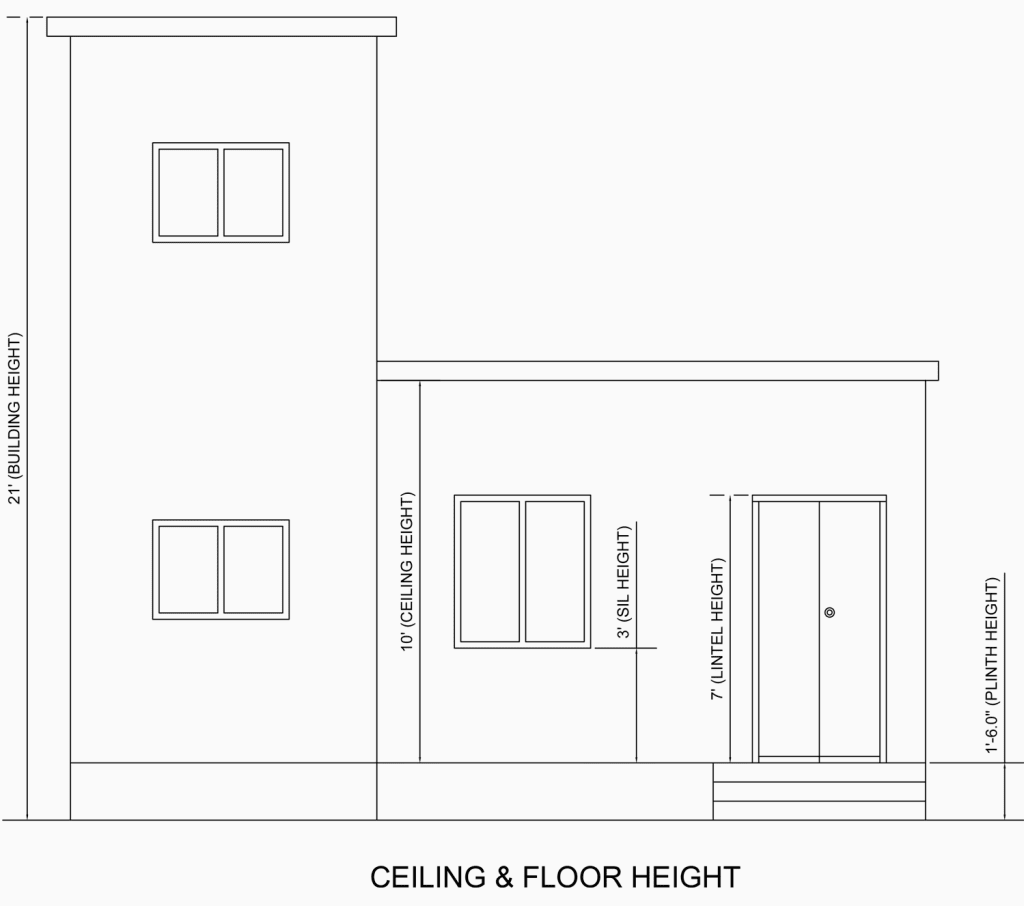
What Is Ceiling Height?
Ceiling height is the vertical distance between the finished floor level and the ceiling surface of a room.
In simple terms, it measures how high the ceiling is above the floor inside a room.
This dimension affects how open or compact a room feels. A higher ceiling often makes the space feel larger and improves airflow, while a lower ceiling may create a more compact environment.
When architects design a house, they carefully choose the ceiling height to ensure that rooms feel comfortable and balanced. The chosen height also needs to work with the building’s structural system, including beam depth and slab thickness.
Minimum Ceiling Height According to Building Standards
Most building guidelines specify minimum ceiling heights to ensure adequate ventilation and comfortable living conditions.
Typical minimum heights used in residential construction are shown below.
| Room Type | Minimum Ceiling Height |
| Habitable rooms (living room, bedrooms) | 2.75 m (about 9 ft) |
| Bathrooms and toilets | 2.4 m (about 8 ft) |
| Corridors and passages | 2.1 m |
These values are commonly followed in building standards and municipal guidelines across India. However, the exact requirements may vary slightly depending on local regulations and building codes.
Maintaining these minimum heights ensures that rooms have sufficient air volume and do not feel cramped.
Ideal Ceiling Height for Modern Houses
While minimum heights ensure functionality, modern homes often use slightly higher ceilings to improve comfort and aesthetics.
The following table shows typical ideal ceiling heights for different rooms in a house.
| Room Type | Ideal Ceiling Height |
| Living room | 10 – 12 ft |
| Bedrooms | 9 – 10 ft |
| Kitchen | 9 – 10 ft |
| Bathrooms | 8 – 9 ft |
Living rooms sometimes have higher ceilings because they are the main gathering spaces in a home. A higher ceiling can create a more open and welcoming atmosphere.
Bedrooms and kitchens usually maintain heights between 9 and 10 feet, which provides a comfortable balance between spaciousness and construction efficiency.
Bathrooms often have slightly lower ceilings because they require less vertical space.
Typical Floor-to-Floor Height in Houses
Ceiling height is often confused with floor-to-floor height, but the two are not the same.
Floor-to-floor height refers to the total vertical distance between the finished floor of one storey and the finished floor of the storey above it.
This height includes several components:
- ceiling height
- thickness of the floor slab
- depth of structural beams
- floor finishing layers
In most residential buildings, the floor-to-floor height typically ranges between 10 and 11 feet.
For example, if a room has a ceiling height of about 9.5 feet and the slab thickness and beam depth together occupy around 1 to 1.5 feet, the total floor-to-floor height may be close to 10.5 or 11 feet.
This dimension is important when determining the overall height of multi-storey houses.
Factors That Influence Ceiling Height
Several factors influence the choice of ceiling height in a house. Architects and engineers consider these aspects to ensure that the building remains comfortable, practical, and structurally efficient.
Climate and Ventilation
In warmer climates like many parts of India, slightly higher ceilings help improve airflow. Hot air naturally rises, so a higher ceiling can make rooms feel cooler and more comfortable.
Architectural Design Style
Different architectural styles use different ceiling heights. For example, contemporary homes sometimes use higher ceilings to create a more spacious interior, while compact urban homes may use standard heights to optimise construction cost.
Structural System
Structural elements such as beams and slab thickness affect the final ceiling height. Engineers must ensure that the structural design provides sufficient strength while maintaining the desired room proportions.
Room Proportions
The size of the room also influences ceiling height. Larger rooms generally benefit from slightly higher ceilings to maintain balanced proportions.
Benefits of Higher Ceiling Height
Many homeowners prefer slightly higher ceilings because they offer several practical advantages.
Improved Ventilation
Higher ceilings allow warm air to rise above the occupied space. This can help improve air circulation and make rooms feel more comfortable, especially in warmer climates.
Better Natural Lighting
Rooms with higher ceilings often accommodate taller windows or larger openings. This allows more daylight to enter the interior.
Spacious Interior Feel
Even a small increase in ceiling height can make a room feel more open and airy. This is one reason why many modern homes use ceiling heights closer to 10 feet rather than the minimum limit.
However, excessively high ceilings can increase construction cost and energy consumption, so a balanced design approach is usually preferred.
Ceiling Height vs Floor-to-Floor Height (Common Confusion)
The terms ceiling height and floor-to-floor height are sometimes used interchangeably, but they refer to different measurements.
- Ceiling height measures the distance from the finished floor surface to the ceiling surface inside a room.
- Floor-to-floor height measures the distance between the finished floors of two successive storeys.
Floor-to-floor height includes structural elements such as slabs and beams, while ceiling height refers only to the usable interior space inside the room.
Understanding this distinction is helpful when reviewing architectural drawings or discussing building dimensions.
Typical Ceiling Height in Modern Indian Houses
In most modern residential houses in India, ceiling heights typically range between 9 and 10 feet.
This range offers a good balance between comfort, ventilation, and construction cost. It provides enough vertical space for ceiling fans, lighting fixtures, and interior finishes without significantly increasing structural requirements.
In larger homes or premium residential projects, living rooms may sometimes have ceilings of 10 to 12 feet to create a more spacious appearance.
For smaller homes or apartments, ceiling heights closer to 9 feet are commonly used because they help maintain efficient construction costs while still providing comfortable living conditions.
FAQs on Standard Ceiling Height in India
In most residential houses in India, the standard ceiling height ranges between 9 feet and 10 feet from the finished floor level to the ceiling surface.
For habitable rooms such as living rooms and bedrooms, the minimum ceiling height generally used in residential construction is about 2.75 metres (approximately 9 feet). Bathrooms may have slightly lower ceilings.
Floor-to-floor height is the total vertical distance between the finished floors of two consecutive storeys. It includes ceiling height along with slab thickness, beam depth, and floor finishing.
Conclusion
Ceiling height plays an important role in the comfort and functionality of a house. It affects ventilation, lighting, and the overall sense of space inside rooms.
In most residential buildings in India, ceiling heights between 9 and 10 feet provide a comfortable balance between spaciousness and construction efficiency. Larger rooms may sometimes use higher ceilings to create a more open interior.
When planning a house, it is helpful to consider ceiling height alongside other important design standards such as room sizes, staircase dimensions, and plinth height. Paying attention to these details during the design stage helps create a home that feels comfortable, well-proportioned, and suitable for everyday living.
Popular on Houseyog Right Now!: