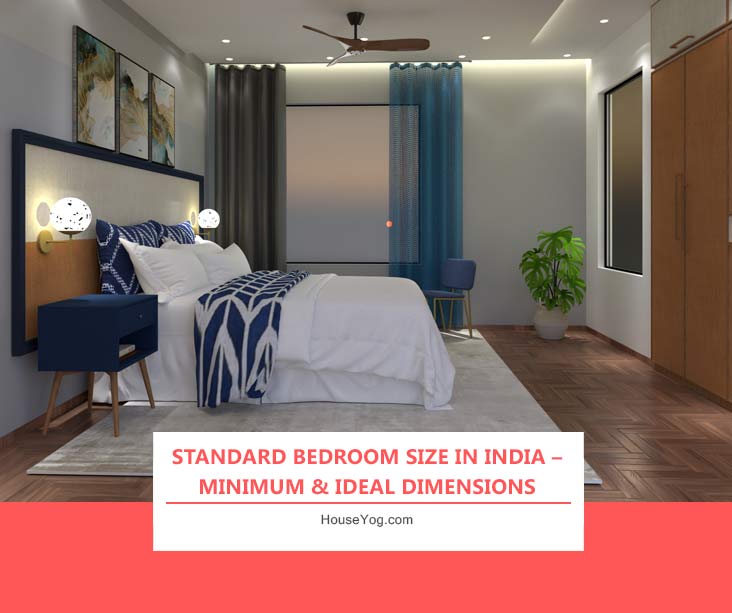

The bedroom is one of the most important spaces in a house. It’s where you rest, relax, and spend a significant part of your daily life.
Yet many homeowners are unsure about the right bedroom size when planning their house.
During house design discussions with our clients, a few questions come up almost every time:
- Should a bedroom be 10 x 10 ft or 12 x 12 ft?
- How much space is needed for a bed and a wardrobe?
- What is the ideal master bedroom size in a house?
In reality, the standard bedroom size in India is not fixed. It usually depends on several practical planning factors, such as:
- Bed size
- Wardrobe placement
- Walking clearance around furniture
- Attached bathroom requirements
In this guide, we’ll explain the standard bedroom size in India, including:
- Minimum bedroom size for houses
- Ideal master bedroom dimensions
- Master bedroom suites in larger homes
- Practical bedroom layout considerations
The goal is simple: to help you choose a bedroom size that feels comfortable and works well with real furniture layouts.
Standard Bedroom Size in India (Quick Answer)
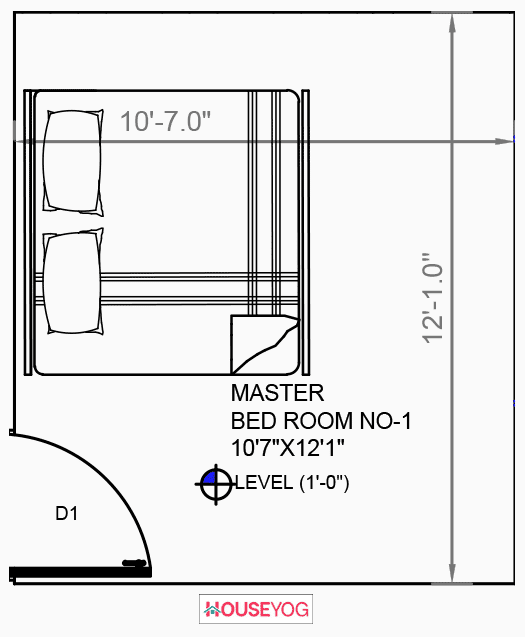
In most residential houses in India, the standard bedroom size typically ranges between 10 x 12 feet and 12 x 14 feet.
A 10 x 12 ft bedroom is commonly used as a secondary bedroom, while 12 x 14 ft bedroom is considered a comfortable master bedroom size.
This size comfortably accommodates:
- a double bed
- wardrobe storage
- walking space around the furniture
A 10 x 12 ft bedroom is commonly used for secondary bedrooms, while a 12 x 14 ft room is often planned as a master bedroom in many houses.
Bedroom Size Chart (Quick Reference)
Below is a quick reference chart for common bedroom sizes used in residential houses in India.
| Bedroom Type | Typical Size | Suitable For |
| Small bedroom | 10 x 10 ft | Guest room or kids bedroom |
| Standard bedroom | 10 x 12 ft | Secondary bedroom |
| Comfortable bedroom | 12 x 12 ft | Larger secondary bedroom |
| Master bedroom | 12 x 14 ft | Primary bedroom |
| Large master bedroom | 14 x 16 ft | Master bedroom with seating |
Next, we’ll understand the minimum sizes of the bedroom for comfortable living.
Minimum Bedroom Size for Indian Houses
While designing houses, we sometimes work with space constraints, especially in urban plots. In such cases, bedrooms can be planned at the minimum functional size.
However, it’s important to understand how usable each size actually feels once furniture is placed.
| Bedroom Type | Minimum Size |
| Small bedroom | 10 x 10 ft |
| Standard bedroom | 10 x 12 ft |
| Comfortable bedroom | 12 x 12 ft |
A 10 x 10 ft bedroom is generally considered the smallest practical bedroom size. It can accommodate a bed and a small wardrobe, but the room may feel slightly compact once furniture is added.
A 10 x 12 ft bedroom is a more comfortable layout and is commonly used in many residential houses.
A 12 x 12 ft bedroom provides better circulation space and allows more flexibility in placing furniture.
If space allows, we usually recommend avoiding bedrooms smaller than 10 x 10 ft, because movement around the bed becomes restricted.
Ideal Master Bedroom Size in India
The master bedroom is typically larger than other bedrooms in the house.
This is because it often includes:
- A larger bed (queen or king size)
- Larger wardrobes
- Dressing space
- Attached bathroom
Typical sizes include:
| Bedroom Type | Typical Size |
| Master bedroom | 12 x 14 ft |
| Large master bedroom | 14 × 16 ft |
A 12 x 14 ft room is considered a comfortable master bedroom size in India and works well in most residential houses. It provides enough space for a large bed, wardrobes, and comfortable circulation.
A 14 x 16 ft master bedroom feels significantly more spacious and allows additional features such as a seating corner or larger wardrobe area.
Master Bedroom Suite Size (Luxury Bedroom Layout)
In larger homes and independent villas, the master bedroom is sometimes designed as a complete bedroom suite.
Instead of being just a sleeping space, it becomes a private zone within the house.
A typical bedroom suite may include:
- Sleeping area
- Walk-in wardrobe
- Attached bathroom
- Sometimes a small seating space
Typical planning sizes include:
| Bedroom Layout | Typical Size |
| Large master bedroom | 14 x 16 ft |
| Master bedroom with a walk-in wardrobe | 16 x 18 ft |
| Full master bedroom suite | 18 x 22 ft or larger |
These layouts are usually planned in larger independent houses or villas where space is not a major constraint.
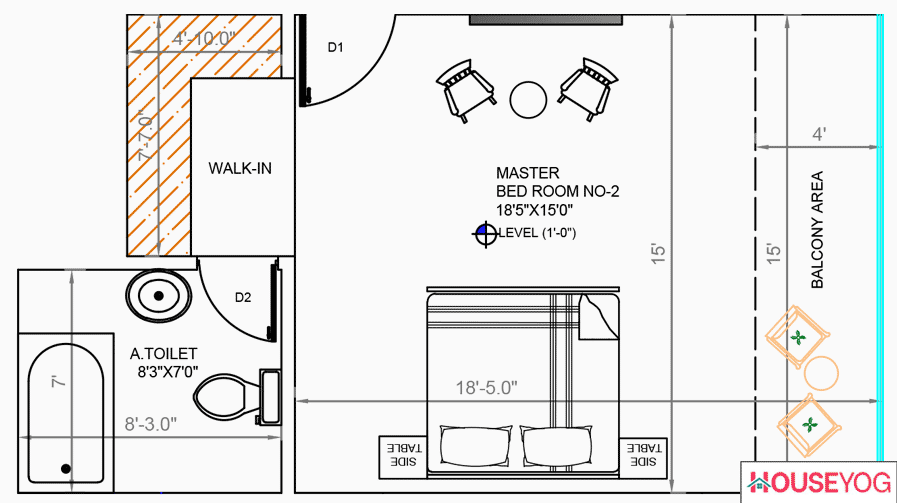
Walk-in Wardrobe Space
A walk-in wardrobe usually requires a width of around 5–7 feet.
This allows wardrobes on one or both sides with a comfortable walking space in the middle.
In many house plans, the wardrobe area is placed between the bedroom and the bathroom, creating a functional dressing zone.
This layout also improves privacy because the bathroom entrance is not directly visible from the bedroom.
Bathroom with Bathtub
Bathrooms attached to bedroom suites are typically larger than regular bathrooms.
Common sizes include:
- 8 x 10 ft
- 10 x 12 ft
This extra space allows room for features such as:
- Bathtub
- Separate shower area
- Double vanity
- Toilet enclosure
Such layouts are commonly seen in independent villas and larger residential houses.
Bedroom Size Based on Bed Dimensions
In practical house design, the bedroom size often depends on the bed size and the required walking space around it.
Here’s a simple reference:
| Bed Type | Bed Size | Recommended Room Size |
| Single bed | 3 x 6.5 ft | 8 x 10 ft |
| Double bed | 5 x 6.5 ft | 10 x 12 ft |
| King-size bed | 6 x 6.5 ft | 12 x 12 ft or larger |
When placing a bed, we usually try to maintain 2–3 feet of walking space around the sides and foot of the bed.
Without this clearance, the room quickly starts to feel cramped.
Recommended Clearance Around the Bed
When planning bedroom dimensions, it’s important to leave enough walking space around the bed.
In most house designs, we usually try to maintain:
| Area | Recommended Clearance |
| Side of bed | 2–3 ft |
| Foot of the bed | 2–3 ft |
| Wardrobe access space | 3 ft |
This clearance ensures that:
- The bed is easy to access
- Wardrobes can open comfortably
- The room does not feel cramped
Ignoring this during planning often results in bedrooms that look large on paper but feel tight after furniture is installed.
Space Needed for Wardrobes
Wardrobe space is one of the most important factors that affect bedroom dimensions in feet.
A typical wardrobe usually has a depth of about 2 feet.
When planning bedroom width, we need to consider:
- Bed width
- Walking space beside the bed
- Wardrobe depth
For example, if a bedroom has a king-size bed, the room should ideally allow:
- Bed width
- Walking space on both sides
- Wardrobe along one wall
Ignoring wardrobe space during planning often results in tight bedrooms once interiors are installed.
Common Bedroom Layout Sizes Used in Houses
In most residential projects, we frequently see a few standard bedroom layouts.
| Layout | Typical Size |
| Guest/Kids bedroom | 10 x 10 ft |
| Standard bedroom | 10 x 12 ft |
| Master bedroom | 12 x 14 ft |
A 10 x 10 ft room is usually used as a guest bedroom or children’s bedroom.
A 10 x 12 ft room works well as a standard bedroom and is one of the most common sizes in modern houses.
A 12 x 14 ft room is typically used for master bedrooms.
These sizes balance comfort while still keeping the overall house layout efficient.
Factors That Affect Bedroom Size
When we design bedrooms in residential houses, the final room size depends on several practical factors.
Bed Size
The bed is the largest piece of furniture in a bedroom, so the room layout usually starts with the bed dimensions.
Wardrobe Space
Wardrobes require a minimum depth of around 2 feet, and the room must also allow space to stand and access them comfortably.
Attached Bathroom
If the bedroom has an attached bathroom, the room may need additional space near the entrance or dressing area.
Window Placement
Windows are important for ventilation and natural light. Their location can affect where the bed and wardrobe are placed.
Study Table or Dressing Area
Some bedrooms include:
- Study desks
- Dressing tables
- Small seating areas
These elements can slightly increase the ideal bedroom size.
Typical Bedroom Sizes in Modern Indian Houses
In most modern Indian houses, a few bedroom sizes are used very frequently because they balance comfort and space efficiency.
For example:
10 x 12 ft
This is probably the most common bedroom size used in residential houses. It comfortably fits a double bed and a wardrobe.
12 x 12 ft
This size provides better circulation space and allows more flexibility in furniture layout.
12 x 14 ft
This is a typical master bedroom size in India and works well when an attached bathroom is included.
These dimensions provide a good balance between comfort, usability, and efficient house planning.
Frequently Asked Questions (FAQs)
The standard bedroom size in India usually ranges between 10 x 12 feet and 12 x 14 feet in most residential houses.
The minimum practical bedroom size is generally around 10 x 10 feet, although slightly larger rooms are more comfortable once furniture is added.
Yes, a 10 x 10 ft room can work as a bedroom, especially for a guest room or children’s room. However, space can feel limited once wardrobes and furniture are added.
A comfortable master bedroom size in India is usually around 12 x 14 ft or larger, depending on the house layout and available space.
Conclusion
Choosing the right bedroom dimensions is an important part of planning a comfortable home.
While the standard bedroom size in India typically ranges between 10 x 12 ft and 12 x 14 ft, the ideal dimensions depend on practical considerations such as:
- Bed size
- Wardrobe space
- Comfortable movement around furniture
In many houses, secondary bedrooms are around 10 x 12 ft, while master bedrooms are usually 12 x 14 ft or larger.
When designing a house, it’s helpful to think about bedroom layouts early in the planning stage. This ensures that the room comfortably fits the furniture and daily activities you expect.
If you’re planning your house layout, you may also find these guides helpful:
- Standard bathroom size in India
- Standard staircase dimensions for houses
- Standard car parking size for homes
Taking the time to plan these details early can make a significant difference in the comfort and usability of your home.
Popular on Houseyog Right Now!: