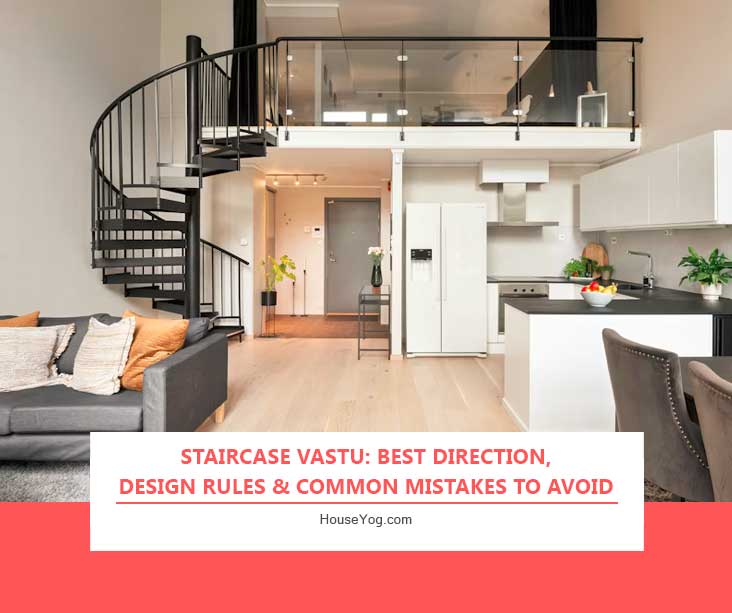

Are you planning to build a home and wondering where your staircase should be placed as per Vastu?
In Vastu Shastra, a staircase is not just a structural element connecting floors. It plays a crucial role in controlling energy movement, stability, and long-term harmony within the house. When placed correctly, it supports growth, health, and peace. When planned incorrectly, it can quietly create financial stress, health issues, or constant imbalance in daily life.
That’s why understanding staircase vastu before finalising your house layout is extremely important — especially for independent homes, duplexes, and villas.
In this detailed guide, we’ll walk you through everything you need to know — from the best direction and ideal number of steps to design rules, common mistakes, practical remedies, and real-life planning insights that homeowners often overlook.
Quick Summary – Staircase Vastu Key Points
The best staircase direction as per Vastu is South, West, or South-West. Avoid the North-East and the centre of the house. Staircases should rise clockwise, use odd steps, and avoid placement near puja rooms or main entrances.
Before we go deeper, here’s a quick snapshot of the most important staircase Vastu guidelines you should keep in mind while planning your home:
- Best direction: South, West, or South-West
- Avoid: North-East and the centre of the house
- Ideal number of steps: Odd numbers such as 9, 11, 15, or 17
- Best staircase shape: L-shaped or square (avoid spiral designs)
- Preferred materials: Stone, marble, or concrete
- Common mistakes: Staircase above the kitchen, puja room, or main entrance
- Good news: Vastu remedies are available even if the staircase is already built
These basics give you a strong foundation. But staircase Vastu goes much deeper than just direction and step count.
Now, let’s understand why the position of a staircase matters so much in Vastu, before moving into detailed rules and design principles.
Why Staircase Vastu Matters in Home Design
In Vastu Shastra, every part of the house influences energy flow — but staircases are unique because they connect different energy zones vertically. This vertical movement can either support balance or disturb it, depending on placement and design.
A well-planned staircase:
- Encourages smooth energy circulation
- Improves spatial balance
- Enhances long-term stability and comfort
On the other hand, a poorly positioned staircase can block positive energy, create pressure points, and affect multiple areas of life at once.
This is why staircase vastu should never be an afterthought; it must be planned alongside your layout, room positioning, and circulation flow.
You may also like to explore our Vastu-Friendly Home Design Guide to understand how all Vastu elements come together in a complete home layout.
Best Direction for Staircase as per Vastu
Choosing the right direction for your staircase is one of the most critical decisions in Vastu planning. Since a staircase represents constant upward and downward energy movement, its placement directly affects balance, stability, and flow within the house.
In Vastu Shastra, different directions carry different energy qualities. Some zones can easily handle heavy movement, while others are meant to remain light and open.
Let’s understand which directions work best, and which directions & positions should be avoided.
Ideal Staircase Directions (Highly Recommended)
South, West, and South-West are considered the most suitable directions for staircases.
These zones represent stability, strength, and grounding energy, making them ideal for heavy structural elements like stairs.
Why these directions work well:
- They can comfortably handle weight and movement
- They do not disturb positive energy zones
- They support long-term stability and financial balance
- They help maintain proper energy circulation in the rest of the house
Placing the staircase in these directions ensures that other sensitive areas—such as the north-east and centre- remain open and energetically balanced.
Directions to Avoid for Staircase Placement
Some areas of the house are highly sensitive in Vastu and should never carry heavy structural loads like staircases.
Avoid placing staircases in:
- North-East (Ishanya corner) – the most inauspicious for stairs
- North or East zones – generally discouraged
- Centre of the house (Brahmasthan) – strictly avoid
Why These Directions Are Not Recommended
The North-East zone governs clarity, wisdom, health, and spiritual growth. It should always remain light, open, and unobstructed. A staircase here blocks positive energy flow and often leads to mental stress, health issues, or stagnation in progress.
Similarly, the centre of the house acts as the energy core. Placing a staircase here creates an imbalance and disrupts the natural flow between different areas of the home.
This is why experienced architects and Vastu consultants strongly recommend keeping staircases away from these zones — especially in independent houses and duplex homes.
Staircase Vastu Rules You Must Follow
Once the staircase direction is finalised, the next step is to focus on how the staircase is designed and positioned inside the house. In Vastu Shastra, even small details, like the direction of movement or the height of each step, can influence energy flow and overall harmony.
Let’s look at the most important staircase Vastu rules that every homeowner should follow during planning and construction.
Direction of Movement (Going Up)
The direction in which you climb the staircase plays a subtle but important role in energy balance.
- The staircase should rise in a clockwise direction while going up.
- Anti-clockwise movement is considered energy-draining and may create instability or restlessness in the home.
This rule is especially important for internal staircases used daily by family members.
Staircase Position Inside the House
The internal placement of a staircase can influence how energy flows between rooms and floors.
Recommended guidelines:
- The staircase should not touch or directly face the main entrance.
- Avoid placing it inside or directly above the kitchen or puja room.
- It is best positioned along a side wall, preferably in the south, west, or south-west zone.
Proper placement ensures smooth circulation without disturbing important activity zones of the house.
Height and Proportion of Steps
Consistency in staircase design is essential for both comfort and Vastu compliance.
- All steps should have uniform height and width.
- Avoid broken, uneven, or irregular steps.
- Sudden changes in step size can create imbalance and discomfort, both physically and energetically.
Well-proportioned steps support smooth movement and stable energy flow across floors.
Once the direction, placement, and structure are right, the next important factor is the number of steps, a small detail that carries significant Vastu importance.
Ideal Number of Steps as per Vastu
After deciding the staircase direction and placement, the next important detail to focus on is the number of steps. While it may sound minor, Vastu considers step count to be closely linked with rhythm, balance, and energy movement within the house.
A well-calculated number of steps helps maintain harmony, while an incorrect count can create subtle imbalance over time.
Auspicious Number of Steps
As per Vastu Shastra, odd numbers are considered more stable and auspicious for staircases.
Commonly recommended step counts include: 9, 11, 15, 17, 21
These numbers are believed to support continuity, progress, and positive energy flow throughout the home.
Number of Steps to Avoid
Certain step counts are generally avoided in staircase design:
- Even numbers such as 10, 12, or 14
- Step counts ending in 0 or 8
Such numbers are believed to disrupt rhythm and balance, especially when the staircase is used frequently by family members.
How to Count the Steps – the Right Way
Always count only the risers, not the landings or floor slabs.
For example:
- If your staircase has 10 visible risers but one landing in between, the correct count is still 10, not 11.
This small detail is often overlooked during construction and can lead to confusion later, so it’s best to clarify it early with your architect or contractor.
Staircase Vastu Rules (Shape, Material & Colour)
Once the direction and number of steps are finalised, the next important aspect of staircase Vastu is design. This includes the shape, material, and colour of the staircase — all of which influence how energy moves through the home.
A well-designed staircase should feel balanced, stable, and visually calm, without dominating the space or creating heaviness.
Best Staircase Shapes as per Vastu
The shape of the staircase affects how smoothly energy flows between floors.
Recommended shapes include:
- L-shaped staircase – the most preferred option, as it allows controlled and stable energy movement
- Square or U-shaped staircase – acceptable and commonly used in modern homes
These shapes maintain balance and avoid sudden or chaotic energy shifts.
Staircase Shapes to Avoid
Some designs may look stylish but are not ideal from a Vastu perspective:
- Spiral staircases – create uneven energy flow and instability
- Circular staircases in small homes can cause confusion and imbalance due to continuous rotation
Such designs are better suited for aesthetic spaces rather than residential homes focused on comfort and harmony.
Materials Recommended for Staircases
Material selection plays a key role in grounding the energy of the house.
Preferred materials include:
- RCC (Reinforced Cement Concrete)
- Natural stone
- Marble or granite
These materials provide strength, stability, and longevity, qualities that align well with Vastu principles.
Expert tip: Avoid wooden staircases in the South or South-West zones, as wood represents lighter energy and may conflict with the heavy nature of these directions.
Colour Suggestions for Staircases
Colours influence mood and energy more than most people realise.
Recommended colours:
- Light earthy tones
- Cream, beige, off-white
- Soft browns or neutral shades
Colours to Avoid:
- Dark red or maroon
- Black or very dark shades
- Extremely bright or flashy colours
Soft, natural colours help maintain balance and make the staircase feel welcoming rather than overpowering.
Common Staircase Vastu Mistakes to Avoid
Even with good intentions, many homeowners unknowingly make staircase-related mistakes that disturb the energy balance of the house. These issues often arise due to space constraints, lack of early planning, or incomplete Vastu awareness.
Understanding these common staircase Vastu mistakes can help you avoid long-term discomfort and expensive corrections later.
Most Common Staircase Vastu Mistakes in Homes
1. Staircase above the Puja Room
This is one of the most serious Vastu defects. The puja room represents purity and spiritual energy, and placing a staircase above it creates energetic pressure and disturbance.
2. Toilet Under the Staircase
A toilet below the stairs is considered highly inauspicious. It mixes negative and heavy energy with movement zones, which may affect health and peace of mind.
3. Kitchen Directly Below the Staircase
The kitchen represents fire energy. When placed under a staircase, this fire element gets suppressed, often leading to stress, financial imbalance, or frequent conflicts.
4. Storage of Junk Under the Stairs
Using the space under the staircase to store unused or broken items blocks energy flow. Over time, this can lead to stagnation and negativity within the house.
5. Staircase in the Centre of the House (Brahmasthan)
The centre of the home is its energy core. A staircase here disrupts the natural balance and can affect all areas of life.
6. Staircase Facing the Main Door
When a staircase directly faces the main entrance, positive energy tends to rush out instead of circulating inside the house.
Each of these placements disrupts the natural energy flow, often leading to subtle yet persistent issues, such as restlessness, financial instability, or stagnation in growth. Many homeowners realise this only after living in the house for some time.
The good news? Most of these issues can be corrected or minimised with the right Vastu remedies, even if structural changes are not possible.
Vastu Remedies for Staircase Defects
If your home already has a staircase placed in an unfavourable position, don’t panic. In many real-life homes, structural changes are not always possible, especially in completed or occupied houses.
The good news is that Vastu remedies can help reduce negative impact and restore balance, provided they are applied correctly and realistically.
Simple & Practical Vastu Remedies for Staircases
1. Use Light Colours and Proper Lighting
Light shades such as white, cream, or soft pastels help neutralise heavy energy. Ensure the staircase area is well-lit, preferably with natural light or soft, warm lighting.
2. Avoid Clutter Under the Stairs
The space below the staircase should never be used to store broken items, unused furniture, or scrap. Clutter blocks energy flow and creates stagnation.
3. Install Copper Strips or Vastu Pyramids (Expert-Guided)
Copper elements or vastu pyramids can help balance disturbed energy when placed correctly. These should always be installed after consultation, as incorrect placement may reduce effectiveness.
4. Use Indoor Plants Near the Staircase Base
Healthy green plants help absorb negative energy and bring freshness. Choose low-maintenance indoor plants and avoid thorny or dry plants.
5. Maintain Cleanliness and Ventilation
A clean, well-ventilated staircase area helps energy move freely and prevents heaviness or dullness in the surrounding spaces.
Vastu remedies help reduce the intensity of defects, but they cannot fully replace proper planning or structural correction. For new constructions, it’s always better to align the staircase layout correctly at the design stage itself.
Under-Staircase Usage as per Vastu
The space beneath a staircase is often overlooked or misused, but according to Vastu Shastra, it plays an important role in maintaining balance within the home. Since this area naturally carries heavier and downward-moving energy, it must be used thoughtfully.
Proper utilisation of the under-staircase area can support stability and organisation, while incorrect usage may lead to energy stagnation or discomfort in the house.
Allowed Uses Under the Staircase
These uses are considered safe and Vastu-friendly:
- Storage for non-heavy and non-cluttered items, such as seasonal items, cleaned utensils, or household essentials
- Closed cabinets or drawers, preferably well-organised and kept clean at all times
- Small seating or reading space, especially in well-lit areas where the staircase is open and airy
These uses help maintain balance without blocking or disturbing energy flow.
Uses to Avoid Under the Staircase
Certain functions should strictly be avoided under the staircase due to their conflicting energy nature:
- Puja room or prayer space
- Bathroom or toilet
- Kitchen or gas stove
- Bedroom or sleeping area
Such placements can create energetic imbalance and negatively affect peace, health, and harmony within the home.
Expert tips: If the space under the staircase is unavoidable and already constructed, keep it clean, dry, well-lit, and clutter-free. Adding soft lighting or indoor plants can also help improve the energy quality.
Internal vs External Staircase – Vastu Difference
Not all staircases impact a home in the same way. From a Vastu perspective, internal and external staircases behave very differently, mainly because of how they interact with the internal energy flow of the house.
Understanding this difference helps you decide placement, design, and precautions more accurately — especially during the planning stage.
Internal Staircase (Inside the House)
Internal staircases directly affect the energy movement within the home and, therefore, require more careful planning.
Key Vastu considerations:
- More sensitive to Vastu defects due to constant daily use
- Should be aligned carefully with the overall room layout
- Avoid placing near bedrooms, puja rooms, or the main entrance
- Should not disturb privacy, peace, or natural light flow
Because internal staircases influence multiple areas of the house, even small design mistakes can have long-term effects.
External Staircase (Outside the Main Structure)
External staircases are comparatively more flexible from a Vastu point of view, as they remain outside the core living space.
Recommended guidelines:
- Best placed in the South or West direction
- Should not block natural light, ventilation, or entry points
- Should feel structurally balanced and well-connected without dominating the façade
External staircases are often easier to correct or modify if required, making them a safer option in constrained layouts.
Cost Perspective: What Influences Staircase Construction Cost?
While staircase vastu focuses on direction, placement, and energy flow, it’s also important to understand how design choices affect construction cost.
Vastu-compliant staircases do not necessarily cost more. But materials, finishes, and complexity can influence the final budget.
Approximate Cost Range (India)
- RCC staircase: ₹1,200 – ₹1,800 per sq ft
- Stone or marble finish: ₹2,500 – ₹4,000 per sq ft
- Railings & safety finishes: ₹1,000 – ₹3,000 per running ft
Cost Depends On:
- Quality of materials used
- City and local labour rates
- Staircase shape and detailing
- Type of railing and finish
Planning your staircase early helps control both cost and Vastu alignment. For a detailed breakup and estimation method, you can refer to our Construction Material Estimation Guide.
Frequently Asked Questions (FAQ)
Yes. Staircase vastu plays a crucial role in maintaining balance between different floors of a home.
It’s generally avoided. If unavoidable, expert consultation and remedies are required.
L-shaped or square staircases are best as per Vastu.
No. This is one of the most serious Vastu defects.
Final Thoughts
A well-planned staircase is not just about movement — it’s about balance, safety, and long-term comfort.
If you’re designing or renovating a home, consider staircase vastu early in the planning stage to avoid expensive corrections later.
👉 Explore more:
If you’re planning a new home or modifying an existing layout, our architects can help you align design, Vastu, and budget seamlessly
Call or WhatsApp us at: 75960 58808 for personalised planning, drawings, and vastu-aligned designs.
Popular on Houseyog Right Now!: