
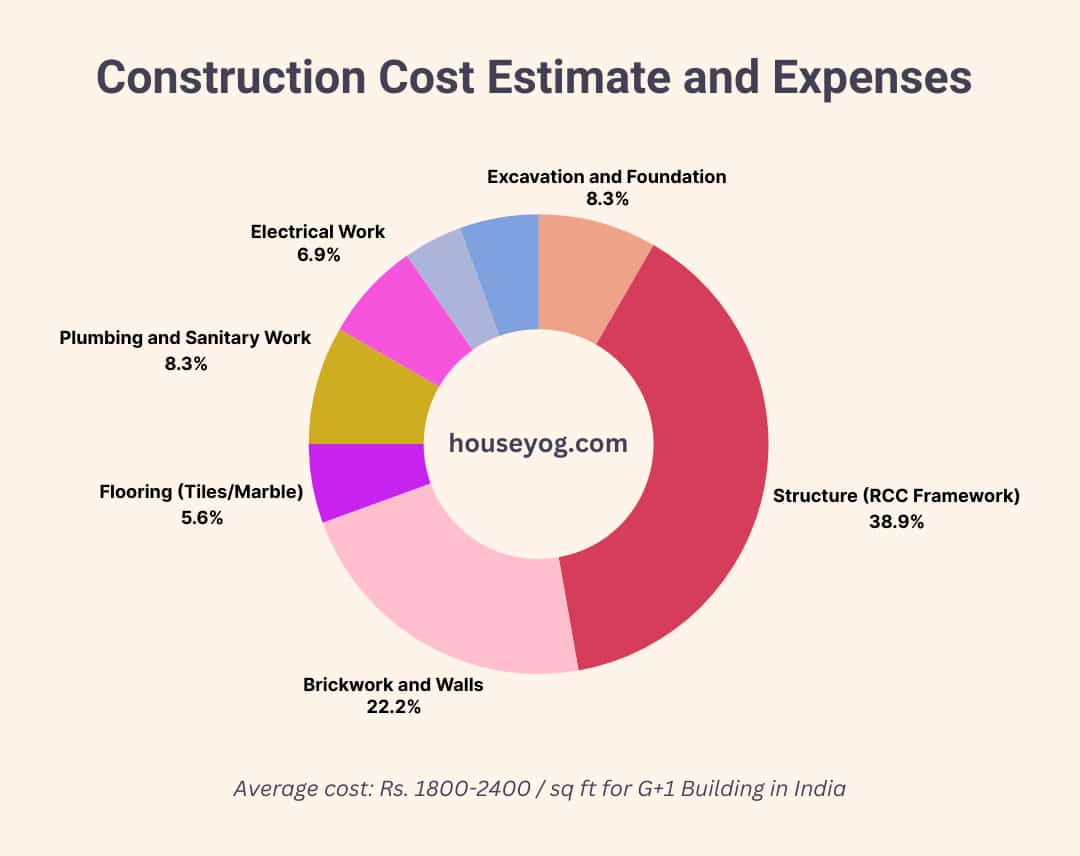

If you’re preparing to build your home in 2026, understanding the construction cost per square foot is usually the best starting point. Across most Indian cities, house construction costs range between ₹1,600 and ₹3,200 per sq ft for a standard independent residential building. However, that number alone does not tell the full story.
The final cost depends on several practical factors — the city you’re building in, the finish quality you choose, whether it’s a G or G+1 structure, the type of contractor agreement, and even soil conditions on your plot.
For example:
- A basic-finish home may cost around ₹1,400–₹1,800 per sq ft
- A standard-finish house typically falls between ₹1,800–₹2,800 per sq ft
- Premium specifications can go beyond ₹2,800 and even reach ₹5,000+ per sq ft
These rates apply to independent residential houses and exclude land cost, compound walls, borewells, septic tanks, and major external development unless specifically included.
Building a home is exciting — but it’s also one of the biggest financial decisions for most families. Whether you are planning a compact 1000 sq ft home or a G+1 house with a 1500 sq ft built-up area, understanding where your money goes helps you plan with clarity and avoid costly surprises later.
At Houseyog, we’ve worked on multiple residential projects across Bihar and Jharkhand, including recently completed G+1 homes in cities like Darbhanga and Ranchi. One thing we consistently see is this: small design or material decisions can significantly influence the overall construction cost.
In this article, we break down house construction cost in India in a practical, easy-to-understand manner — covering finish types, city-wise trends, labour vs turnkey contracts, and real project cost insights — so you can budget confidently and build smart.
To understand these variations clearly, let’s first look at how different finish levels influence the overall construction cost per square foot.
Construction Cost and Finish Type
House construction cost in India varies significantly based on finish quality, with basic, standard, and premium specifications directly influencing the per sq ft rate.
| Finish Type | Typical Cost Range (₹/sq ft) |
|---|---|
| Basic residential finish | ₹1,400 – ₹1,800 |
| Standard finish | ₹1,800 – ₹2,800 |
| Premium finish | ₹2,800 – ₹5,000+ |
House Construction Cost Per Sq Ft in Major Indian Cities
While overall construction cost in India ranges between ₹1,600 and ₹3,200 per sq ft for standard residential buildings, metro cities tend to fall toward the higher end of this range due to labour charges, material logistics, and compliance costs.
Below is a broad reference based on current 2026 trends:
| City | Typical Cost Range (₹/sq ft) | Category Alignment |
|---|---|---|
| Delhi NCR | ₹2,200 – ₹3,800 | Metro |
| Mumbai | ₹2,400 – ₹4,000+ | Metro |
| Bangalore | ₹2,100 – ₹3,600 | Metro |
| Kolkata | ₹1,900 – ₹3,000 | Tier-II |
| Patna | ₹1,600 – ₹2,700 | Tier-II |
| Ranchi | ₹1,600 – ₹2,600 | Tier-II |
Important:
Actual cost depends on finish level (basic vs premium), soil conditions, and contractor type. Premium specifications can exceed these ranges.
For a more detailed breakdown, you can explore our complete guide on house construction cost in Patna, including local factors, cost examples, and planning tips.
How Houseyog Defines Construction Cost Ranges
All construction cost ranges published on Houseyog follow a consistent methodology:
- Independent residential house (G or G+1)
- Standard structural design
- Normal soil conditions
- Labour and material rates observed across Indian cities
Individual labour cost guides (RCC, masonry, plaster, etc.) are derived from this base framework to ensure consistency across estimates.
Built-up area is considered for all per sq ft calculations unless stated otherwise.
Factors Affecting House Construction Costs
Understanding the key factors that influence house construction costs can help you plan your budget more effectively and avoid surprises. Some of the key factors that affect the construction cost include:
- City & Labour Market: Metropolitan areas have higher labour and material charges.
- Material Quality & Brand: Premium tiles, fittings, and finishes increase per-sq-ft rates.
- Design Complexity: Curved walls, cantilevers, basements, and rooftop slabs increase structural cost.
- Soil Condition & Foundation Depth: Poor soil increases excavation and piling costs.
- Number of Floors: Multi-storey buildings increase structural, shuttering, and reinforcement costs per sq ft.
- Contractor Type: Fixed-price contracts vs labour-only charges vary widely.
Here’s a detailed breakdown of the most significant cost determinants:
Project location
Urban cities generally have higher construction costs due to elevated labour charges and material prices. Semi-urban and rural areas often have lower labour costs, but transportation expenses for materials may rise, especially in remote locations.
Raw materials prices
The quality and grade of materials significantly impact construction costs. Premium-grade cement, steel, and tiles are more expensive but ensure better durability and longevity. Fluctuations in raw material prices, driven by market demand and supply, can also affect your construction budget.
Labour Charges
Skilled labour costs vary depending on the region, with urban areas typically incurring higher charges than rural areas. Labour costs cover essential tasks such as masonry, carpentry, plumbing, electrical work, and painting.
For a detailed breakdown of labour-only construction costs, contract types, and stage-wise labour rates, refer to our dedicated guide on house construction labour rates per sq ft.
Type of Construction
The cost of constructing a framed structure (RCC) is higher than building with load-bearing walls due to the need for more materials and structural support. G+1 and G+2 buildings involve additional expenses for foundation footing and piling to support the structure.
Additional Costs
Planning for additional expenses is crucial for managing your project efficiently. Here are a few often-overlooked cost heads:
- Material transportation: Costs for carrying materials to the construction site, especially for remote areas or higher floors in multi-story buildings.
- Contingencies: Unexpected expenses such as design modifications, government fees for building plan approvals, or unforeseen repairs.
- Finishes: High-end finishes like designer tiles, modular kitchens, and imported fittings can substantially increase costs. It’s common to opt for higher-quality finishes while shopping, so allocating a contingency fund in your budget is wise.
Cost Breakdown for a 1000 sq. ft. G+1 House Construction Project
Below is a detailed cost estimate for a 1000 sq. ft. G+1 building to provide clarity.
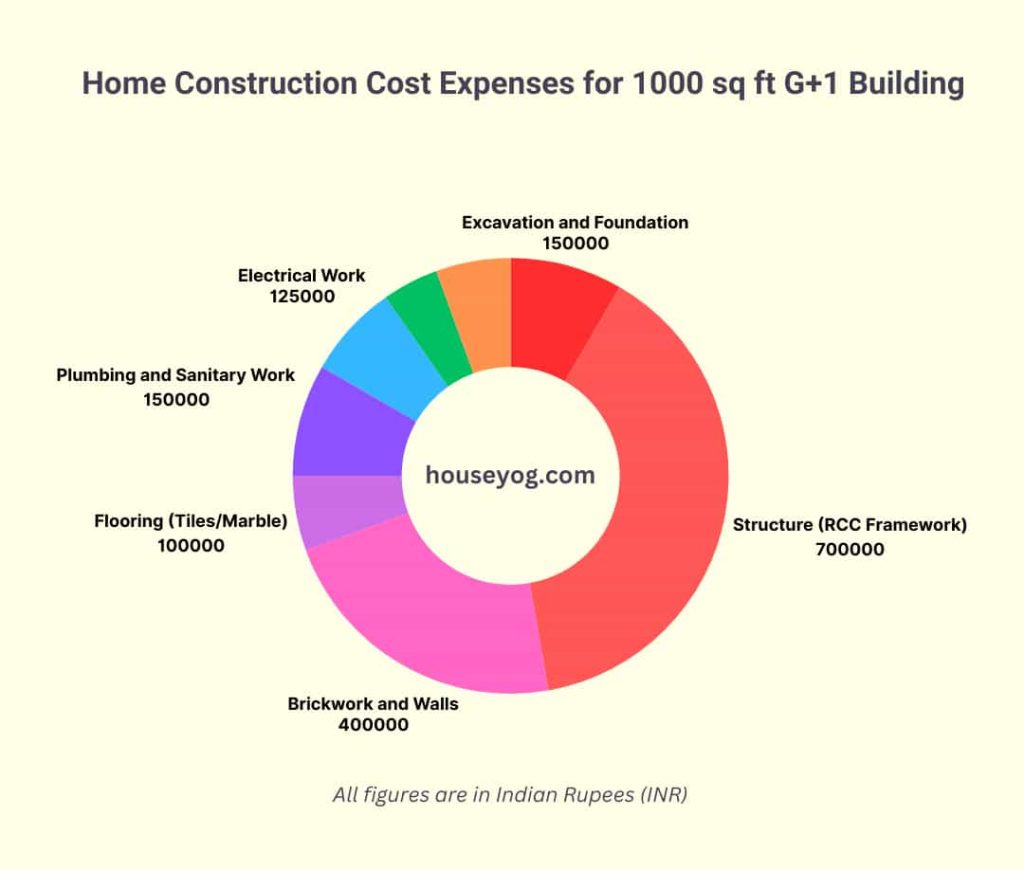
These costs can be scaled up for a 1200 or 1500 sq. ft. G+1 house or any other size of the house.
| Category | Avg Cost per sq. ft. | Total Cost for 1000 sq. ft. |
| Excavation and Foundation | Rs. 150 – 200 | Rs. 1,50,000 – 2,00,000 |
| Structure (RCC Framework) | Rs. 700 – 900 | Rs. 7,00,000 – 9,00,000 |
| Brickwork and Walls | Rs. 400 – 500 | Rs. 4,00,000 – 5,00,000 |
| Flooring (Tiles/Marble) | Rs. 100 – 150 | Rs. 1,00,000 – 1,50,000 |
| Plumbing and Sanitary Work | Rs. 150 – 200 | Rs. 1,50,000 – 2,00,000 |
| Electrical Work | Rs. 125 – 150 | Rs. 1,25,000 – 1,50,000 |
| Painting and Finishing | Rs. 75 – 150 | Rs. 75,000 – 1,50,000 |
| Miscellaneous Costs | Rs. 100 – 150 | Rs. 1,00,000 – 1,50,000 |
| Total | Rs. 1800 – 2400 | Rs. 18,00,000 – 24,00,000 |
For instant and customised estimates based on your plot and desired finishes, try our house construction cost calculator. It provides per-square-foot and build-up-wise figures, along with BOQ breakdowns, within seconds.
Constructing a boundary wall is usually one of the first steps on site, so understanding the boundary wall construction cost per foot in India helps in planning your total project budget more accurately.
Practical Tips to Control House Construction Cost
Planning to build your dream home? Proper insights and strategies can help you save money, avoid delays, and ensure a smooth construction process.
Here’s an in-depth guide to key tips that every homeowner should know:
Plan for Contingencies
Construction projects often encounter unexpected expenses, such as price hikes for materials, changes in design, or unplanned repairs.
- Budget Allocation: Set aside 10-15% of your total budget as a contingency fund to handle unforeseen costs.
- Proactive Planning: Regularly review your project’s progress and expenses to identify potential risks early and make adjustments.
Opt for Trusted Quality Materials
Choosing high-quality materials may increase initial costs but offers significant benefits in the long run.
- Durability: Premium-grade cement, steel, and tiles last longer, reducing the need for frequent repairs or replacements.
- Cost vs. Quality: Avoid compromising on critical materials like foundation steel or waterproofing solutions, as poor-quality alternatives can lead to expensive structural issues later.
Choose Experienced Professionals
Hiring skilled professionals ensures efficient construction and minimises costly errors.
- Architects and Contractors: Select professionals with a proven track record and good reviews to ensure quality work.
- Labour Force: Skilled labourers, such as masons and electricians, deliver better results and adhere to safety standards.
- Communication: Maintain clear communication with the contractor to ensure that they are fully aligned with your construction plan and expectations.
Optimise House Design
A well-thought-out design can help you save on costs while maximising the usability of your space.
- Efficient Layouts: Work with your architect to create a functional design that minimises material wastage.
- Standardised Dimensions: Using standard-sized doors, windows, and tiles can reduce cutting and installation costs.
- Energy Efficiency: Incorporate energy-saving features like natural ventilation, LED lighting, and insulated walls to reduce future utility expenses.
Stay Updated on Market Prices of the Materials
The construction market is dynamic, with prices for materials and labour fluctuating regularly.
- Monitor Prices: Keep track of trends in raw material costs, such as cement, steel, and sand, to make informed purchasing decisions.
- Bulk Purchasing: If prices are expected to rise, consider buying essential materials in bulk to lock in lower rates.
- Negotiate Rates: Engage with multiple vendors and negotiate prices for materials and services to get the best deals.
Real-life examples from a Construction Project in Darbhanga and Bokaro
We have recently constructed two houses – one in Darbhanga, Bihar, and another in Bokaro, Jharkhand. Both projects were G+1 buildings with 1500 sq. ft. built-up areas.
These examples reflect typical G+1 house construction costs in Tier-2 cities under standard specifications.
G+1 House Construction project in Darbhanga, Bihar:
- Total Cost: INR 28,00,000
- Features: Premium-grade cement, steel and tiles
- Challenges: high plinth level due to flood-prone locality.
G+1 House Construction Project at Bokaro, Jharkhand:
- Total Cost: INR 27,40,000
- Features: Standard-grade materials with quality finishes.
- Advantages: Proximity to suppliers reduced material transportation costs.
FAQ About Home Construction Cost
Yes, this range reflects typical residential construction costs in India for independent houses with standard specifications in 2025–26.
It depends on the contract type. Labour contracts cover labour only, while turnkey contracts include both materials and labour.
Yes. Multi-storey houses usually cost more per sq ft due to additional structural, shuttering, and reinforcement requirements.
Higher labour wages, material logistics, compliance costs, and contractor margins contribute to wider cost variation in metro cities.
Over to You
Constructing your dream home is a significant investment, but with careful planning, extensive budgeting and informed decisions, you can manage the construction costs effectively. By understanding the factors influencing construction costs and considering real-life examples, you can create a realistic budget and avoid last-minute surprises.
If you’re planning to build a home in Bihar or Jharkhand, feel free to reach out to us for expert architectural, construction and project supervision at the best affordable rates. With our years of experience in designing and building high-quality small residential buildings, we’ll ensure your dream home becomes a reality without breaking the bank.
Ready to plan, design and construct your dream home? Contact us today at +91 75960 58808 for an expert consultation!