A bedroom is not just another room in the house. It is where the body recovers, the mind slows down, and relationships quietly grow or strain. In Indian homes, especially those planned for long-term living, bedroom design plays a crucial role in everyday comfort, sleep quality, and emotional well-being.
From an architectural perspective, Bedroom Vastu is less about blindly following rules and more about understanding direction, light, airflow, privacy, and psychological comfort. When applied practically, these principles help create a calm, stable sleeping environment without compromising on modern layouts or design preferences.
This guide explains Bedroom Vastu tips in a clear, practical way, keeping real Indian homes, apartments, and construction constraints in mind. Bedroom Vastu broadly refers to planning the bedroom’s direction, bed placement, furniture layout, lighting, and ventilation so that the space supports restful sleep, mental calm, and overall harmony in daily life.
If you are still at the early stage of house planning, it is helpful to first understand the broader Vastu tips for home planning and interior design, as bedroom Vastu works best when aligned with the overall layout of the house.
Why Bedroom Vastu Matters for Sleep, Health & Peace of Mind
Sleep is influenced by far more than just mattresses and air conditioners. The orientation of the room, position of the bed, amount of daylight, noise levels, and even visual clutter play a major role in how deeply and peacefully we rest. Traditional Vastu principles often overlap with these fundamental design considerations.
A bedroom located in a calmer zone of the house naturally feels more restful. Similarly, sleeping with the head supported by a solid wall, maintaining controlled lighting in the evening, and keeping visual balance within the room all contribute to healthier sleep cycles. When interpreted correctly, Bedroom Vastu encourages exactly these conditions.
From an architectural lens, the real value of Bedroom Vastu lies in creating a stable, low-disturbance environment, something every well-designed bedroom should aim for. These bedroom vastu tips work best when aligned with broader Vastu-friendly home design principles, especially during the planning stage of a new house.
Bedroom Vastu Direction: Best Placement as per Vastu Shastra
Bedroom direction is one of the most discussed aspects of Vastu, and for good reason. Direction influences sunlight exposure, heat gain, noise levels, privacy, and overall calmness, each of which directly affects sleep quality.
As per Vastu, the South-West direction is considered the most suitable placement for the master bedroom, as it offers stability, privacy, and minimal disturbance from daily household activity. This zone also tends to remain relatively cooler in the evenings, supporting better rest.
Bedrooms located in the North or East can work well for children, students, or guests. These directions receive softer morning light and feel more active, which is beneficial for non-primary bedrooms. However, they may not always provide the same sense of privacy or calm needed for long-term sleeping.
The South-East and North-West zones are generally avoided for permanent bedrooms, as these areas are more dynamic and can feel restless over time, particularly for couples. In apartments, where directional choices are limited, Vastu principles should be balanced with practical design decisions rather than followed rigidly.
Master Bedroom Vastu Tips for Homeowners
The master bedroom sets both the emotional and physical tone of the household. Its placement, layout, and detailing therefore deserve special attention during planning.
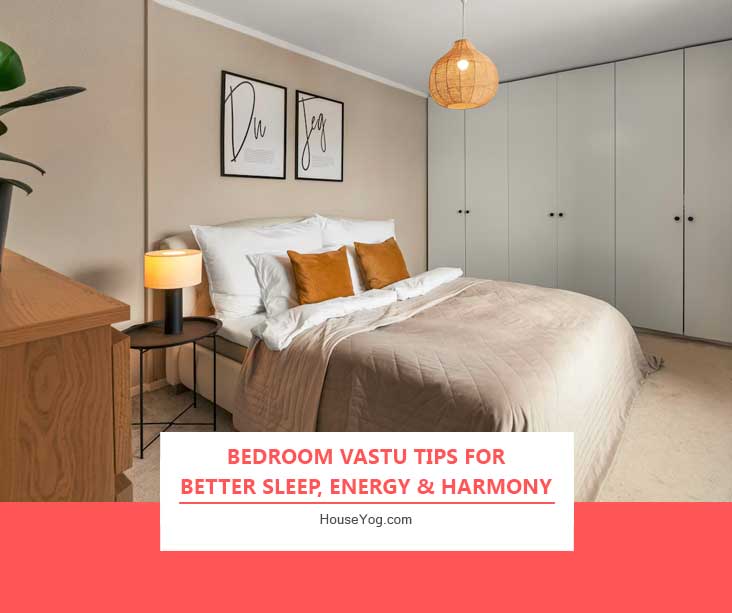
Ideally, the master bedroom should be located in the South-West part of the house, with the bed positioned so that the head rests towards the South or East. This orientation provides a sense of stability and psychological comfort, which is why it traditionally suits the primary occupants of the home.
The bed should be supported by a solid wall and should not be placed directly under structural beams, as beams can create visual heaviness and subtle psychological pressure. From a design perspective, beams also interfere with lighting and ceiling proportions.
Wardrobes and heavy storage units are best placed along the South or West walls, helping ground the room both visually and structurally. Mirrors should be used carefully, preferably inside wardrobes or on side walls, and should not directly reflect the bed.
If the master bedroom includes an attached toilet, its door should not face the bed. Proper ventilation and natural light for the toilet are essential, not only from a hygiene standpoint but also to maintain a healthy bedroom environment.
Couple Bedroom Vastu Tips for Harmony & Relationship
A couple’s bedroom is not only a sleeping space; it is a private zone for emotional balance and comfort. Poor planning here often leads to subtle stress that occupants may not consciously notice.
Couple bedroom Vastu focuses on balance, privacy, and calmness. The bed should be accessible from both sides to maintain symmetry, and mirrors should not face the bed directly, as reflections can be visually unsettling.
Colour selection plays a significant role in setting the mood of the space. Soft, neutral, and warm tones, such as beige, light earthy shades, or muted pastels, create a calming atmosphere. Very dark colours or overly bright tones can make the room feel heavy or restless over time.
Electronic gadgets, particularly televisions and work desks, should be limited to the bedroom. From both Vastu and wellness perspectives, a bedroom should ideally not function as a workspace whenever possible.
Bedroom Vastu for East Facing House
In an east-facing house, bedroom planning requires additional care because the front zones receive strong morning light and higher levels of activity.
The master bedroom in an east-facing home is best placed in the South-West or West portion of the layout. This keeps it away from early morning noise, movement, and excessive daylight that may disturb sleep.
Bedrooms located in the East or North-East are better suited for children, study rooms, or guest bedrooms. While these spaces benefit from natural morning light, they may not always provide the calm required for deep, uninterrupted rest.
Common mistakes in east-facing homes include placing the master bedroom too close to the main entrance or directly above living areas, which increases noise and movement disturbance. For a deeper understanding of layout planning, readers may refer to this detailed east-facing house Vastu guide.
Bedroom Vastu Rules Everyone Should Follow
Certain Bedroom Vastu rules apply across all house types, independent homes, villas, and apartments alike.
A bedroom should always feel uncluttered and breathable. Excess storage under the bed, blocked windows, or overcrowded furniture disrupt airflow and visual calm, directly affecting sleep quality.
Sleeping with the head towards the South or East is generally preferred, while North-facing sleeping is often discouraged. Windows should allow ample daylight during the day but should be easily darkened at night to support proper rest.
In apartments where structural changes are not possible, simple adjustments such as bed orientation, lighting control, and mirror placement can still bring noticeable improvement.
Basic bedroom Vastu rules to keep in mind include:
Keep the bedroom clutter-free and well-ventilated
Avoid sleeping with your head towards the North
Do not place mirrors directly opposite the bed
Ensure windows allow daylight but can block light at night
Avoid placing the bed under structural beams
Common Bedroom Vastu Mistakes Seen in Modern Homes
One of the most frequent mistakes we see as architects is placing the bed directly under a beam. Even when occupants feel accustomed to it, the subconscious discomfort often remains.
Another common issue is mirrors reflecting the bed or bedroom door. This creates visual restlessness and usually results from purely decorative choices without functional planning.
Clutter is a quieter but equally damaging problem. Overloaded wardrobes, open shelves filled with unused items, and blocked windows gradually turn bedrooms into storage spaces rather than areas meant for rest and recovery.
Vastu-Friendly Bedroom Design Tips by Architects
Good bedroom design does not treat Vastu as an afterthought. Instead, it integrates direction, structure, ventilation, and lifestyle needs right from the planning stage.
Window placement should allow daylight without glare, while cross-ventilation, where possible, keeps the room fresh without relying entirely on air conditioning. Lighting should be layered, combining soft ambient lighting for evenings with functional lighting where required.
The most important principle is balance. A Vastu-friendly bedroom should feel calm, practical, and personal, not forced or ritualistic.
Architect’s note: In real homes, especially apartments, Vastu should never override ventilation, daylight, or privacy. A bedroom that feels airy, visually balanced, and comfortable will always perform better than one that follows rules mechanically.
Planning a Vastu-Compliant House Design? Talk to Our Architects
At Houseyog, we approach Vastu as a design technique, not as a restriction. Our architects integrate Vastu principles with modern layouts, real site conditions, and everyday lifestyle needs, so bedrooms, kitchen, living and all other spaces remain comfortable, practical, and genuinely restful.
If you are planning a new home or redesigning your bedroom, our team can help you strike the right balance between Vastu, comfort, and contemporary living.
Bedroom Vastu FAQs
Which direction should we sleep facing as per Vastu?
Sleeping with the head towards the South or East is generally recommended for better rest and stability.
Can Bedroom Vastu be followed in apartments?
Yes. Even without structural changes, bed placement, lighting, and furniture layout can significantly improve bedroom Vastu.
Is Vastu more important than ventilation and light?
No. Good ventilation, daylight, and comfort should always come first. Vastu works best when aligned with sound architectural principles.