
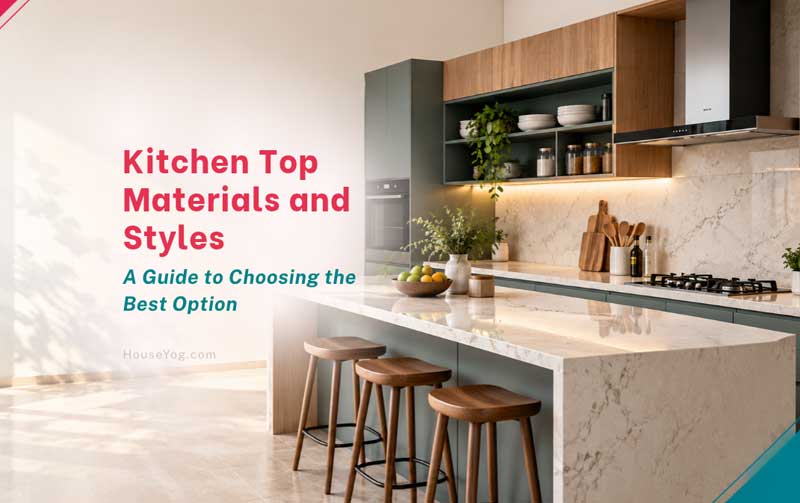

Your kitchen worktop handles a lot throughout the day, from rolling chapatis at breakfast and preparing school tiffins to chopping vegetables and cleaning up spills. It also covers a significant part of the kitchen, influencing the overall look and feel of the space. Choosing the right kitchen top, therefore, involves more than just appearance. Durability, ease of cleaning, kitchen layout and budget all play an important role.
With so many materials, colours and styles available, choosing the right countertop can be confusing. Whether you are building a new home or renovating your existing kitchen, you need a surface that suits your cooking habits, complements your cabinets and fits your budget.
In this guide, we compare common kitchen countertop materials, explore different styles and finishes, and explain what to consider before making your choice.
Start with the Way You Use Your Kitchen
A busy family kitchen needs a worktop that cleans quickly and handles constant use. If you cook only occasionally, colour and pattern may matter more. Light finishes can help a compact kitchen feel open, while a darker top adds contrast against pale cabinets.
Most kitchens also have more than one working zone, and each may need something slightly different:
- Preparation area: The hardest-working stretch, which needs to handle daily food preparation, spills and regular cleaning.
- Cooking zone: The worktop around the hob faces heat, oil splashes and turmeric-stained spoons.
- Breakfast counter or island: Often the most visible surface, so appearance, edge detailing and comfortable overhangs matter.
- Utility surface: Needs to be practical and easy to wipe, rather than purely decorative.
Mapping these zones before choosing a material helps you avoid paying for features you don’t need or missing ones you do.
Explore the Look and Performance of Different Surfaces
Kitchen tops come in everything from quiet solid colours to finishes inspired by marble, granite, concrete and natural stone. If you like the appearance of natural stone, natural stone options for kitchen countertops can help you explore different patterns and finishes. Engineered surfaces offer additional choices, including more consistent colours and designs.
Whatever you shortlist, ask about resistance to stains, scratches, heat, impact and household cleaners. Also check how the surface will be fabricated, joined and supported.
Always compare samples alongside your cabinet and flooring choices. A finish that looks warm in a showroom can look cooler under your own kitchen lights, so view samples in daylight and under the lighting you plan to install.
Compare Common Kitchen Countertop Materials
Different materials suit different kitchens. Some offer natural patterns, while others provide more consistent finishes or easier maintenance. The right choice depends on your budget, cooking habits and willingness to care for the surface.
| Material | Main advantages | Limitations and maintenance |
| Granite | A durable natural stone available in many colours and patterns. Commonly used in Indian kitchens. | Patterns and quality vary between slabs. Some varieties benefit from periodic sealing, and spills should be cleaned promptly. |
| Quartz | An engineered surface available in consistent colours and patterns. Generally easy to clean for everyday use. | Can be damaged by excessive heat, so use trivets for hot cookware. Follow the manufacturer’s guidance on cleaners and stain removal. |
| Sintered stone or porcelain | Available in a wide range of finishes, with many products offering good resistance to stains, scratches and heat. | Edges and cut-outs can be vulnerable to chipping if mishandled. Specialist fabrication and installation may be required. |
| Marble | Offers distinctive natural veining and an elegant appearance. | Can stain or develop dull marks from acidic substances. It generally needs more careful cleaning and maintenance than many alternatives. |
| Solid-surface materials | Available in a variety of colours, with some systems allowing inconspicuous joints and integrated sinks. | Can scratch and may be sensitive to heat. Repair and maintenance options depend on the specific product. |
These are general comparisons, not guarantees for every product. Performance varies with the material grade, finish, fabrication and installation. Before deciding, request the manufacturer’s care instructions and confirm whether the surface is suitable for your intended use.
Select a Style That Works with Your Cabinets
The worktop and cabinets should work as a pair. Strong cabinet colours or detailed profiles call for a simpler surface, while plain cabinets leave room for a top with more movement. These combinations are a good place to start:
- Warm and natural: Beige or cream surfaces work well with wood tones and soft lighting.
- Modern contrast: A dark worktop against light cabinets sharpens the kitchen’s lines.
- Soft minimalism: Pale, low-contrast finishes create a calm look with simple handles and uncluttered storage.
- Expressive focal point: A distinctive top can anchor an island, with quieter finishes around the perimeter.
Do not forget the splashback. Match it to the worktop for continuity, or use a contrasting finish to define the cooking zone. Review both together so their patterns and joints do not compete.
Check Thickness, Edges and Layout
Thickness changes how a worktop looks. A slim profile suits a pared-back kitchen, while a thicker edge feels more substantial. The right choice depends on your design, cabinets and the fabrication requirements of the chosen material.
When planning your worktop, make sure its dimensions suit the available space and kitchen layout. Our guide to standard kitchen sizes in India explains the key dimensions to consider when planning a functional kitchen.
Edge profiles matter too. A straight edge looks crisp, while a softened edge feels more relaxed. Confirm with the fabricator which profiles are suitable for your selected surface. Large-format surfaces can cover long runs with fewer joints, but their number and position still depend on the room size, cut-outs and installation plan.
Before fabrication, plan the positions of these elements:
- Sink and taps: Finalise the sink type and tap position before making cut-outs.
- Hob and appliances: Confirm the hob size and the clearances required by your appliances.
- Sockets and switches: Check that they will not clash with the splashback or upstands.
Accurate measurements, suitable support and approved cut-out details reduce delays and help the finished top line up neatly with the cabinets.
Make Cleaning and Maintenance Part of the Decision
A kitchen countertop should suit your everyday habits. Check which cleaners are safe, how quickly you need to wipe spills and whether the surface requires periodic treatment. Never assume every material can withstand scouring pads, harsh chemicals or a pan straight off the flame.
Also consider how well the surface handles everyday wear. Check the manufacturer’s specifications for heat, stain and scratch resistance, along with any restrictions on use. Even a durable worktop benefits from chopping boards, trivets and prompt cleaning of spills such as oil, wine or haldi.
For natural stone surfaces, follow the recommended cleaning and sealing practices for the specific stone. The Natural Stone Institute’s guide to natural stone care and maintenance offers additional guidance on looking after these surfaces.
Set a Realistic Budget
Compare the full installed cost, not just the surface price. A realistic quote should include:
- Measurement and templating: Site visits to measure and confirm the final dimensions.
- Fabrication: Cutting, cut-outs and edge finishing.
- Transport and installation: Delivery, handling and on-site fitting.
- Accessories: Supports, brackets and any upstands or splashbacks.
Ask every supplier to quote against the same measurements and design so you can compare the actual scope and cost. Keep some flexibility in your budget for unexpected requirements during installation.
Conclusion
Choosing the right kitchen top is about finding a balance between appearance, durability, maintenance and budget. Consider how you use your kitchen, compare the pros and limitations of different materials, and check the manufacturer’s recommendations before making a decision.
Before placing your order, finalise the worktop dimensions, edge profile, sink and hob cut-outs, and installation requirements with your fabricator. A little planning at this stage can help you avoid unnecessary costs and ensure your countertop looks good and works well for years to come.