


Wooden doors add warmth, elegance, and timeless appeal to any home. But when the monsoon arrives, they often become one of the first things to show signs of seasonal wear. Doors may start sticking, swell due to moisture, develop fungal patches, or lose their smooth finish.
The good news? Most of these problems are preventable.
With a few simple maintenance habits before and during the rainy season, you can keep your wooden doors looking beautiful and functioning smoothly for years. In this guide, we’ll share practical, easy-to-follow tips that architects and experienced homeowners rely on to protect wooden doors during the monsoon.
Why Wooden Doors Swell During Monsoon (And How to Prevent It)
Wooden doors absorb moisture from the air during humid weather. As humidity levels rise during the monsoon, the wood expands slightly, which can cause doors to swell, stick, or become difficult to close. Proper maintenance helps minimise these issues and extends the life of the door.
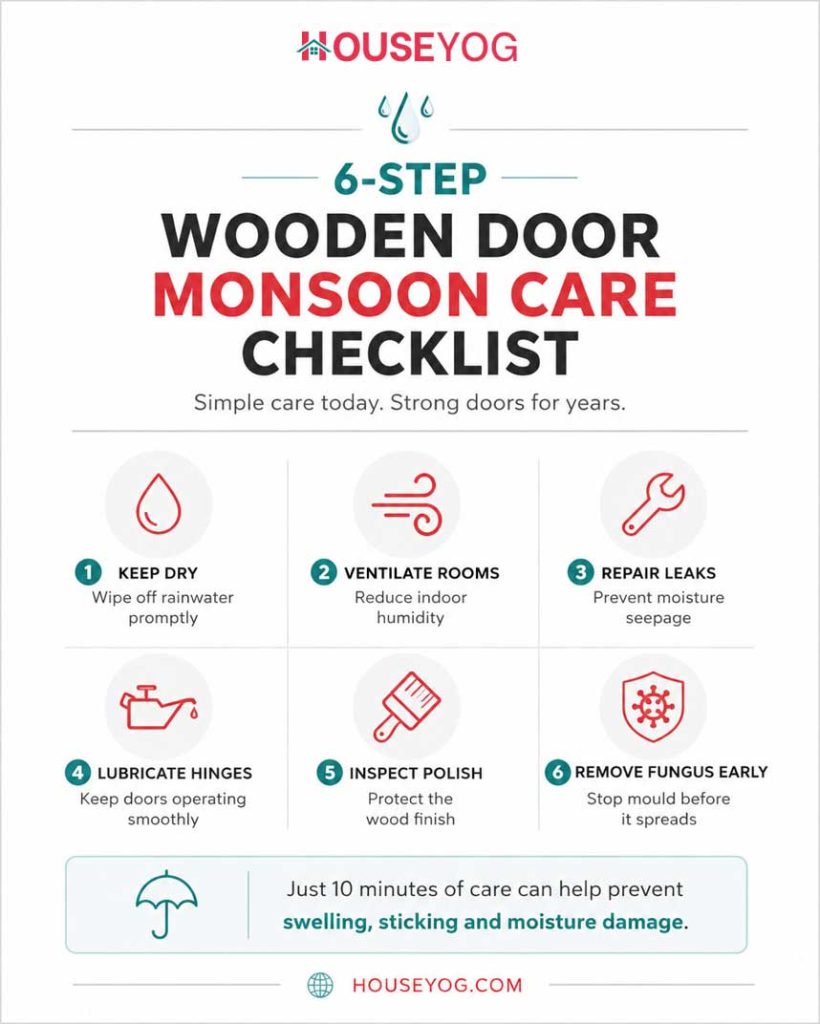
Unlike steel or aluminium, wood is a natural material. One of its biggest strengths is also one of its biggest challenges—it responds to changes in temperature and humidity.
During the rainy season, moisture in the air increases significantly. Even if rainwater never directly touches your door, the surrounding humidity can gradually affect the wood. Depending on the type of timber, the quality of seasoning, and the protective finish applied, you may notice changes such as:
- The door rubbing against the frame
- Difficulty locking or closing the door
- A dull or faded surface finish
- Damp smell or fungal spots
- Rusting hinges and hardware
This doesn’t mean wooden doors are unsuitable for Indian homes. In fact, well-seasoned hardwood doors can last for decades. They simply require a little seasonal care, especially during the monsoon.
The following maintenance tips are practical, inexpensive, and easy enough for anyone to follow.
Most wooden door problems can be prevented before the first rains arrive. Once the monsoon begins, the focus shifts to controlling moisture and addressing issues early.
1. Keep the Door Surface Dry Whenever Possible
The easiest way to protect a wooden door during monsoon is to prevent moisture from remaining on its surface for long periods. Wipe off rainwater or condensation as soon as you notice it.
This is particularly important for:
- Main entrance doors exposed to wind-driven rain
- Balcony doors
- Garden-facing doors
- Utility area doors
After a heavy shower, take a minute to inspect the door. If you notice water droplets or damp patches, wipe them using a soft, dry cloth.
Pay special attention to areas people often overlook:
- The bottom edge of the door
- Corners near the frame
- Decorative grooves and carvings
- Door threshold
Moisture trapped in these areas over several weeks can gradually affect the finish and encourage fungal growth.
If your entrance door is regularly exposed to rain, consider installing a canopy or extending the existing shade. It is a simple investment that can significantly increase the life of the door.
2. Ensure Good Ventilation Inside the House
Good airflow helps reduce indoor humidity, allowing wooden doors to remain dry and stable even during the rainy season.
Many people assume rain alone damages wooden doors. In reality, indoor humidity often causes just as many problems.
Bathrooms, kitchens, laundry areas, and rooms with poor ventilation tend to retain moisture. Over time, this creates an environment where wooden doors absorb excess moisture from the surrounding air.
A few simple habits can make a noticeable difference:
- Open windows whenever weather permits.
- Use exhaust fans in kitchens and bathrooms.
- Keep ceiling fans running to improve air circulation.
- Avoid keeping rooms closed for several days.
If you live in a particularly humid coastal region or areas with prolonged monsoons, using a dehumidifier occasionally can also help maintain indoor moisture levels.
Better ventilation doesn’t just protect wooden doors—it also reduces dampness throughout the house.
3. Check for Water Leaks Before They Damage the Door
Many wooden door problems are caused not by humidity but by unnoticed water leaks from roofs, windows, balconies, or plumbing. Identifying and fixing leaks early can prevent expensive repairs later.
We’ve visited homes where owners assumed their door quality was poor. On closer inspection, the real culprit turned out to be a leaking window sill or rainwater entering through an exterior wall.
Before the monsoon begins, inspect areas around your doors carefully.
Look for signs such as:
- Water stains on nearby walls
- Peeling paint around the frame
- Damp plaster
- Water dripping near the door after rainfall
- Persistent wet patches on the floor
Even a small leak that goes unnoticed for weeks can allow moisture to seep into the wooden frame.
If you identify a leak, fix the source first rather than treating only the symptoms. Replacing a damaged polish without addressing water ingress will rarely solve the problem.
4. Inspect the Protective Finish Before Every Monsoon
A good quality polish, varnish, PU coating, or paint acts as a protective barrier against moisture. If the finish has worn out, consider recoating the door before the rainy season begins.
Think of the finish as your door’s first line of defence.
When the protective layer is intact, water is far less likely to penetrate the wood. However, over time, sunlight, dust, and regular use gradually wear down the coating.
Before the monsoon arrives, inspect your doors under natural light.
You may notice:
- Dull appearance
- Uneven shine
- Fine surface cracks
- Peeling varnish
- Areas where the finish has worn away
These are signs that the protective coating may no longer be providing adequate protection.
Exterior doors usually require more frequent maintenance than interior doors because they face direct sunlight, rain, and dust throughout the year.
You don’t necessarily need a complete refinishing every year. A professional inspection every few years and timely touch-ups are often sufficient for well-maintained doors.
If you’re still choosing a new entrance door, our guide on Wood vs Steel Doors can help you compare both materials.
5. Clean Wooden Doors Gently Without Excess Water
Regular cleaning keeps dirt, dust, and fungal spores from accumulating on wooden doors. However, avoid using excessive water or harsh cleaning chemicals.
During monsoon, dust combines with moisture to form stubborn stains, especially near the bottom of doors.
Fortunately, cleaning doesn’t need to be complicated.
A simple routine works well:
| Cleaning Step | Recommended Practice |
| Dust removal | Use a soft microfiber cloth |
| Surface cleaning | Slightly damp cloth with mild soap solution |
| Drying | Wipe immediately with a dry cloth |
| Frequency | Once every one to two weeks during monsoon |
Avoid soaking the cloth or pouring water directly onto the door.
Similarly, stay away from abrasive scrubbers, bleach, strong detergents, or acidic cleaners. These may damage the protective finish and reduce the lifespan of the wood.
If you notice fungal spots beginning to appear, clean them promptly before they spread across the surface.
Quick Wooden Door Maintenance Checklist for Monsoon
A few minutes of preventive maintenance can save you from expensive repairs later. Here’s a simple checklist you can follow throughout the rainy season.
| Before Monsoon | During Monsoon |
| Inspect polish or protective coating | Wipe off moisture after rain |
| Repair roof and window leaks | Keep rooms well ventilated |
| Check weather seals | Clean dirt regularly |
| Lubricate hinges if required | Watch for swelling or sticking |
| Clean the door thoroughly | Remove fungal spots early |
None of these tasks takes much time, but together they help keep your wooden doors looking and performing their best year after year.
6. Lubricate Hinges, Locks and Other Hardware
Monsoon moisture doesn’t affect only the wood. Hinges, locks and handles can also become stiff or develop rust if they are not maintained. A little lubrication every few months helps keep the door operating smoothly.
Sometimes homeowners assume the door has swollen when the real issue is a rusty hinge or a dry lock mechanism.
Before the rainy season, inspect all moving parts. If you notice squeaking, stiffness or slight rust, apply a suitable lubricant to the hinges, latch and lock cylinder.
While doing so, also check whether:
- Hinges are securely fastened.
- Screws have become loose.
- The door is properly aligned.
- The handle operates smoothly.
These small checks take only a few minutes but can prevent bigger repair jobs later.
7. Don’t Panic if the Door Swells Slightly
Minor swelling during monsoon is common with wooden doors. In many cases, the door returns to its normal size once humidity levels reduce. Avoid sanding or trimming the door immediately unless advised by a professional.
This is one of the most common mistakes we see.
A door that starts rubbing against the frame during July or August is often sanded down immediately. A few months later, when the weather becomes dry, the door shrinks back to its original size, leaving uneven gaps around the frame.
Instead, first identify the cause.
Ask yourself:
- Has the swelling appeared only during the rainy season?
- Is there any water leakage nearby?
- Does the door still close with slight pressure?
- Is the rubbing minor or severe?
If the problem is mild, it is often better to monitor the door until the monsoon ends.
However, if the door has become extremely difficult to operate or you notice signs of water damage, consult a carpenter rather than attempting a DIY fix.
Pro Tip: If your door swells every monsoon, the problem is often inadequate sealing or prolonged exposure to moisture—not necessarily poor-quality wood.
8. Prevent Fungus and Mould Before It Spreads
Fungus and mould grow on wooden surfaces when moisture remains trapped for long periods. Keeping the door clean, dry and well-ventilated is the best way to prevent fungal growth.
You’ll usually notice the first signs as:
- Black or green patches
- White powdery spots
- A musty smell
- Discolouration around the bottom of the door
Don’t ignore these early warning signs.
Clean the affected area using a soft cloth and a mild cleaning solution recommended for finished wooden surfaces. After cleaning, dry the surface thoroughly.
More importantly, identify why the fungus appeared.
Common causes include:
- Poor ventilation
- Persistent dampness
- Water seepage
- Wet doormats touching the door
- Doors installed in poorly ventilated utility areas
Treating the surface without addressing the source of moisture usually means the fungus will return.
9. Give Exterior Wooden Doors Extra Protection
Exterior doors face the harshest weather conditions. Adding simple protective measures such as canopies, weatherstrips and bottom door seals can significantly improve their lifespan.
Your main entrance door experiences much more than interior doors.
It is exposed to:
- Wind-driven rain
- Direct sunlight
- Dust
- Temperature changes
- Daily wear and tear
This is why exterior doors deserve a little extra attention.
Some practical ways to protect them include:
- Installing a porch roof or canopy above the entrance.
- Using high-quality weatherstripping around the frame.
- Fitting a bottom door seal to reduce water ingress.
- Ensuring rainwater drains away from the entrance.
- Recoating the finish whenever it begins to wear.
These improvements not only protect the door but also improve energy efficiency by reducing unwanted air gaps.
If you’re planning a new home, it’s worth discussing entrance protection with your architect during the design stage itself.
10. Make Monsoon Maintenance a Yearly Habit
The best way to keep wooden doors in excellent condition is through regular preventive maintenance rather than waiting for visible damage to appear.
Wooden doors are remarkably durable when looked after properly.
Instead of waiting until the door starts sticking or the polish begins peeling, schedule a quick inspection every year before the monsoon arrives.
Your annual checklist can be as simple as:
- Inspect the polish or paint.
- Clean the entire door thoroughly.
- Check hinges and locks.
- Look for leaks around doors and windows.
- Inspect weather seals.
- Ensure good ventilation inside the house.
Most of these tasks can be completed in less than an hour, yet they can help your doors last for decades.
Common Wooden Door Maintenance Mistakes to Avoid
Sometimes it’s not the rain that causes damage. It’s well-intentioned maintenance done the wrong way.
Here are a few wooden door mistakes worth avoiding.
| Mistake | Better Practice |
| Sanding a swollen door immediately | Wait until humidity reduces unless the problem is severe |
| Using excessive water for cleaning | Use a slightly damp cloth and dry immediately |
| Ignoring small roof or window leaks | Repair leaks before they damage the wood |
| Delaying fungal cleaning | Clean affected areas as soon as they appear |
| Skipping polish inspection for years | Inspect the finish before every monsoon |
| Leaving wet doormats against the door | Keep the bottom edge dry and well ventilated |
Avoiding these simple mistakes often saves more money than expensive repairs later.
Wooden Door Maintenance During Monsoon: Quick Summary
If you’re short on time, here’s a quick recap.
| Maintenance Tip | Why It Matters |
| Wipe off moisture regularly | Prevents water absorption |
| Keep rooms well ventilated | Reduces indoor humidity |
| Repair leaks promptly | Prevents long-term damage |
| Maintain the protective finish | Improves moisture resistance |
| Clean gently using mild cleaners | Preserves the surface coating |
| Lubricate hinges and locks | Ensures smooth operation |
| Don’t sand swollen doors immediately | Avoids permanent gaps later |
| Remove fungus early | Prevents staining and deterioration |
| Protect exterior doors from direct rain | Extends service life |
| Inspect doors every year before monsoon | Prevents costly repairs |
Frequently Asked Questions
Wood naturally absorbs moisture from humid air. As the moisture content increases, the wood expands slightly, causing the door to become tight or difficult to close.
Yes. In many cases, the door returns close to its original size once humidity levels reduce. That’s why immediate sanding is usually not recommended unless the swelling is severe.
It depends on the type of finish and the door’s exposure to weather. Exterior wooden doors generally need more frequent inspection and maintenance than interior doors.
Fungus can damage the finish and affect the appearance of the door if left untreated. Cleaning it early and addressing the source of moisture usually prevents recurring problems.
Yes, but use only a slightly damp cloth. Avoid soaking the surface and always wipe it dry immediately afterwards.
Absolutely. Well-seasoned hardwood doors with a quality protective finish perform well even in regions with high rainfall, provided they receive regular maintenance and adequate protection from direct exposure.
Painting or refinishing is generally best done in dry weather because high humidity can affect drying and adhesion. If repainting is necessary during monsoon, ensure the surface is completely dry.
Final Thoughts
Wooden doors remain one of the most elegant and durable choices for Indian homes. Their natural beauty, warmth and timeless appeal are difficult to match. Like any natural material, however, they perform best when cared for properly.
The good news is that monsoon maintenance doesn’t require expensive products or complicated procedures. Simple habits such as keeping doors dry, ensuring good ventilation, inspecting the protective finish and fixing water leaks early can prevent most common problems before they become costly repairs.
If you’re planning to install a new wooden door or replace an existing one, choosing the right timber, finish and installation method is just as important as regular maintenance. At Houseyog, we believe informed decisions lead to homes that not only look beautiful but also perform well for years to come.
With a little seasonal care, a quality wooden door can easily serve your home for decades. The key isn’t avoiding the monsoon—it’s preparing for it. A few simple maintenance habits each year can keep your doors operating smoothly, looking beautiful and protecting your investment for years to come.