
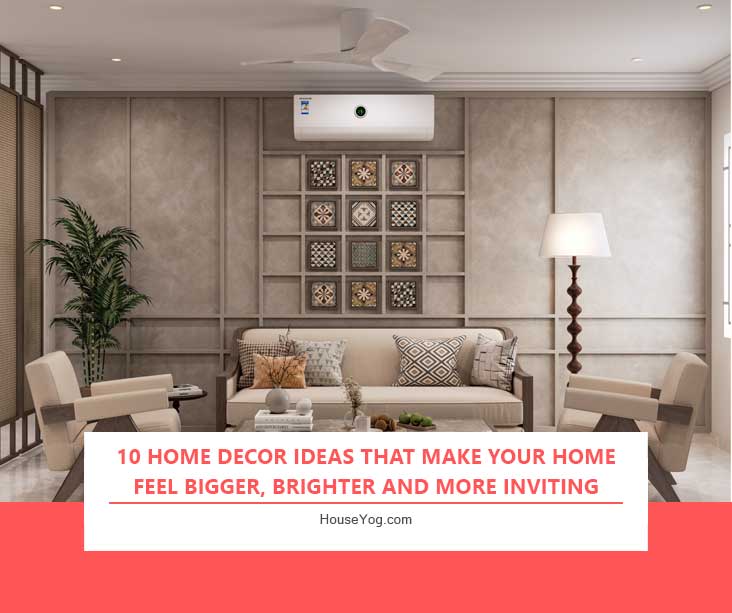

A beautifully designed home isn’t always the one with the most expensive furniture or the biggest rooms. More often, it’s a home that feels comfortable, welcoming, and thoughtfully put together. The right combination of lighting, colours, textures, furniture placement, and décor can completely transform how a space looks and feels—without requiring a major renovation.
As architects and interior designers, we’ve often seen modest apartments feel more spacious than much larger homes simply because they were planned well. Small design decisions—placing a mirror in the right spot, choosing the correct lighting, or reducing visual clutter—can make a remarkable difference.
Whether you’re decorating a newly purchased home, refreshing your apartment, or giving an older house a new personality, these practical home decor ideas will help you create spaces that feel bigger, brighter, and far more inviting.
Quick Summary: 10 Home Decor Ideas at a Glance
| Decor Idea | Biggest Benefit |
| Layer your lighting | Creates warmth and visual depth |
| Add indoor plants | Brings freshness and natural colour |
| Design an accent wall | Adds character without overwhelming the room |
| Use rugs and soft furnishings | Makes spaces feel cosy and well-defined |
| Place mirrors strategically | Reflects light and creates the illusion of space |
| Create a gallery wall | Adds personality and visual interest |
| Mix modern with vintage | Gives your home warmth and uniqueness |
| Refresh cushions and curtains | Instantly updates the look of a room |
| Transform unused corners | Makes every square foot functional |
| Balance furniture layouts | Creates a calm, organised appearance |
Why Home Decor Matters More Than You Think
Good home décor improves comfort, functionality, and visual appeal without necessarily increasing your renovation budget.
Many people think home décor is simply about making a house look attractive. In reality, it’s about creating spaces that support the way you live. A well-decorated room feels comfortable to spend time in, functions better, and reflects your personality.
You don’t need to replace all your furniture or renovate every room at once. In most homes, thoughtful styling delivers a bigger impact than expensive upgrades. Start with the spaces you use every day, make a few meaningful improvements, and gradually build from there.
1. Layer Your Lighting Instead of Depending on One Light Source
Combine ambient, task, and accent lighting to make rooms feel brighter, more comfortable, and visually interesting.
Lighting is one of the most overlooked elements in home décor. Many Indian homes rely on a single ceiling light, which often leaves corners dark and makes rooms appear flat.
Instead, think of lighting in layers.
Start with general ceiling lighting for overall illumination. Add task lighting where needed, such as a reading lamp beside the sofa or focused lighting over a study desk. Finally, introduce accent lighting through wall sconces, pendant lights, or LED strips to highlight artwork, shelves, or textured walls.
Warm white lighting (around 3000K) generally works well in living rooms and bedrooms, creating a cosy atmosphere, while brighter neutral lighting is better suited to kitchens and workspaces.
Good lighting doesn’t simply brighten a room—it adds mood, depth, and character.
2. Bring Nature Indoors with Plants and Natural Materials
Indoor plants soften interiors, improve visual appeal, and make your home feel fresh throughout the year.
Few decorating ideas offer as much impact for such a modest investment as indoor plants.
Whether it’s a tall Areca Palm beside the window, a Snake Plant in the bedroom, or a Money Plant cascading from a shelf, greenery instantly makes interiors feel more alive.
If your home receives limited sunlight, choose low-maintenance plants that thrive indoors. Pair them with natural materials like cane furniture, wooden accessories, woven baskets, terracotta planters, or jute rugs to introduce warmth and texture.
If you’re still exploring different aesthetics, browsing curated collections of home decor ideas can help you understand which interior design style best matches your space before investing in furniture or decorative accessories.
Natural materials age gracefully and rarely go out of style.
3. Create One Beautiful Accent Wall
A single feature wall creates a focal point without making the room feel busy.
Every room benefits from having one visual anchor.
Instead of decorating every wall, choose one feature wall behind the sofa, bed, dining table, or TV unit.
You could use:
- Textured paint
- Wooden panelling
- Stone cladding
- Wallpaper
- Decorative mouldings
- Exposed brick finishes
- Large artwork
Keeping the remaining walls relatively simple allows the accent wall to stand out naturally.
This approach works particularly well in compact apartments where excessive decoration can make spaces feel cluttered.
4. Add Comfort Through Rugs, Cushions and Soft Furnishings
Layering fabrics adds warmth, colour, and comfort while helping define different spaces.
Soft furnishings often make the difference between a house that looks complete and one that feels unfinished.
A carefully selected rug anchors the seating area, while cushions, throws, curtains, and upholstered furniture introduce texture and softness.
Rather than matching every colour perfectly, choose complementary shades and mix different materials such as cotton, linen, wool, velvet, and woven fabrics.
Seasonal updates can also keep your interiors feeling fresh without major expense. Simply changing cushion covers, curtains, or table runners can completely alter the mood of a room.
5. Use Mirrors to Make Rooms Feel Larger
Mirrors reflect natural light and create the illusion of additional space, especially in smaller homes.
This is one of the oldest interior design tricks—and it continues to work.
Place a large mirror opposite a window or balcony so it reflects daylight back into the room.
In narrow corridors or compact living rooms, mirrors visually extend the space and reduce the feeling of confinement.
Framed mirrors can also serve as decorative elements while performing a practical function.
However, avoid placing mirrors randomly. Their placement should enhance the room rather than reflect clutter or blank walls.
6. Tell Your Story with a Gallery Wall
A thoughtfully curated gallery wall makes your home feel personal rather than staged.
The most memorable homes aren’t filled with expensive décor—they’re filled with personality.
A gallery wall allows you to showcase family photographs, travel memories, artwork, sketches, or meaningful quotes.
Choose frames with a consistent finish to maintain visual harmony, even if the artwork itself varies.
Before hanging anything, arrange the layout on the floor to experiment with spacing and proportions.
Your walls should reflect your journey, not simply follow current trends.
7. Mix Modern Furniture with Timeless Pieces
Combining contemporary and vintage elements creates interiors that feel balanced and unique.
Homes where everything looks brand new often lack warmth.
Instead, combine modern furniture with older or handcrafted pieces.
For example:
- A sleek sofa paired with a vintage wooden coffee table.
- Contemporary dining chairs alongside a traditional solid wood dining table.
- Brass décor against minimalist white walls.
- Cane chairs combined with modern lighting.
This layered approach gives your home depth and character while avoiding the showroom look.
Well-designed interiors usually evolve over time rather than being purchased in one weekend.
If you prefer interiors that won’t feel dated after a few years, our guide to timeless interior design ideas explores classic design principles and materials that continue to look elegant for decades.
8. Refresh Your Home with Cushions, Curtains and Everyday Accessories
Updating small accessories is one of the most affordable ways to refresh your home’s appearance.
You don’t always need new furniture.
Replacing curtains, cushion covers, table décor, lampshades, or wall art can dramatically change how a room feels.
When selecting accessories, remember that less is often more.
Instead of displaying dozens of decorative items, choose a few quality pieces with room to breathe around them.
This creates cleaner sightlines and helps each item stand out.
Looking beyond the living room? These budget kitchen makeover ideas show how small upgrades can refresh one of the busiest spaces in your home without stretching your renovation budget.
9. Transform Empty Corners into Functional Spaces
Unused corners can become some of the most enjoyable spaces in your home.
Every home has awkward corners that gradually become storage areas for miscellaneous items.
Instead, give them a purpose.
A comfortable chair, floor lamp, and bookshelf create an inviting reading nook.
A compact console table can become a coffee station.
Near a window, a small writing desk can become an inspiring workspace.
Even a single indoor plant with a decorative floor lamp can completely change how an empty corner contributes to the room.
Good design isn’t only about adding more—it is about making every space useful.
10. Design with Balance Rather Than Filling Every Corner
Well-balanced furniture layouts make homes feel larger, calmer, and easier to use.
One of the biggest decorating mistakes is trying to fill every available space.
Leave breathing room around furniture.
Allow natural walking paths.
Keep surfaces relatively uncluttered.
Symmetry also helps create visual balance. Matching bedside tables, paired armchairs, or coordinated lighting fixtures introduce a sense of order without making rooms feel rigid.
Remember, empty space is an important part of good design.
It allows your favourite furniture and décor pieces to shine.
Common Home Decor Mistakes to Avoid
Even beautiful furniture can look disappointing when common decorating mistakes creep in.
| Mistake | Better Approach |
| Using only one ceiling light | Layer ambient, task and accent lighting |
| Choosing furniture that’s too large | Scale furniture to the room size |
| Ignoring natural light | Keep windows open and use light curtains |
| Decorating every wall | Create one focal point instead |
| Buying everything at once | Build your interiors gradually |
| Filling every corner | Leave visual breathing space |
These simple adjustments often improve a room more than buying expensive new furniture.
Where Should You Spend Your Home Decor Budget?
If you’re decorating on a limited budget, prioritise changes that have the greatest visual impact.
| High Impact | Lower Priority |
| Lighting upgrades | Expensive decorative accessories |
| Curtains | Frequent trend-based décor |
| Rugs | Multiple small showpieces |
| Indoor plants | Matching decorative sets |
| Wall paint | Unnecessary furniture replacement |
Our advice is simple: invest first in elements that improve the entire room, not just one corner.
Frequently Asked Questions
Layered lighting, quality curtains, fewer but better decorative pieces, and keeping rooms uncluttered usually create the biggest visual improvement without a large budget.
Use mirrors, maximise natural light, avoid oversized furniture, choose lighter wall colours, and keep clear walking paths throughout the room.
Indoor plants, multipurpose furniture, light curtains, accent walls, layered lighting, and smart storage solutions are particularly effective in compact apartments.
Not necessarily. Many well-designed homes successfully combine contemporary furniture with traditional materials, handcrafted décor, and personal collections to create a unique look.
No. Start with the rooms you use most frequently, complete them thoughtfully, and expand gradually. This usually leads to better design decisions and helps manage your budget.
Final Thoughts
Creating a beautiful home isn’t about following every design trend or buying expensive furniture. It’s about making thoughtful choices that improve the way your home looks, feels, and functions.
Start with the basics. Improve your lighting. Bring in natural textures. Add greenery. Refresh soft furnishings. Make better use of empty corners. Most importantly, decorate at a pace that allows your home to evolve naturally.
If you’re decorating a rented apartment, you’ll also find plenty of practical inspiration in our guide to renter-friendly home decor ideas that help personalise your space without making permanent changes.
The best interiors aren’t built overnight. They’re shaped over time, reflecting the people who live in them and the memories they create. When every room is designed with comfort, balance, and purpose in mind, your home becomes more than just a place to live—it becomes a space you’ll genuinely enjoy coming back to every day