
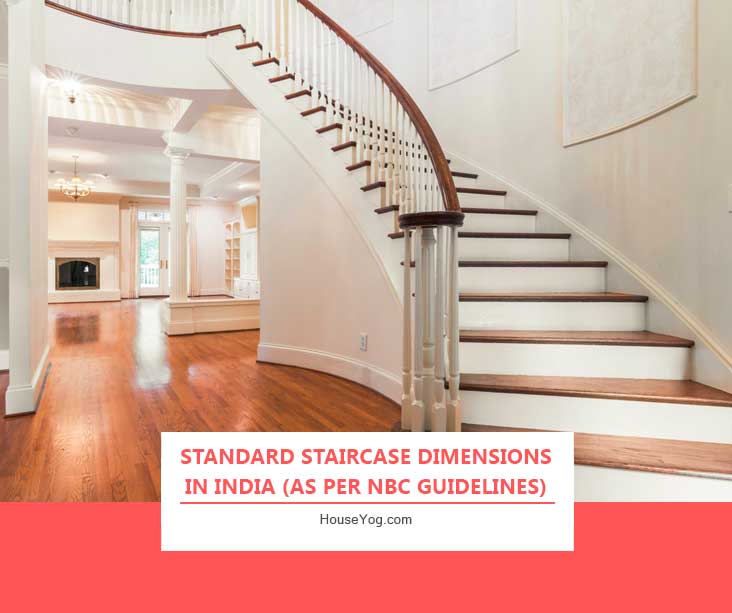

When you plan your house layout, staircase dimensions directly affect safety, comfort, and space efficiency. A poorly designed staircase can feel steep, unsafe, and uncomfortable to use daily. On the other hand, a well-proportioned staircase improves movement flow and ensures compliance with building standards.
If you are designing a duplex house, an independent home, or even reviewing a house plan layout, understanding the standard staircase dimensions in India will help you avoid costly design mistakes.
This guide explains the commonly followed staircase size standards in India, based on NBC (National Building Code) recommendations and practical residential construction practices.
Quick Reference: Standard Staircase Dimensions (Residential – India)
These staircase dimensions are generally followed in residential construction across India and serve as a practical reference during planning and drawing preparation.
| Staircase Element | Standard Residential Size |
| Minimum Staircase Width | 900 mm (3 feet) |
| Comfortable Staircase Width | 1000–1200 mm |
| Riser Height | 150–190 mm |
| Ideal Riser Height | 160–175 mm |
| Tread Depth | 250–300 mm |
| Headroom Clearance | Minimum 2.1 meters |
| Handrail Height | 900 mm from the tread |
| Minimum Landing Depth | Equal to staircase width |
Note: Exact requirements may vary slightly depending on state bylaws and building type.
Staircase Width Standards in India
The width of your staircase determines how comfortably you can move between floors. It affects daily usability, safety during emergencies, and even furniture movement. If you are finalising your floor plan, this is one of the first staircase dimensions you should get right.
The minimum staircase width in a residential building in India is generally 900 mm (3 feet).
However, what you choose depends on your house type:
✔ For small independent houses:
- 900 mm is acceptable.
- Works for compact layouts.
✔ For duplex houses:
- 1000 mm to 1100 mm is more comfortable.
- Easier furniture movement.
- Safer for children and elderly users.
✔ For apartment buildings:
- Width often increases beyond 1200 mm.
- Fire and evacuation norms apply.
If your plot size allows, always choose slightly wider stairs than the bare minimum. It improves daily usability and long-term comfort. When planning compact homes, you should also consider how staircase width affects circulation space, especially in small plot designs like 20×30 or 30×40 house plans.
Riser and Tread Dimensions (Most Important)
If you want your staircase to feel comfortable and safe, riser height and tread depth matter more than anything else. These two elements directly control the steepness of your staircase and how natural it feels when you climb up or down.
Standard Riser Height in India
The riser is the vertical portion between two steps.
- Minimum: 150 mm
- Maximum: 190 mm
- Ideal (residential comfort): 160–175 mm
If the riser is too high, climbing becomes tiring. If too low, it increases staircase length unnecessarily and consumes more space.
Standard Tread Depth in India
The tread is the horizontal surface where your foot rests.
- Minimum: 250 mm
- Comfortable: 270–300 mm
A deeper tread improves balance, reduces slip risk, and makes the staircase more comfortable for daily use.
The Comfort Rule (2R + T Formula)
Architects and structural planners often use a simple proportion rule to achieve a balanced staircase design.
2 x Riser Height + Tread Depth = 550 to 600 mm
Example:
Riser = 170 mm
Tread = 270 mm
2(170) + 270 = 610 mm (comfortable range)
If you follow this proportion while designing your staircase dimensions in India, the steps will feel natural and easy to use.
Staircase Headroom Requirements
Headroom is one of the most commonly ignored staircase standards in residential construction. It refers to the clear vertical distance between the tread and the ceiling above.
As per commonly followed NBC guidelines, the minimum headroom height is:
2.1 meters (2100 mm)
If your headroom is less:
- It feels cramped.
- It becomes unsafe.
- It may violate building norms.
When planning slab levels or staircase positioning, always check headroom clearance early in the design stage.
Staircase Landing Dimensions
A landing provides resting space and improves safety, especially in longer staircases. It is also mandatory when your staircase changes direction.
A landing is required:
- At the top and bottom of every staircase.
- After every 12–16 risers (recommended).
- At the change of direction (L-shaped or U-shaped stairs).
Standard Landing Depth:
Should not be less than the width of the staircase.
Example:
If your staircase width is 1000 mm,
Your landing depth should be at least 1000 mm.
Proper landing size ensures better balance and smoother transition between flights.
Handrails are essential for staircase safety, particularly if you have elderly family members or children. Proper railing height improves grip and stability.
For residential buildings in India:
- Handrail height: 900 mm from tread level
- Should be continuous and easy to grip
- Required on at least one side (both sides preferred if width > 1 meter)
If you are planning a wider staircase, consider installing handrails on both sides for added support.
Staircase Types and Space Impact
The type of staircase you choose directly affects space planning, headroom design, and overall floor layout efficiency. Different staircase designs require different space allocations.
1️. Straight Staircase
- Easiest to construct
- Requires more linear space
- Suitable for rectangular layouts
2️. L-Shaped Staircase
- Saves space
- Includes landing at a 90-degree turn
- Common in duplex houses
3️. U-Shaped Staircase
- Compact
- Efficient for small plots
- Requires careful headroom planning
4️. Spiral Staircase
- Minimum diameter: 1500–2000 mm (residential)
- Not ideal as a primary staircase
- Mostly used for terrace access
How Much Space Does a Staircase Require?
Before finalising your house plan, you should estimate the total staircase area required. This depends on floor-to-floor height, riser count, and staircase type.
For a typical residential floor height of 3 meters:
- Number of risers: ~17–18
- Tread depth: 270 mm
- Total run length: ~4.5 to 5 meters
So if you are planning your house layout, allocate:
- Around 30–35 sq. ft. minimum for a compact staircase
- 40–50 sq. ft. for a more comfortable design
Planning staircase space early prevents awkward adjustments later.
Common Staircase Design Mistakes to Avoid
Even when you follow staircase size standards in India, small planning or execution errors can create long-term problems.
Avoid these common mistakes:
- Too steep (high riser, small tread)
- Ignoring headroom
- Uneven riser heights
- Too narrow a width
- No proper landing
- Poor railing support
You should always review your overall construction layout to ensure staircase placement does not interfere with column positions, beam depth, or ventilation shafts.
When reviewing your construction drawings, you should also ensure that other architectural elements, such as standard door and window sizes in India, are proportioned correctly to maintain structural balance and compliance.
Even small dimensional errors can affect safety, comfort, and building compliance.
Frequently Asked Questions
For residential buildings, the minimum recommended width is 900 mm (3 feet). Wider staircases improve comfort and safety.
The ideal riser height ranges between 160 mm and 175 mm for comfortable daily use.
Yes, 3 feet (900 mm) is acceptable for compact homes. However, if space allows, 1000–1100 mm is more comfortable.
The minimum headroom clearance required is 2.1 meters.
Technically possible in very small houses, but not advisable. Reducing the width compromises safety and usability.
Over to You
When you design your staircase, you are choosing how you move between floors every single day. Because of this daily use, getting the dimensions right at the planning stage makes a real difference in comfort and safety.
Following standard staircase dimensions in India ensures:
- Safety
- Comfort
- NBC compliance
- Better long-term usability
If you are reviewing your house plan or preparing construction drawings, double-check these measurements before finalising your layout.
A well-designed staircase makes your home feel functional, spacious, safe, and comfortable.