
When we start planning a house, we usually focus on the spaces we imagine using the most, such as the bedrooms, bathrooms, kitchen, or the staircase layout. These are the areas that naturally come to mind during the early design discussions.
Parking space, however, often gets less attention and becomes a lower priority during the initial layout planning stage.
Yet in reality, it is one of the most frequently used areas of the house. Every day, you enter and exit your home through the parking area. If the space is too tight, parking becomes uncomfortable, opening the car doors becomes difficult, and even simple movement around the vehicle feels restricted.
This is especially important in modern Indian homes where most families have at least one car and one or two bikes or scooters. Without proper planning, the parking area can quickly become cramped and inconvenient to use.
When we design houses at Houseyog, we usually allocate parking space based on vehicle size, plot width, turning clearance, and structural column placement. A well-planned parking layout allows you to park comfortably, open doors fully, and move vehicles without repeated adjustments.
In this guide, we will explain:
- The standard car parking size in India
- The minimum car parking size for houses
- Bike parking space requirements
- Parking sizes for multiple vehicles
These practical dimensions can help you plan your parking space correctly while designing your house.
Standard Car Parking Size in India (Quick Answer)
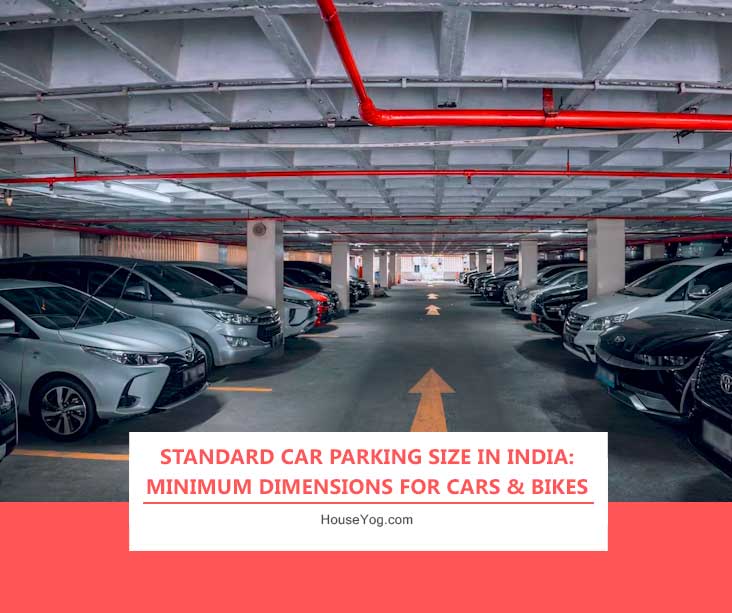
In residential houses, the standard car parking size in India is typically 8.5 to 9 feet wide and 16 to 18 feet long.
This size comfortably accommodates most hatchbacks, sedans, and small SUVs while leaving enough space to open the car doors and move around the vehicle.
For larger vehicles, our architects often recommend a 9 x 18 ft parking space for ease of use.
Minimum Car Parking Size for Houses
In smaller plots, especially in urban areas, parking spaces often need to be planned carefully. Some houses may have only the minimum area available for vehicle parking.
The minimum car parking size depends on the type of car and the available plot width.
| Parking Type | Minimum Size |
| Small car | 8 x 15 ft |
| Standard car | 9 x 18 ft |
8 x 15 ft Parking Space
This size can work for small hatchbacks, especially on narrow plots. However, it offers very limited side clearance. Opening the doors fully may be difficult if the car is parked close to a wall.
Because of this, architects usually recommend this size only when space is extremely limited.
9 x 18 ft Parking Space
This is widely considered the most comfortable and practical parking size for a single car in residential houses.
It allows:
- comfortable door opening
- space to walk around the vehicle
- easier manoeuvring when parking
If your plot allows it, planning a 9 x 18 ft parking area is generally a better long-term choice.
Typical Car Dimensions in India (Why Parking Size Matters)
To understand why parking spaces are designed around certain dimensions, it helps to look at the typical size of cars used in India.
Most hatchbacks, sedans, and SUVs fall within the following approximate size range.
| Car Type | Approx Width | Approx Length |
| Hatchback | 5.5 – 6 ft | 12 – 13 ft |
| Sedan | 5.8 – 6 ft | 14 – 15 ft |
| SUV | 6 – 6.5 ft | 15 – 16.5 ft |
Because a car itself already occupies around 6 feet of width, parking spaces must include extra clearance on both sides for opening the doors and moving around the vehicle.
That is why most residential parking areas are designed 8.5 to 9 feet wide, which provides a practical balance between space efficiency and comfortable usage.
Similarly, since most cars are 13 to 16 feet long, architects usually keep parking lengths between 16 and 18 feet to allow safe parking and easy manoeuvring.
Standard Bike Parking Size
In India, bikes and scooters are an essential part of daily life. Even homes that have a car usually have one or two bikes as well.
That is why it is important to plan a dedicated space for bikes within the parking layout.
| Vehicle | Typical Space |
| Single bike | 3 x 6 ft |
| Two bikes | 6 x 6 ft |
Where Bikes Are Usually Parked
When we design residential parking areas for Indian homes, bikes are often placed in flexible locations such as:
- beside the car parking space
- near the entrance or gate
- along a wall
- under the staircase in stilt parking layouts
Because bikes require relatively small spaces, they can often fit into areas that would otherwise remain unused.
However, it is still important to ensure that bike parking does not block the movement of cars and the residents.
Two-Car Parking Size for Houses
Some houses need parking space for two cars, especially in larger homes or joint family houses.
There are two common ways to arrange two cars in residential parking.
| Parking Layout | Typical Size |
| Side-by-side parking | 16 x 18 ft |
| Tandem parking | 10 x 30 ft |
Side-by-Side Parking
In this layout, both cars are parked next to each other.
This arrangement is more convenient because:
- Each car can enter and exit independently
- There is better access to both vehicles
- Door opening is easier
However, it requires more plot width, which may not always be available.
Tandem Parking
In tandem parking, one car is parked behind the other.
This layout works well for narrow plots but has a limitation: the car parked behind must be moved before the front car can exit.
Despite this inconvenience, tandem parking is commonly used in urban houses with limited frontage width.
Parking Space for Car and Bike Together
Most Indian homes require parking for one car and one or two bikes.
A commonly used parking layout is:
1 car + 1 bike will require around 10 x 18 ft of parking space
This allows the car to occupy the main parking area while the bike can be placed in available side space.
Common Bike Placement Options
Bikes can be parked in several practical locations, such as:
- beside the car
- behind the car
- along the side wall
- near the gate
When designing parking areas, we usually try to keep bike parking in a way that does not interfere with car movement.
Even small adjustments in layout can make parking much more convenient in daily use.
Factors That Affect Parking Size
While standard parking dimensions are useful guidelines, the actual space required can vary depending on several practical factors.
1. Vehicle Size
Not all cars are the same size.
For example:
- Hatchbacks require less space
- Sedans need slightly longer parking areas
- SUVs require more width and turning clearance
If you plan to buy a larger vehicle in the future, it is wise to keep some extra space.
2. Plot Width
In smaller plots, especially 20–25 ft wide plots, parking space must be planned very carefully.
The parking layout often needs to balance space for:
- Staircase
- Entrance lobby
- Parking area
A slightly wider plot makes parking design much easier.
3. Gate Width
The entry gate also plays an important role in parking convenience.
A gate that is too narrow makes it difficult to bring the car inside.
Typically, residential gates are designed between 10 and 12 feet wide for comfortable vehicle entry.
Narrower gates can make it difficult to turn the car into the parking area, especially on plots located along narrow streets.
4. Turning Radius
Cars need sufficient space to turn and align properly while entering or exiting the parking area.
If the approach road or driveway is narrow, you may need additional manoeuvring space inside the parking area.
This is an important design consideration often overlooked during planning.
5. Column Placement
In houses with stilt parking or ground-floor parking, structural columns may fall inside the parking area.
If columns are placed incorrectly, they can obstruct:
- Car movement
- Door opening
- Parking alignment
Architects usually coordinate with structural engineers to place columns so they do not interfere with vehicle parking.
Standard Parking Height in Indian Houses
While most people focus on the length and width of a parking space, the height of the parking area is equally important when designing a house.
In many residential houses, parking is located on the ground floor or stilt floor, sometimes with rooms or living spaces above it. Because of this, homeowners occasionally reduce the parking height to create a mezzanine storage area or loft.
However, keeping the parking height too low can make the space feel cramped and may create problems for larger vehicles.
Typical Parking Height in Houses
| Parking Type | Typical Clear Height |
| Minimum practical height | 9 ft |
| Comfortable residential parking height | 10–11 ft |
| Stilt parking (with floor above) | 10–12 ft |
9 ft Parking Height
Some houses keep the parking height around 9 feet, especially when a mezzanine or storage loft is planned.
While this may work for small cars, it can feel tight and may not be ideal for taller vehicles such as SUVs or vehicles with roof carriers.
10–11 ft Parking Height
This is generally considered a comfortable height for residential parking.
It provides:
- Better air circulation
- Easier vehicle movement
- More comfortable headroom
- Flexibility for larger vehicles
Most architects prefer keeping at least 10 ft clear height in parking areas whenever possible.
Stilt Parking Height (Parking with Floor Above)
In houses with stilt parking, where the ground floor is used for parking, and the first floor contains living spaces, the height is usually kept between 10 and 12 feet.
This allows:
- Proper structural beam depth
- Adequate ventilation
- Comfortable vehicle clearance
Expert Planning Tips
When designing your house parking area, it is wise to avoid keeping the height too low just to gain a small mezzanine storage space.
Vehicles are gradually becoming taller and larger, and a slightly higher parking space makes the area more flexible for future use.
Typical Parking Size in Modern Indian Houses
Based on practical residential designs, the following parking sizes are commonly used in Indian houses.
| Parking Requirement | Typical Size |
| One car | 9 x 18 ft |
| Two cars | 16 x 18 ft |
| Car + bike | 10 x 20 ft |
| One bike | 3 x 6 ft |
These sizes provide a comfortable balance between space efficiency and usability.
While smaller parking areas may still work in tight plots, slightly larger parking dimensions make daily use far more convenient.
FAQs about Parking Space Sizes
In most residential houses, the standard car parking size in India is about 8.5 to 9 feet wide and 16 to 18 feet long. This size accommodates most cars while allowing enough space for door opening and movement around the vehicle.
The minimum car parking size for Indian homes is around 8 x 15 feet, which may work for small hatchbacks. However, for better comfort and usability, many architects recommend a 9 x 18 ft parking space.
A single bike typically requires around 3 x 6 feet of space. Two bikes can usually be accommodated within 6 x 6 feet, depending on how they are parked.
Two cars parked side-by-side typically require around 16 x 18 feet. If parked in tandem (one behind the other), the parking area may require about 10 x 30 feet.
Conclusion
Parking space may seem like a simple part of house design, but it plays a major role in the daily convenience of your home.
When we design a house, planning the correct parking size ensures:
- Comfortable vehicle movement
- Easy door opening and access
- Efficient use of available plot space
Most houses in India use a 9 x 18 ft parking area for a single car, while larger homes may require two-car parking or space for both cars and bikes.
It is always better to plan the parking area early during the design stage, rather than adjusting it later after the layout is fixed.
Just like standard room sizes, staircase dimensions, and gate width, parking spaces should be considered an essential part of residential planning to ensure your home remains practical and convenient for everyday use.
If you found this guide useful, consider sharing it with friends or family who are planning to design or build their own house.
Popular on Houseyog Right Now!: